Results by title
6 books match the query 'Russian Revolution'
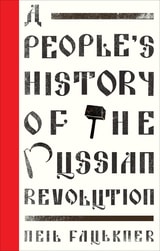
A People's History of the Russian Revolution
Neil Faulkner
Pluto Press, 2017
The Russian Revolution may be the most misunderstood and misrepresented event in modern history, its history told in a mix of legends and anecdotes. In A People's History of the Russian Revolution, Neil Faulkner sets out to debunk the myths and pry fact from fiction, putting at the heart of the story the Russian people who are the true heroes of this tumultuous tale. In this fast-paced introduction, Faulkner tells the powerful narrative of how millions of people came together in a mass movement, organized democratic assemblies, mobilized for militant action, and overturned a vast regime of landlords, profiteers, and warmongers.
Faulkner rejects caricatures of Lenin and the Bolsheviks as authoritarian conspirators or the progenitors of Stalinist dictatorship, and forcefully argues that the Russian Revolution was an explosion of democracy and creativity—and that it was crushed by bloody counter-revolution and replaced with a form of bureaucratic state-capitalism.
Grounded by powerful first-hand testimony, this history marks the centenary of the Revolution by restoring the democratic essence of the revolution, offering a perfect primer for the modern reader.
[more]
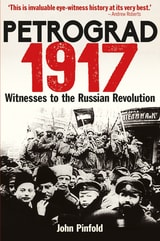
Petrograd, 1917
Witnesses to the Russian RevolutionJohn Pinfold
Bodleian Library Publishing, 2017
The 1917 Bolshevik Revolution irrevocably changed the course of history, with consequences still being felt a century later. This book offers a dramatic depiction of the chaotic events of the revolution, drawn from selected firsthand accounts.
Assembling extracts from letters, journals, diaries, and memoirs from a remarkably diverse cast of both Russians and foreign nationals who were there when the revolution broke, Petrograd, 1917 is a strikingly close-up account of these world-shaking events. Each entry is supplemented with a short introductory note that sets it in context, and the book is rounded out with more than seventy illustrations, including photographs of the Romanovs and the violence in the streets as well as propaganda posters, postcards to loved ones, and more. In these pages, the drama and terror of those days comes to life once more, a century on.
Assembling extracts from letters, journals, diaries, and memoirs from a remarkably diverse cast of both Russians and foreign nationals who were there when the revolution broke, Petrograd, 1917 is a strikingly close-up account of these world-shaking events. Each entry is supplemented with a short introductory note that sets it in context, and the book is rounded out with more than seventy illustrations, including photographs of the Romanovs and the violence in the streets as well as propaganda posters, postcards to loved ones, and more. In these pages, the drama and terror of those days comes to life once more, a century on.
[more]
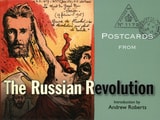
Postcards from the Russian Revolution
Edited by the Bodleian Library
Bodleian Library Publishing, 2008
The tumultuous political events that swept Russia in the early twentieth century sent powerful ripples around the world. The Bolshevik revolutionaries and activists had sympathizers among Americans and Europeans alike, and one notable way they exercised their support was through artfully created postcards. This remarkable volumepresents for the first time a newly unearthed collection of those cards that recount the 1917 Russian Revolution in a novel way.
The postcards originated not only from Russia, but also from Germany, the United States, Belgium, and France, and they reflect their diverse origins in the rich array of artistic styles employed to create them. Whether simply drawn, hand-painted, or mass-printed, the cards present compelling and complex images of the Bolshevik Revolution of 1917 and the people who were enmeshed in it. The cards serve as concise yet powerful artistic documents of Russian history and culture, as they display bloody and graphic street scenes, rare pictures of lesser-known revolutionary leaders, satirical sketches of Russian rulers, portraits of the royal family, illustrations of palaces and institutional buildings, and depictions of pivotal events leading up to the Revolution such as the 1905 assassination of Grand Duke Alexander. Also included in this fascinating visual narrative are cards depicting crucial events from the aftermath of the Revolution, including the great famine of 1921 and public celebrations of the newly formed Union of Soviet Socialist Republics.
An unprecedented and arresting exploration of the Russian Empire in its death throes, Postcards from the Russian Revolution reveals a wholly new and vibrant perspective on one of the most important political movements of the twentieth century.
[more]
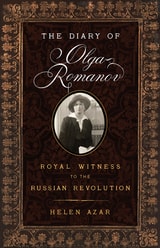
The Diary of Olga Romanov
Royal Witness to the Russian RevolutionHelen Azar
Westholme Publishing, 2014
The First English Translation of the Wartime Diaries of the Eldest Daughter of Nicholas II, the Last Tsar of Russia, with Additional Documents of the Period
In August 1914, Russia entered World War I, and with it, the imperial family of Tsar Nicholas II was thrust into a conflict they would not survive. His eldest child, Olga Nikolaevna, great-granddaughter of Queen Victoria, had begun a diary in 1905 when she was ten years old and kept writing her thoughts and impressions of day-to-day life as a grand duchess until abruptly ending her entries when her father abdicated his throne in March 1917. Held at the State Archives of the Russian Federation in Moscow, Olga’s diaries during the wartime period have never been translated into English until this volume. At the outset of the war, Olga and her sister Tatiana worked as nurses in a military hospital along with their mother, Tsarina Alexandra. Olga’s younger sisters, Maria and Anastasia, visited the infirmaries to help raise the morale of the wounded and sick soldiers. The strain was indeed great, as Olga records her impressions of tending to the officers who had been injured and maimed in the fighting on the Russian front. Concerns about her sickly brother, Aleksei, abound, as well those for her father, who is seen attempting to manage the ongoing war. Gregori Rasputin appears in entries, too, in an affectionate manner as one would expect of a family friend. While the diaries reflect the interests of a young woman, her tone grows increasingly serious as the Russian army suffers setbacks, Rasputin is ultimately murdered, and a popular movement against her family begins to grow. At the point Olga ends her writing in 1917, the author continues the story by translating letters and impressions from family intimates, such as Anna Vyrubova, as well as the diary kept by Nicholas II himself. Finally, once the imperial family has been put under house arrest by the revolutionaries, we follow events through observations by Alexander Kerensky, head of the initial Provisional Government, these too in English translation for the first time. Olga would offer no further personal writings, as she and the rest of her family were crowded into the basement of a house in the Urals and shot to death in July 1918.
The Diary of Olga Romanov: Royal Witness to the Russian Revolution, translated and introduced by scientist and librarian Helen Azar, and supplemented with additional primary source material, is a remarkable document of a young woman who did not choose to be part of a royal family and never exploited her own position, but lost her life simply because of what her family represented.
[more]
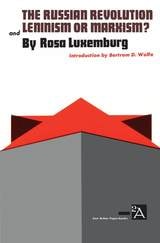
The Russian Revolution and Leninism or Marxism?
Rosa Luxemburg
University of Michigan Press, 1961
Rosa Luxemburg (1870-1919), one of the most remarkable and controversial personalities in the Marxist movement, opposes in this book not the Bolshevik’s quest for power but the way they took power, the way they held power, the way they justified themselves in doing both. In the light of the soviet collapse her penetrating but not unsympathetic criticism becomes a grave indictment and her fears for the Communists uncannily prophetic of events to come.
[more]

Year One of the Russian Revolution
Victor Serge
Pluto Press, 1992
[more]