Results by title
5 books match the query 'Sacred Music'
Bach Perspectives, Volume 12
Bach and the Counterpoint of ReligionEdited by Robin A. Leaver
University of Illinois Press, 2018
Sacred Music from the Cathedral at Trent
Trent, Museo Provinciale d'Arte, Codex 1375 (olim 88)Edited by Rebecca L. Gerber
University of Chicago Press, 2007
Often called the musical equivalent of the Dead Sea Scrolls, the Trent codices have dramatically broadened our understanding of Renaissance music. Much has been written about this collection of fifteenth-century music manuscripts, most of which were discovered in the Cathedral at Trent, but none of the seven codices--generally called Trent 87 through Trent 93--has ever been published in its entirety. Thus Rebecca Gerber’s edition of Trent 88, which took more than a decade to prepare, will be the first to appear. As such, this volume is a landmark in the publication of early music.
Trent 88 comprises an extensive anthology of 145 compositions tailored to the ceremonial and daily religious services of the period. The international scope of the collection is both impressive and significant: early English, French, German, and Spanish mass cycles appear alongside simple hymns and Magnificats. Music by renowned composers—including Guillaume Du Fay, Johannes Ockeghem, Johannes Cornago, and John Bedingham—is joined here by an even larger repertory of anonymous compositions with great aesthetic and historical value. Edited to accommodate both scholars and performers, and augmented with Gerber’s expert introduction, this volume will significantly deepen existing knowledge of a crucial period in the history of music.
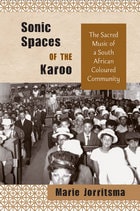
Sonic Spaces of the Karoo
The Sacred Music of a South African Coloured CommunityMarie Jorritsma
Temple University Press, 2011
Sonic Spaces of the Karoo is a pioneering study of the sacred music of three coloured (the apartheid designation for people "not white or native") people's church congregations in the rural town of Graaff-Reinet, South Africa. Jorritsma's fieldwork involves an investigation of the choruses, choir music, and hymns of the Karoo region to present a history of the people's traditional, religious, and cultural identity in song. This music is examined as part of a living archive preserved by the community in the face of a legacy of slavery and colonial as well as apartheid oppression.
Jorritsma's findings counteract a lingering stereotype that coloured music is inferior to European or African music and that coloured people should not or do not have a cultural identity. Sonic Spaces of the Karoo seeks to eradicate that bias and articulate a more legitimate place for these people in the contemporary landscape of South Africa.
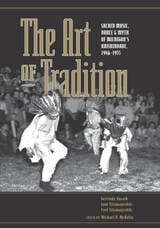
The Art of Tradition
Sacred Music, Dance & Myth of Michigan's Anishinaabe, 1946-1955Michael D. McNally
Michigan State University Press, 2009
The Art of Tradition documents the complexity of Native life and culture at a critical juncture in Native American history, where the rekindling of pride in Native cultures characteristic of the later twentieth century met the generation of elders who spent their early years speaking Native tongues but who came of age in boarding schools and amid strong pressures of assimilation. Because this period was deemed by most ethnographers of the time to be one of "acculturation," marking the end of traditional Native cultures, the authors' appreciation for the integrity of mid-century Native culture stands out markedly from other scholarship of the day. The songs, dance steps, and stories collected here are evidence of the artful work of maintaining and breathing new life into traditions, often in contexts that seem anything but traditional, by indigenous elders and artists. As the editor notes, there are no "Native informants" in this study, only collaborators whose lives are shown to be as resilient as the repertories they performed.

The Chigi Codex
Sacred Music from Burgundy and France; Vatican City, Biblioteca Apostolica Vaticana, MS Chigi C VIII 234Edited by Edward F. Houghton
University of Chicago Press, 2027
Compiled between 1500 and 1504, The Chigi Codex contains the complete contents of an extraordinary illuminated manuscript, an anthology of forty polyphonic masses and motets associated with the royal courts of France and Burgundy. This edition includes nearly the complete oeuvre of Johannes Ockeghem, five motets by Johannes Regis, and compositions by Josquin des Prez, Henricus Isaac, Antoine Busnoys, Pierre de la Rue, Jean Mouton, Alexander Agricola, and others. Twelve works are unique to The Chigi Codex; seven motets were added by a Spanish scribe after 1515. The complete contents are presented here with transcriptions of the music accessible to musicians today, with a critical commentary on the music and concordant sources. The Codex transmits works that were copied in manuscripts and prints throughout Europe later in the sixteenth century.
In addition to its monumental repertory, The Chigi Codex includes notable works of visual art in the double-folio openings of thirty-six works with miniature paintings, coats of arms, inhabited capitals, family mottos, bizarre creatures, and colorful borders, all in the famed Ghent-Bruges style. Herbert Kellman discusses these as well as the history of the Codex and its long journey from its original patron, the Burgundian seigneur Philippe Bouton, to the Spanish families Folch de Cardona and Fernández de Córdoba, and finally to Rome and to the library of Fabio Chigi, Pope Alexander VII. The Chigi library is now an important part of the Vatican Library.
Making the manuscript accessible to the public and musicians, this edition of The Chigi Codex supports the study, performance, and understanding of its music and art in the musical, cultural, and historical contexts of its creation.