Results by title
64 books match the query 'Sacred Writings' and 6 start with a
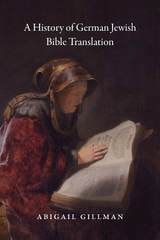
A History of German Jewish Bible Translation
Abigail Gillman
University of Chicago Press, 2018
This book is the first in English to offer a close analysis of German Jewish translations as part of a larger cultural project. Looking at four distinct waves of translations, Abigail Gillman juxtaposes translations within each that sought to achieve similar goals through differing means. As she details the history of successive translations, we gain new insight into the opportunities and problems the Bible posed for different generations and gain a new perspective on modern German Jewish history.
A Torah Commentary for Our Times
Volume 2: Exodus and LeviticusRabbi Harvey J. Fields
Central Conference of American Rabbis, 1991
A helpful approach to the weekly parashah, juxtaposing the insights of ancient, medieval, and modern commentators (including the author). Perfect for both beginning Torah students and scholars seeking new angles on the text. The volumes are available individually or as a three-volume set, ideal for a bar or bat mitzvah or confirmation gift.
A Torah Commentary for Our Times
Volume 3: Numbers and DeuteronomyRabbi Harvey J. Fields
Central Conference of American Rabbis, 1993
A helpful approach to the weekly parashah, juxtaposing the insights of ancient, medieval, and modern commentators (including the author). Perfect for both beginning Torah students and scholars seeking new angles on the text. The volumes are available individually or as a three-volume set, ideal for a bar or bat mitzvah or confirmation gift.
A Torah Commentary for Our Times
Volume I: GenesisRabbi Harvey J. Fields
Central Conference of American Rabbis, 1990
A helpful approach to the weekly parashah, juxtaposing the insights of ancient, medieval, and modern commentators (including the author). Perfect for both beginning Torah students and scholars seeking new angles on the text. The volumes are available individually or as a three-volume set, ideal for a bar or bat mitzvah or confirmation gift.
Adam and Eve in the Armenian Tradition, Fifth through Seventeenth Centuries
Michael E. Stone
SBL Press, 2013
Aseneth of Egypt
The Composition of a Jewish NarrativePatricia D. Ahearne-Kroll
SBL Press, 2020
An exploration of Aseneth's beginnings
In Aseneth of Egypt: The Composition of a Jewish Narrative, Patricia D. Ahearne-Kroll challenges reliance on reconstructed texts in previous scholarship on the book of Joseph and Aseneth. After outlining the problems with previous prototypes of the Hellenistic narrative, she proposes a way to talk about the story in its initial setting without ignoring the manuscript evidence. Her thorough analysis of the evidence reveals how Joseph and Aseneth reflects the literary impulse of Greek-speaking Jewish writers to redescribe their identity in Egypt and Judean connections to the land of Egypt, while incorporating Ptolemaic strategies of legitimation of power. In the end, Ahearne-Kroll concludes that the base storyline preserved in all the copies of this story demonstrates that it was written for Jewish communities living in Hellenistic Egypt.
Features:
- A focus on Hellenistic stories of heroic ancestors
- A discussion of the possible lives of Jews in Hellenistic Egypt drawn from the narrative of Aseneth
- An examination of the complexities involved in dating the composition of literary texts