Results by title
3 books match the query 'Salt lake ecology'
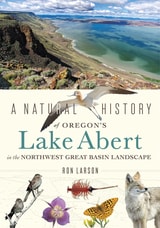
A Natural History of Oregon's Lake Abert in the Northwest Great Basin Landscape
Ron Larson
University of Nevada Press, 2023
A beautifully detailed exploration of flora and fauna.
Author Ron Larson offers a natural history of a Great Basin landscape that focuses on the northern region including Lake Abert and Abert Rim, and the adjacent area in southcentral Oregon. Although the jewel of this landscape is a lake, the real story is the many plants and animals—from the very primitive, reddish, bacteria-like archaea that thrive only in its high-salinity waters to the Golden Eagles and ravens that soar above the desert. The untold species in and around the lake are part of an ecosystem shaped by ageless processes from massive lava flows, repeated drought, and blinding snowstorms. It is an environment rich with biotic and physical interconnections going back millions of years.
The Great Basin, and in particular the Lake Abert region, is special and needs our attention to ensure it remains that way. We must recognize the importance of water for Great Basin ecosystems and the need to manage it better, and we must acknowledge how rich the Great Basin is in natural history. Salt lakes, wherever they occur, are valuable and provide critically important habitat for migratory water birds, which are unfortunately under threat from upstream water diversions and climate change. Larson’s book will help people understand that the Great Basin is unique and that wise stewardship is necessary to keep it unspoiled. The book is an essential reference source, drawing together a wide range of materials that will appeal to general readers and researchers alike.
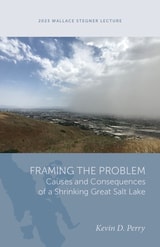
Framing the Problem
Causes and Consequences of a Shrinking Great Salt LakeKevin D. Perry
University of Utah Press, 2024

The Great Salt Lake Food Chains
Fragility and ResiliencyBonnie K. Baxter
University of Utah Press, 2024