Results by title

19 books match the query 'Salvation'

cover of A Tawdry Place of Salvation: The Art of Jane Bowles

A Tawdry Place of Salvation

The Art of Jane Bowles

Edited by Jennie Skerl

Southern Illinois University Press, 1997

Through these essays—which deal with Bowles’s published as well as her unpublished work—Skerl seeks to generate serious critical attention for an important but neglected female experimental writer of the mid-twentieth century and to celebrate her originality, power, and craft.

Based in disciplines and theoretical approaches that range from feminist criticism to Middle Eastern studies, from postmodernism to queer theory, and from Victorianism to the Beat Generation, the essayists naturally approach Bowles’s fiction and drama from a wide variety of critical perspectives. All of these essays are unpublished and written for this volume.
[more]
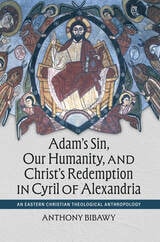
cover of Adam's Sin, Our Humanity, and Christ's Redemption in Cyril of Alexandria: An Eastern Christian Theological Anthropology

Adam's Sin, Our Humanity, and Christ's Redemption in Cyril of Alexandria

An Eastern Christian Theological Anthropology

Anthony Bibawy

Catholic University of America Press, 2026

As a result of the neo-patristic movement of the early twentieth century, the teachings of original sin and atonement as understood in the West were questioned and reformulated based on what was believed to be early Eastern Christian patristic thought. This new paradigm proposed that humanity inherited death and corruption, but not sin, from Adam and that the purpose of the incarnation and salvific work of Christ was to restore humanity from death and corruption, but not an inherent sinfulness. In contrast to this popular and seemingly dogmatic paradigm and false dichotomy between Western and Eastern teaching on sin and redemption, this book proposes that the writings of many Eastern fathers of the early fifth century incorporate many, if not the majority, of the terms and teachings behind what have been labeled as Western departures concerning the relationship between Adam’s sin, humanity, and its redemption in Christ. Through a comprehensive analysis of the writings of Cyril of Alexandria and some of his contemporaries in the early fifth century East during the time of the Pelagian controversy, this book demonstrates that a central and consistent theme of their soteriology revolves around the sinfulness and guilt of all humanity that is rooted in Adam’s sin and is resolved only through recapitulation into the new root, the second Adam, the impeccable Christ. Christ’s impeccability is necessary to correct the state of sinfulness and guilt in humanity through his incarnation and spotless sacrifice on the cross as a ransom and substitute on behalf of and in exchange of all to satisfy the divine justice and to restore humanity to its original state in the divine image.
[more]
cover of America's First Adventure in China: Trade, Treaties, Opium, and Salvation

America's First Adventure in China

Trade, Treaties, Opium, and Salvation

John R Haddad

Temple University Press, 2014

In 1784, when Americans first voyaged to China, they confronted Chinese authorities who were unaware that the United States even existed. Nevertheless, a long, complicated, and fruitful trade relationship was born after American traders, missionaries, diplomats, and others sailed to China with lofty ambitions: to acquire fabulous wealth, convert China to Christianity, and even command a Chinese army.

In America's First Adventure in China, John Haddad provides a colorful history of the evolving cultural exchange and interactions between these countries. He recounts how American expatriates adopted a pragmatic attitude-as well as an entrepreneurial spirit and improvisational approach-to their dealings with the Chinese. Haddad shows how opium played a potent role in the dreams of Americans who either smuggled it or opposed its importation, and he considers the missionary movement that compelled individuals to accept a hard life in an alien culture.

As a result of their efforts, Americans achieved a favorable outcome—they established a unique presence in China—and cultivated a relationship whose complexities continue to grow.
[more]
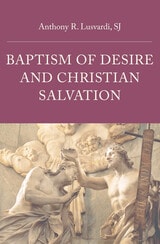
cover of Baptism of Desire and Christian Salvation

Baptism of Desire and Christian Salvation

Anthony R. Lusvardi

Catholic University of America Press, 2024
Belief in the necessity of baptism for salvation is rooted in the New Testament and was forcefully affirmed by the Church Fathers, yet today this belief is treated with unease if not ignored altogether. Over the course of centuries, Catholic theology has wrestled with a doctrine—baptism of desire—that both preserves this fundamental principle and allows for salvation in hard cases, such as catechumens dying unexpectedly. Baptism of Desire and Christian Salvation traces this doctrine’s varied history, from its genesis in a fourth century funeral oration given by Ambrose of Milan to its uneasy position in the Anonymous Christianity of Karl Rahner. More than a history, however, this book raises questions about the nature of religious ritual and the sacraments, the mission of the Church, and the essence of salvation. Arguing that theologians of the past two centuries have tended to downplay the role of the sacraments when discussing salvation, Lusvardi suggests that baptism should remain our theological starting point. Engaging with the theological tradition and at times challenging the conventional wisdom, Baptism of Desire and Christian Salvation shows how such a sacramental approach can offer credible—and sometimes surprising—responses to questions related to the salvation of non-Christians, the fate of unbaptized infants, and the relevance of the Church’s mission today.
[more]
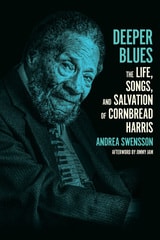
cover of Deeper Blues: The Life, Songs, and Salvation of Cornbread Harris

Deeper Blues

The Life, Songs, and Salvation of Cornbread Harris

Andrea Swensson

University of Minnesota Press, 2024

The emotional, epic story of James “Cornbread” Harris—a self-proclaimed “blessed dude” and one of Minneapolis’s most influential musicians

From the heart of the Minnesota blues comes the story of James “Cornbread” Harris Jr., the songwriter, pianist, and consummate bluesman whose seventy years making music helped to shape the Minneapolis Sound. “I am a blessed dude,” Cornbread tells Andrea Swensson, taking us along on his musical journey from a first “gig” entertaining his fellow soldiers during World War II to his subsequent years playing music for audiences across Minnesota. Following Cornbread’s extraordinary life story, Deeper Blues is a unique history of Minnesota music that evolves into a heartfelt tale of reconciliation and forgiveness, all to the tune of the legendary musician’s signature sound.

Cornbread’s career started in the 1950s, when he played with the Augie Garcia Quintet and cowrote their hit “Hi Ho Silver.” A tireless entertainer, he has been performing live ever since, influencing an entire generation of musicians credited with putting Minneapolis on the map in the 1980s—including his long-estranged son, Grammy-winning Rock and Roll Hall of Famer James “Jimmy Jam” Harris III. Going beyond the music, Deeper Blues turns toward family, atonement, and peace when Cornbread reunites with Jimmy Jam after a five-decade separation and they perform together on stage.

Through conversations with Cornbread, Jimmy Jam, and many others, Swensson reveals a story of perseverance and unfailing grace, a firsthand account of making music in the face of racism and segregation, and a hard-won acceptance of the personal sacrifices that are often required when dedicating one’s life to making music. As the man himself says, “All of my hardships ended up to be blessings.”

A rich mix of present-day anecdotes and historical vignettes, animated by voices from Cornbread’s life and the Twin Cities music scene, underscored by the bluesman’s original lyrics of heartache and hope, and featuring never-before-seen photographs of Cornbread and Jimmy Jam, Deeper Blues tells a singular story—one imprinted on the history, heart, and soul of the Minneapolis Sound.
[more]
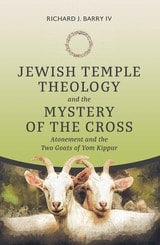
cover of Jewish Temple Theology and the Mystery of the Cross: Atonement and the Two Goats of Yom Kippur

Jewish Temple Theology and the Mystery of the Cross

Atonement and the Two Goats of Yom Kippur

Richard J. Barry IV

Catholic University of America Press, 2023
On the Day of Atonement, two goats were brought before the high priest at the temple. One was chosen as the goat for the Lord, a spotless sacrifice, and the other was set aside for Azazel, doomed to bear sins into the wilderness. Jewish Temple Theology and the Mystery of the Cross shows how a theological appreciation for the two movements of Yom Kippur makes it possible to identify the paradox at the heart of Christian soteriology: in his single atoning act, Jesus Christ fulfills the work of both goats, without confusion, without division. Appreciation for this paradox helps illuminate many of the doctrinal debates in the history of Christian soteriology and offers a compelling way forward. Jewish Temple Theology and the Mystery of the Cross begins with a survey of biblical geography: first, a rich theological pilgrimage to Mount Zion, the home of beauty, goodness, and truth, and then to the surrounding desert, the wilderness of sin and sorrow. To appreciate the Yom Kippur liturgy, and to understand the priestly word “atonement,” one must be oriented by this cosmic stage. Drawing on the best modern historical-critical scholarship, this volume reveals the wonders hidden in Leviticus and shows how a sophisticated theological interpretation of this book leads to breakthroughs in our understanding of Christ’s saving work. Seeing the mystery of the cross from the perspective of the ancient Jewish scriptures has surprising results. For example, Richard Barry shows how Hans Urs von Balthasar’s controversial theology of Holy Saturday is a compelling development of Azazel-goat soteriology; it is not only biblically licit but is in some ways mandated by the logic of Yom Kippur. At the same time, David Bentley Hart is celebrated for the way he powerfully advances modern YHWH-goat soteriology, yet obedience to the logic of Yom Kippur also necessitates a nuanced biblical critique of his muscular universalism. How can Christ fulfill the seemingly contradictory movements of both goats in a single saving work? Grappling with that question, Jewish Temple Theology and the Mystery of the Cross seeks to draw nearer to the heart of the mystery of salvation.
[more]
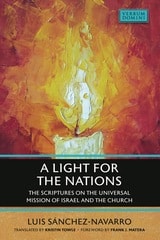
cover of Light for the Nations: The Scriptures on the Universal Mission of Israel and the Church

Light for the Nations

The Scriptures on the Universal Mission of Israel and the Church

Luis Sanchez-Navarro

Catholic University of America Press, 2024
Universality belongs to the very being of the Catholic Church. This claim of the Gospel is rooted in the ministry of Jesus, witnessed to by the canonical Gospels and the other books of the New Testament, all of which present the universal openness of salvation as a fulfillment of the Scriptures of Israel. In this book, after addressing the universality of salvation in the writings of the Old Covenant, we examine the differentiated and concordant witness of the synoptic Gospels, John and Paul, as well as the Letter to the Hebrews and the Apocalypse. In this way, we intend to show how this apostolic witness responds to the will of the Lord Jesus, while highlighting its harmony with Torah, Prophets and Writings. Light for the Nations, by reviewing the main biblical passages on the universal dimension of salvation, aims to show how the fact that the Gospel of Jesus Christ has a claim to universality does not diminish, but rather enhances, the importance of the people of the first Covenant: Israel is called to be an active mediator of salvation. The canonical perspective is based on a differentiated exegetical study of each testimony. The scope is broad, since this theme of biblical theology is also relevant for Christology and soteriology, for anthropology and for ecclesiology. The main contribution lies in showing how the various biblical testimonies, in their diversity (which is fully taken into account), offer at the same time a concurring testimony on this fundamental question of Christian theology, forming a true symphony within its polyphony.
[more]
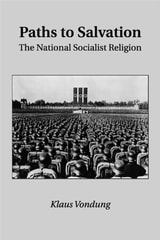
cover of Paths to Salvation: The National Socialist Religion

Paths to Salvation

The National Socialist Religion

Klaus Vondung

St. Augustine's Press, 2017

In order to understand National Socialism one must recognize its religious nature. Many Germans were attracted to the party by its pledge to re-establish a true community of the people, a goal that was celebrated as “holy”.
     Not only did Hitler promise to solve political, social, and economic problems, he also responded to a widely felt need for salvation. The prospect of salvation elevated politics into the realm of religion and lent meaning to the lives of those who embraced it.
      In this work Klaus Vondung explores the various forms in which the elevation of politics into the sphere of religion was expressed in the Third Reich: in the faith of committed National Socialists, in the party’s cult events which celebrated the “community  of the people” as a “community of faith” and the Fuhrer as “savior”, and in the persecution of the Jews that was ‘justified’ in religious terms by demonizing Jews as the “evil enemies of humanity” responsible for the world’s ills. This apocalyptic worldview was the extreme manifestation of the religious nature of National Socialism and, in the final analysis, the only plausible explanation for the intention of exterminating the Jews that led to the holocaust.
[more]
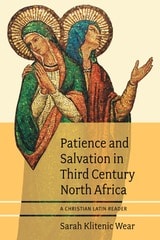
cover of Patience and Salvation in Third Century North Africa: A Christian Latin Reader

Patience and Salvation in Third Century North Africa

A Christian Latin Reader

Sarah Wear

Catholic University of America Press, 2022
Patience and Salvation in Third Century North Africa: A Christian Latin Reader features the entirety of Tertullian’s To Martyrs and The Passion of Perpetua and Felicity, with selections from Cyprian’s On the Good of Patience and a short appendix on Augustine’s Commentary on Psalm 121.6. The Latin text has facing vocabulary and theological, historical, philosophical, and grammatical notes. In the first three centuries, Roman Carthage produced some of the earliest literature composed originally in Latin by Christians. Tertullian’s Ad Martyras (197); Passio Perpetuae et Felicitatis (203), and Cyprian’s De Bono Patientiae (256) all embody the force of this new genre of Latin literature. With this literature, we see a variant of Latin often denoted “Christian Latin.” Christian Latin featured linguistic elements marked by characteristics of biblical Latin, later Latin, as well as vulgarisms. In addition to converging philologically, Tertullian, the author of the Passio, and Cyprian align themselves in topos: they all ask the question of how one can endure torment and anxiety in this world. Patience (patientia), derived from the verb for “to suffer” (patior), is a virtue that allows one to endure troubles, anxieties, and physical pains with the hope of eternal happiness and salvation in heaven. In this Reader, the student will find three different literary perspectives on this theme. The book also draws parallels to the works of Seneca and Cicero on patience and suffering.
[more]
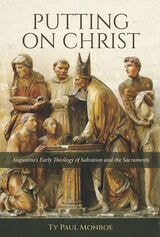
cover of Putting on Christ: Augustine's Early Theology of Salvation and the Sacraments

Putting on Christ

Augustine's Early Theology of Salvation and the Sacraments

Ty Paul Monroe

Catholic University of America Press, 2022
Putting on Christ aims to situate Augustine’s early soteriology and sacramental theology within the context of his personal history and intellectual development. Beginning with an extended analysis of the theology of salvation and sacramental efficacy contained within Augustine’s Confessions (ca. 400), the study then traces the maturation of his views on these matters, beginning with his earliest extant works, the Cassicacum dialogues (ca. 386). The journey entails treating Augustine’s earliest discussions of Christ’s person and his saving work, as well as the believer’s subjective experience of conversion and salvation. As Augustine’s corpus shifts from philosophical dialogues to explicitly apologetic and scriptural-exegetical works, so too does his soteriological lexicon expand to include concepts and terms that will later become his stock-in-trade, such as the virtue of humilitas. And as his roles in the North African Church come to include participation in the presbyterate and the episcopacy, so too does his engagement expand to a wider set of polemical contexts, both anti-Manichaean and anti-Donatist. Putting on Christ tracks these and many other aspects of Augustine’s maturing thought, showing where lines of both continuity and development lie and aiming to uncover their reasons. In doing so, it reveals Augustine to be a thinker and a teacher who continued to hone his understanding of salvation, the very heartbeat of Christian life and thought, as well as its relation to various other aspects of the Christian theological worldview, from Christology and anthropology to sacramental theology and ecclesiology.
[more]
cover of Robert of Arbrissel: Sex, Sin, and Salvation in the Middle Ages

Robert of Arbrissel

Sex, Sin, and Salvation in the Middle Ages

Jacques Dalarun

Catholic University of America Press, 2006
This book tells the fascinating story of Robert of Arbrissel (ca. 1045-1116). Robert was a parish priest, longtime student, reformer, hermit, wandering preacher, and, most famously, founder of the abbey of Fontevraud
[more]
cover of Salvation in New England: Selections from the Sermons of the First Preachers

Salvation in New England

Selections from the Sermons of the First Preachers

Edited by Phyllis M. Jones and Nicholas R. Jones

University of Texas Press, 1977

The sermon as crafted by the early New England preachers was the most prominent literary form of its day, yet the earliest Puritan texts have as a rule been available only in rare-book collections. This anthology of sermons of the first generation of preachers fills a serious gap in American literature. The preachers collected here, the most widely published of their time, were among the eighty or more who emigrated to Massachusetts Bay during the 1630s. They are John Cotton of Boston, Thomas Shepard of Cambridge, and Thomas Hooker of Hartford, the three foremost "lights of the western churches," and two eminent colleagues, Peter Bulkeley of Concord and John Davenport, first of New Haven and later of Boston.
The selections are chosen to be representative of the lengthy works from which they are drawn, to reflect the major concerns and styles of the preachers' work as a whole, and to demonstrate the genre of the sermon as developed by the early American Puritans. Not only does this anthology represent an important contribution to literary history, but the sermons also illustrate a doctrine uniquely elaborated in this period—a consistent and emphatic narrative, mythlike in its repetition and heroics, of the progress of the soul from a state of nature to a state of salvation. This theme may be seen as a three-stage-development, although individual sermons may vary. These stages—preparation, vocation, and regeneration—determine the order of the selections.

The editors' introductory material supplies a comprehensive and thorough discussion of the early New England sermons, concentrating on their role, history, structure, style, and subject matter. A separate essay on the texts of the sermons describes the relationship between the early printed versions and their form as delivered in the pulpit. The introduction preceding each selection presents original research on the historical circumstances of the preaching and publication of the work from which the sermon is drawn. The editors have also provided brief biographies of the preacfiers represented here, an annotated list of recommended background reading, and the most exhaustive checklist available of authoritative editions of the sermons of these five preachers.

This book will be useful to colonial specialists as well as to students of early American literature, religion, and history. The texts are critically edited for readability, with modernized spelling and annotations of unfamiliar phrases and allusions.

[more]
cover of Science and Salvation: Evangelical Popular Science Publishing in Victorian Britain

Science and Salvation

Evangelical Popular Science Publishing in Victorian Britain

Aileen Fyfe

University of Chicago Press, 2004

Threatened by the proliferation of cheap, mass-produced publications, the Religious Tract Society issued a series of publications on popular science during the 1840s. The books were intended to counter the developing notion that science and faith were mutually exclusive, and the Society's authors employed a full repertoire of evangelical techniques—low prices, simple language, carefully structured narratives—to convert their readers. The application of such techniques to popular science resulted in one of the most widely available sources of information on the sciences in the Victorian era.

A fascinating study of the tenuous relationship between science and religion in evangelical publishing, Science and Salvation examines questions of practice and faith from a fresh perspective. Rather than highlighting works by expert men of science, Aileen Fyfe instead considers a group of relatively undistinguished authors who used thinly veiled Christian rhetoric to educate first, but to convert as well. This important volume is destined to become essential reading for historians of science, religion, and publishing alike.
[more]
cover of Sex and Salvation: Imagining the Future in Madagascar

Sex and Salvation

Imagining the Future in Madagascar

Jennifer Cole

University of Chicago Press, 2010

Sex and Salvation chronicles the coming of age of a generation of women in Tamatave in the years that followed Madagascar’s economic liberalization. Eager to forge a viable future amid poverty and rising consumerism, many young women have entered the sexual economy in hope of finding a European husband. Just as many Westerners believe that young people break with the past as they enter adulthood, Malagasy citizens fear that these women have severed the connection to their history and culture.

Jennifer Cole’s elegant analysis shows how this notion of generational change is both wrong and consequential. It obscures the ways young people draw on long-standing ideas of gender and sexuality, it ignores how urbanites relate to their rural counterparts, and it neglects the relationship between these husband-seeking women and their elders who join Pentecostal churches. And yet, as talk about the women circulates through the city’s neighborhoods, bars, Internet cafes, and churches, it teaches others new ways of being.

Cole’s sophisticated depiction of how a generation’s coming of age contributes to social change eschews a narrow focus on crisis. Instead, she reveals how fantasies of rupture and conceptions of the changing life course shape the everyday ways that people create the future.
[more]
cover of Sin and Salvation in Early Modern France: Three Women’s Stories

Sin and Salvation in Early Modern France

Three Women’s Stories

Marguerite d'Auge, Renée Burlamacchi, and Jeanne du Laurens

Iter Press, 2017

The texts available here in English for the first time open a window into the lives of three early modern Frenchwomen as they explore the common themes of family, memory, sin, and salvation. The Regrets of Marguerite d’Auge (1600), the Memoirs of Renée Burlamacchi (1623), and the Genealogy of Jeanne du Laurens (1631), taken from different genres of historical writings, raise important questions: Why and how did female authorship find its way into the historical record? How did these voices escape the censorship and prejudice against female publication? In a time of extreme religious conflict, how did these women convey their views on controversial issues such as primacy of grace, indulgences, and salvation without disrupting the gender expectations of the era?
[more]
cover of The Center is Jesus Christ Himself: Essays on Revelation, Salvation, and Evangelization in Honor of Robert P. Imbelli

The Center is Jesus Christ Himself

Essays on Revelation, Salvation, and Evangelization in Honor of Robert P. Imbelli

Andrew Meszaros

Catholic University of America Press, 2021
The polarization in the Church today can be traced back to a more fundamental crisis in theology, one which has failed to connect our mundane experiences and the mysteries of the Christian faith with the person of Jesus Christ. Ecclesial discourse on the so-called ‘hot- button issues’ of the day too often take place without considering the foundation and goal of the Church. And this is unfortunately due to a similar tendency in the academic theology that informs that ecclesial discourse. In short, much of post-conciliar Catholic theology is adrift, floating aimlessly away from the center of the Christian faith, who is Christ. The Center is Jesus Christ Himself is a collection of essays which anchor theological reflection in Jesus Christ. These diverse essays share a unified focal point, but engage with a variety of theological subdisciplines (e.g., dogmatic, moral, Biblical, etc.), areas (e.g., Christology, Pneumatology, missiology, etc.), and periods (e.g., patristic, medieval, and modern). Given the different combinations of sub-disciplines, areas, and periods, theology is susceptible to fragmentation when it is not held together by some principle of unity. A theology in which the person of Jesus Christ serves as that principle of unity is a Christocentric theology. Together, the essays illustrate not only what Christocentric theology looks like, but also what the consequences are when Christ is dislodged from the center, whether by a conspicuous silence on, or by a relativization of, his unique salvific mission. The volume is published in honor of Emeritus Professor of Systematic Theology at Boston College, Rev. Dr. Robert P. Imbelli, who dedicated his teaching and writing to bringing Christ back to the center of Catholic theological discourse.
[more]
cover of The Miracle of Immortality: What Follows This Earthly Life?

The Miracle of Immortality

What Follows This Earthly Life?

Gerhard Cardinal Muller

Catholic University of America Press, 2026
In The Miracle of Immortality, Gerhard Cardinal Müller tackles some of the great mysteries of human life and hope. The former prefect of the Dicastery for the Doctrine of the Faith is not content merely to present Catholic doc­trine on the afterlife and the last things, although his reflections are always rooted in the teachings and traditions of the Church. Rather, he invites readers to walk with him by the restless sea of human learning, a sea formed by man’s unquenchable thirst for something or someone greater than man himself, by his desire to know the beginning and the end. One who accepts the invitation finds himself in conversation with a mentor whose mind is suffused with scripture and very much sharpened by it. Cherished assumptions are queried or quietly corrected. Slowly but surely he is confronted with the miracle of immortality, without which true happiness is impossible. Cardinal Müller demonstrates in this book that it is entirely possible, and eminently rational, to believe in the miracle of immortality; indeed, that it is ultimately not rational not to believe. The Miracle of Immortality is a work of penetrating theological insight set, chiaroscuro-like, against the darkness of modern and postmodern skepticism. It is at once poetical in spirit and profoundly catechetical in substance, for Müller understands that Christian eschatology cannot be elucidated properly without proclaiming the whole counsel of God. The miracle in question is a miracle for the whole person, accomplished by way of what Paul calls adoption; that is, filiation to the eternal Father through the incarnate Son, effected by the limitless power of the Holy Spirit. It is a miracle that perfects the divine work of creation.
[more]
cover of The Promise of Salvation: A Theory of Religion

The Promise of Salvation

A Theory of Religion

Martin Riesebrodt

University of Chicago Press, 2010

Why has religion persisted across the course of human history? Secularists have predicted the end of faith for a long time, but religions continue to attract followers. Meanwhile, scholars of religion have expanded their field to such an extent that we lack a basic framework for making sense of the chaos of religious phenomena. To remedy this state of affairs, Martin Riesebrodt here undertakes a task that is at once simple and monumental: to define, understand, and explain religion as a universal concept.

Instead of propounding abstract theories, Riesebrodt concentrates on the concrete realities of worship, examining religious holidays, conversion stories, prophetic visions, and life-cycle events. In analyzing these practices, his scope is appropriately broad, taking into consideration traditions in Judaism, Christianity, Islam, Buddhism, Daoism, and Shinto. Ultimately, Riesebrodt argues, all religions promise to avert misfortune, help their followers manage crises, and bring both temporary blessings and eternal salvation. And, as The Promise of Salvation makes clear through abundant empirical evidence, religion will not disappear as long as these promises continue to help people cope with life.
[more]
cover of The Roles of Christ's Humanity in Salvation: Insights from Theodore of Mopsuestia

The Roles of Christ's Humanity in Salvation

Insights from Theodore of Mopsuestia

Frederick G. McLeod S.J.

Catholic University of America Press, 2005

This book enables one to judge Theodore's christological statements in the wider context of how he conceives of Christ's roles in salvation.
[more]