Results by title
3 books match the query 'San Juan (P.R.)'
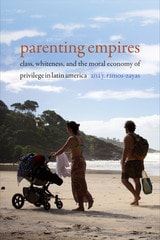
Parenting Empires
Class, Whiteness, and the Moral Economy of Privilege in Latin AmericaAna Yolanda Ramos-Zayas
Duke University Press, 2020
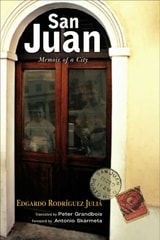
San Juan
Memoir of a CityEdgardo Rodriguez Julia; Translated by Peter Grandbois
University of Wisconsin Press, 2007
In the allusive cityscape he recreates, Rodríguez Juliá invokes the ghosts of his childhood, of San Juan's elder literati, and of characters from his own novels. On the most tangible level, the city is a place of cabarets and cockfighting clubs, flâneurs and beach bums, smoke-filled bars and honking automobiles. Poised between a colonial past and a commercial future, the San Juan he portrays feels at times perilously close to the pitfalls of modernization. Tenement houses and fading mansions yield to strip malls and Tastee Freezes; asphalt hems in jacarandas and palm trees. "In Puerto Rico," he muses, "life is not simply cruel, it is also busy erasing our tracks." Through this book—available here in English for the first time—Rodríguez Juliá resists that erasure, thoughtfully etching a palimpsest that preserves images of the city where he grew up and rejoicing in the one where he still lives.
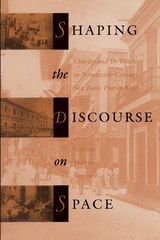
Shaping the Discourse on Space
Charity and Its Wards in Nineteenth-Century San Juan, Puerto RicoBy Teresita Martínez-Vergne
University of Texas Press, 1999
As an inchoate middle class emerged in Puerto Rico in the early nineteenth century, its members sought to control not only public space, but also the people, activities, and even attitudes that filled it. Their instruments were the San Juan town council and the Casa de Beneficencia, a state-run charitable establishment charged with responsibility for the poor.
In this book, Teresita Martínez-Vergne explores how municipal officials and the Casa de Beneficencia shaped the discourse on public and private space and thereby marginalized the worthy poor and vagrants, "liberated" Africans, indigent and unruly women, and destitute children. Drawing on extensive and innovative archival research, she shows that the men who comprised the San Juan ayuntamiento and the board of charity regulated the public discourse on topics such as education, religious orthodoxy, hygiene, and family life, thereby establishing norms for "correct" social behavior and chastising the "deviant" lifestyles of the working poor.
This research clarifies the ways in which San Juan's middle class defined itself in the midst of rapid social and economic change. It also offers new insights into notions of citizenship and the process of nation-building in the Caribbean.