Results by title
4 books match the query 'San Juan County'
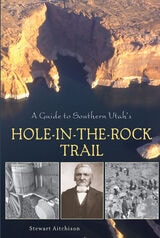
A Guide to Southern Utah's Hole-in-the-Rock Trail
Stewart Aitchison
University of Utah Press, 2005
Though the trail that these devoted pioneers broke across raw frontier was used for several years afterward, no highway was built over most of the route because it was deemed too rugged for modern vehicles. In addition to the historical value of the story of these pioneers, this guide includes road logs, maps, and hiking trails along the historic trail. It also points out fascinating natural history along the way, making A Guide to Southern Utah’s Hole-in-the-Rock Trail a significant reference for a variety of readers.
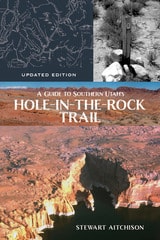
A Guide to Southern Utah's Hole-in-the-Rock Trail
Updated EditionStewart Aitchison
University of Utah Press, 2026
Updated Edition
In 1879, more than 230 settlers in southwestern Utah heeded the call from leaders of the Church of Jesus Christ of Latter-day Saints to pull up stakes and move to the distant San Juan country of southeastern Utah. Their year-long journey became one of the most extraordinary wagon trips ever undertaken in North America, and their trail became one of peril, difficulty, and spectacular vistas. Beginning in Cedar City, Utah, this trail crosses today’s Dixie National Forest, skirts Bryce Canyon National Park, bisects Grand Staircase-Escalante National Monument, crosses Glen Canyon National Recreation Area, and cuts through Bears Ears National Monument on its way to Bluff, Utah.
Though the trail that these devoted pioneers broke across the raw frontier was used for several years afterward, no highway was built over most of the route because it was deemed too rugged for modern vehicles. This updated edition features pioneer family histories and updated natural history, road logs, maps, and hiking trails along the historic route, making A Guide to Southern Utah’s Hole-in-the-Rock Trail a significant reference for a variety of readers.
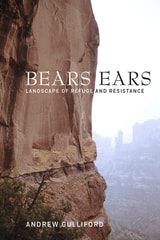
Bears Ears
Landscape of Refuge and ResistanceAndrew Gulliford
University of Utah Press, 2022
Gulliford’s engaging narrative explains prehistoric Pueblo villages and cliff dwellings, Navajo and Ute history, stories of Mormon families who arrived by wagon train in 1880, impacts of the Atomic Age, uranium mining, and the pothunting and looting of Native graves that inspired the passage of the Antiquities Act over a century ago. The book describes how the national monument came about and its deep significance to five native tribes.
Bears Ears National Monument is a bellwether for public land issues in the American West. Its recognition will be relevant for years to come.
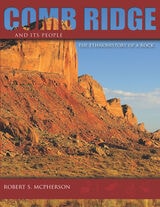
Comb Ridge and Its People
The Ethnohistory of a RockRobert McPherson
Utah State University Press, 2009
West of the Four Corners and east of the Colorado River, in southeastern Utah, a unique one-hundred-mile-long, two-hundred-foot-high, serrated cliff cuts the sky. Whether viewed as barrier wall or sheltering sanctuary, Comb Ridge has helped define life and culture in this region for thousands of years. Today, the area it crosses is still relatively remote, though an important part of a scenic complex of popular tourist destinations that includes Natural Bridges National Monument and Grand Gulch just to the west, Glen Canyon National Recreation Area and Lake Powell a bit farther west, Canyonlands National Park to the north, Hovenweep National Monument to the east, and the San Juan River and Monument Valley to the south. Prehistorically Comb Ridge split an intensively used Ancient Puebloan homeland. It later had similar cultural—both spiritual and practical—significance to Utes, Paiutes, and Navajos and played a crucial role in the history of European American settlement. To tell the story of this rock that is unlike any other rock in the world and the diverse people whose lives it has affected, Robert S. McPherson, author of multiple books on Navajos and on the Four Corners region, draws on the findings of a major, federally funded project to research the cultural history of Comb Ridge. He carries the story forward to contention over present and future uses of Comb Ridge and the spectacular country surrounding it.
The book is the winner of the 2009 Utah Book Award for Nonfiction.