Results by title
15 books match the query 'Sand'

A Grain of Sand in Lambeth
PoemsGeoffrey Babbitt
University of Nevada Press, 2025
Each poem in this collection inhabits a moment of Blake’s life, offering a vivid glimpse into his unique perspective—a perspective that rejected the normative for the transformative power of imagination. From his visionary watercolors to his provocative views on oil painting, these poems draw readers into Blake’s world, where reality and the unseen converge in prismatic intensity.
A Grain of Sand in Lambeth is an invitation to experience the world through Blake’s eyes—a world where imagination reigns supreme and art is a living force.
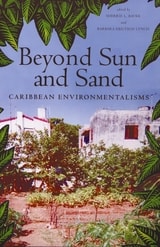
Beyond Sun and Sand
Caribbean EnvironmentalismsEdited by Sherrie L. Baver and Barbara Deutsch Lynch
Rutgers University Press, 2006
In both versions, the image of the exotic landscape overshadows the rich island cultures that are both linguistically and politically diverse, but trapped in a global economy that offers few options for development. Popular depictions also overlook the reality that the region is fraught with environmental problems, including water and air pollution, solid waste mismanagement, destruction of ecosystems, deforestation, and the transition from agriculture to ranching.
Bringing together ten essays by social scientists and activists, Beyond Sun and Sand provides the most comprehensive exploration to date of the range of environmental issues facing the region and the social movements that have developed to deal with them. The authors consider the role that global and regional political economies play in this process and provide valuable insight into Caribbean environmentalism. Many of the essays by prominent Caribbean analysts are made available for the first time in English.
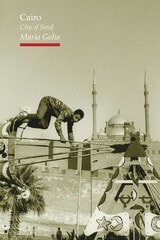
Cairo
City of SandMaria Golia
Reaktion Books, 2004
Cairo steps inside the interactions between Cairenes, examining the roles of family, tradition and bureaucracy in everyday life. The book explores Cairo's relationship with its "others", from the French and British occupations to modern influences like tourism and consumerism. Cairo also discusses characteristic styles of communication, and linguistic mêmes, including slang, grandiloquence, curses and jokes.
Cairo exists by virtue of these interactions, synergies of necessity, creativity and the presence or absence of power. Cairo: City of Sand reveals a peerless balancing act, and transmits the city's overriding message: the breadth of the human capacity for loss, astonishment and delight.

Courage...Chronicled in the Sand
Sand Tray Therapy Reflections from Teenagers and Young Adults Facing Cancer and Blood DisordersJennifer Gretzema
Michigan Publishing Services, 2017
The sand trays and stories in this book were created by patients and families living with Cancer and Blood Disorders. Their expressions, created in the sand and conveyed through the written word, provide insight into their world. Sand tray therapy provides a sacred space to process experiences using symbols instead of language.
This collection of photos and personal stories was compiled so that other patients, their families, and their friends can share the authors’ journeys.
Empire of Sand
The Seri Indians and the Struggle for Spanish Sonora, 1645–1803Compiled and edited by Thomas E. Sheridan
University of Arizona Press, 1999
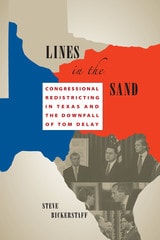
Lines in the Sand
Congressional Redistricting in Texas and the Downfall of Tom DeLayBy Steve Bickerstaff
University of Texas Press, 2007
The events of 2003 in Texas were important to the political history of this country. Congressman Tom DeLay led a Republican effort to gerrymander the state's thirty-two congressional districts to defeat all ten of the Anglo Democratic incumbents and to elect more Republicans; Democratic state lawmakers fled the state in an effort to defeat the plan. The Lone Star State uproar attracted attention worldwide. The Republicans won this showdown, gaining six additional seats from Texas and protecting the one endangered Republican incumbent. Some of the methods used by DeLay to achieve this result, however, led to his criminal indictment and ultimately to his downfall.
With its eye-opening research, readable style, and insightful commentary, Lines in the Sand provides a front-line account of what happened in 2003, often through the personal stories of members of both parties and of the minority activist groups caught in a political vortex. Law professor Steve Bickerstaff provides much-needed historical perspective and also probes the aftermath of the 2003 redistricting, including the criminal prosecutions of DeLay and his associates and the events that led to DeLay's eventual resignation from the U.S. House of Representatives. As a result, Bickerstaff graphically shows a dark underside of American politics—the ruthless use of public institutional power for partisan gain.
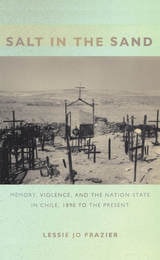
Salt in the Sand
Memory, Violence, and the Nation-State in Chile, 1890 to the PresentLessie Jo Frazier
Duke University Press, 2007
Analyzing multiple memories of state violence, Frazier innovatively shapes social and cultural theory to interpret a range of sources, including local and national government archives, personal papers, popular literature and music, interviews, architectural and ceremonial commemorations, and her ethnographic observations of civic associations, women's and environmental groups, and human rights organizations. A masterful integration of extensive empirical research with sophisticated theoretical analysis, Salt in the Sand is a significant contribution to interdisciplinary scholarship on human rights, democratization, state formation, and national trauma and reconciliation.
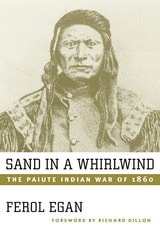
Sand In a Whirlwind, 30th Anniversary Edition
The Paiute Indian War of 1860Ferol Egan
University of Nevada Press, 1985
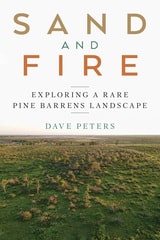
Sand and Fire
Exploring a Rare Pine Barrens LandscapeDave Peters
Wisconsin Historical Society Press, 2023
While many people are familiar with the federally protected St. Croix and Namekagon Rivers of northwestern Wisconsin, few know about the Namekagon Barrens, a rare pine barrens landscape within a few miles of their confluence. A tiny remnant of the millions of barrens acres that once covered the region, the Namekagon Barrens Wildlife Area lies in the heart of the state’s Northwest Sands, a band of pine and oak stretching from Bayfield on Lake Superior to St. Croix Falls on the Wisconsin–Minnesota border. Unfathomable amounts of glacial sand and repeated fires over thousands of years shaped a land of scrub oak and jack pine, blueberries and sweet fern, creating an ideal habitat for wolves and sharp-tailed grouse.
Just as compelling is the land’s rich human history, from Paleo-Indian hunters to Ojibwe berry pickers, loggers to early road builders, and immigrants whose farming efforts failed to the wildlife habitat specialists who manage it today. The book, told in memoir style and featuring color photographs by the author, sets the land’s unusual natural history as the backdrop for a multilayered story about the impact of people on this vulnerable landscape.
Silver winner of the 2023 Midwest Book Award for History
"Peters invites his readers on a journey across time and space, to the glacial formation of the Namekagon Barrens into the present. . . . The book is replete with beautiful photographs, useful maps, and a number of other images that seem to appear on nearly every other page. This book should appeal to a wide public readership while at the same time being a useful primer for academics and researchers."
—Hayden L. Nelson, Environmental History
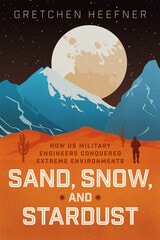
Sand, Snow, and Stardust
How US Military Engineers Conquered Extreme EnvironmentsGretchen Heefner
University of Chicago Press, 2025
Deserts, the Arctic, outer space—these extreme environments are often seen as inhospitable places at the edges of our maps. But from the 1940s through the 1960s, spurred by the diverse and unfamiliar regions the US military had navigated during World War II, the United States defense establishment took a keen interest in these places, dispatching troops to the Aleutian Islands, North Africa, the South Pacific, and beyond. To preserve the country’s status as a superpower after the war, to pave runways and build bridges, engineers had to understand and then conquer dunes, permafrost, and even the surface of the moon.
Sand, Snow, and Stardust explores how the US military generated a new understanding of these environments and attempted to master them, intending to cement America’s planetary power. Operating in these regions depended as much on scientific and cultural knowledge as on military expertise and technology. From General George S. Patton learning the hard way that the desert is not always hot, to the challenges of constructing a scientific research base under the Arctic ice, to the sheer implausibility of modeling Martian environments on Earth, Gretchen Heefner takes us on a wry expedition into the extremes and introduces us to the people who have shaped our insight into these extraordinary environments. Even decades after the first manned space flight, plans for human space exploration and extraplanetary colonization are still based on what we know about stark habitats on Earth.
An entertaining survey of the relationship between environmental history and military might, Sand, Snow, and Stardust also serves as a warning about the further transformation of the planet—whether through desertification, melting ice caps, or attempts to escape it entirely.

Sand, Wind, and War
Memoirs of a Desert ExplorerRalph A. Bagnold
University of Arizona Press, 1990
Ralph Alger Bagnold was born in 1896 into a military family and educated as an engineer. Posted to Egypt in 1926, he was one of a group of officers who adapted Model T Fords to desert travel and in 1932 made the first east-west crossing—6,000 miles—of the Libyan desert. Bagnold established such a name for himself that in World War II he was again posted to Egypt where he founded and trained the Long Range Desert Group that was to confound the German and Italian armies.
Bagnold’s fascination with the desert included curiosity over the formation of dunes, and beginning in 1935 he conducted wind tunnel experiments with sand that led to the book The Physics of Blown Sand and Desert Dunes. Eventually, he was to see his findings called on by NASA to interpret data on the sands of Mars. He devoted subsequent research to particle flow in fluids, and also served as a consultant to Middle Eastern governments concerned with the interference of sand flow in oil drilling.
Sand, Wind, and War is the life story of a man who not only helped shape events in one part of the world but also contributed to our understanding of it. It is a significant benchmark not only in the history of science, but also in the annals of adventure.

Serpents in the Sand
Essays in the Nonlinear Nature of Politics and Human DestinyCourtney Brown
University of Michigan Press, 1995

The North Carolina Shore and Its Barrier Islands
Restless Ribbons of SandOrrin H. Pilkey, William J. Neal, Stanley R. Riggs, Craig A. Webb, David M. Bush, Deborah F. Pilkey, Jane Bullock, and Brian A. Cowan
Duke University Press, 1998
Evidence that the North Carolina shore is changing is never hard to find, but recently the devastation wrought by Hurricane Fran and the perilous situation of the historic lighthouse at Cape Hatteras have reminded all concerned of the fragility of this coast. Arguing for a policy of intelligent development, one in which residential and commercial structures meet rather than confront the changing nature of the shore, the authors have included practical information on hazards of many kinds—storms, tides, floods, erosion, island migration, and earthquakes. Diagrams and photographs clearly illustrate coastal processes and aid in understanding the impact of hurricanes and northeasters, wave and current dynamics, as well as pollution and other environmental destruction due to overdevelopment. A chapter on estuaries provides related information on the shores of back barrier areas that are growing in popularity for recreational residences. Risk maps focus on the natural hazards of each island and together with construction guidelines provide a basis for informed island management. Lastly, the dynamics of coastal politics and management are reviewed through an analysis of the controversies over the decision to move the Cape Hatteras lighthouse and a proposed effort to stabilize Oregon Inlet.
From the natural and historic perspective of the opening chapters to the regional discussions of individual barrier islands, this book is both a primer on coastal processes for the first time visitor as well as a guide to hazard identification for property owners.
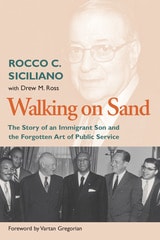
Walking On Sand
The Story of an Immigrant Son and the Forgotten Art of Public ServiceRocco C Siciliano
University of Utah Press, 2004
Rocco C. Siciliano broke new ground as the first Italian-American to serve in the White House as an assistant to the president, Dwight D. Eisenhower. At 31, "Ike’s Youngest" attained a prominence not suggested in his humble beginnings in Salt Lake City, Utah. But his upbringing in the Mormon-dominated community, where he balanced the heritage of his striving immigrant parents with his own aspirations for success, prepared him for a wide variety of service. This service includes leading a special weapons platoon in the 10th Mountain Division in World War II, bringing Martin Luther King Jr. to meet with President Eisenhower, and becoming a recognized business leader in California.
Siciliano used his expertise in labor, personnel management, and business to contribute substantively to the J. Paul Getty Center, the Los Angeles Philharmonic Association, the Committee for Economic Development, and the "Volcker" Commission on Public Service, among others.
The variety of Siciliano’s experiences reinvigorates our understanding of the forgotten art of public service. Walking on Sand emphasizes the role that public service can play for corporations, communities, states, and the nation. This story is a gift from the Greatest Generation to the many people who serve America today and will serve her tomorrow.
Wonders of Sand and Stone
A History of Utah's National Parks and MonumentsFrederick H. Swanson
University of Utah Press, 2020
Drawing on extensive historical research, Swanson presents little-known accounts of people who saw in these sculptured landscapes something worth protecting. Readers are introduced to the region’s early explorers, scientists, artists, and travelers as well as the local residents and tourism promoters who worked with the National Park Service to build the system of parks and monuments we know today, when Utah’s national parks and monuments face multiple challenges from increased human use and from development outside their borders. As scientists continue to uncover the astonishing diversity of life in these desert and mountain landscapes, and archaeologists and Native Americans document their rich cultural resources, the management of these federal lands remains critically important. Swanson provides us with a detailed and timely background to advance and inform discussions about what form that management should take.