Results by title

5 books match the query 'Sand dunes'

cover of Borne of the Wind: Michigan Sand Dunes

Borne of the Wind

Michigan Sand Dunes

Dennis A. Albert

University of Michigan Press, 2006

Sand dunes are among the most rugged and beautiful natural wonders of Michigan's shorelines. These sandy edifices-at once substantial and ephemeral-are the most extensive freshwater dunes in the world, so immense they are visible from outer space. The coastal dunes are also extraordinarily fertile, supporting a multitude of plants and animals.

Borne of the Wind describes the environmental factors necessary for dune creation in an easy-to-understand format, introducing readers to the rich ecology of Michigan's dunes. Each of the distinct types of dunes encountered along the Great Lakes shoreline is explained and illustrated with color photographs and line drawings, while color photographs of the plants and animals found in duneland areas complement the story of these fragile, ever-changing landscapes.

For scholars and enthusiasts alike, Borne of the Wind provides a comprehensive and colorful introduction to one of our finest yet least-understood natural features.

[more]
cover of Dune Country: A Naturalist's Look at the Plant Life of Southwestern Sand Dunes

Dune Country

A Naturalist's Look at the Plant Life of Southwestern Sand Dunes

Janice Emily Bowers

University of Arizona Press, 1998
Janice Emily Bowers takes readers from New Mexico’s White Sands to Utah’s Coral Pink Dunes to the Death Valley dunes of California and beyond. Beautifully written and illustrated, Dune Country is a perfect introduction to the fragile ecosystems of sand dunes.
[more]
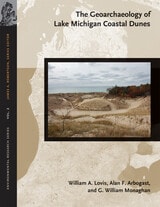
cover of The Geoarchaeology of Lake Michigan Coastal Dunes

The Geoarchaeology of Lake Michigan Coastal Dunes

William A. Lovis, Alan F. Arbogast, and G. William Monaghan

Michigan State University Press, 2012

Complex sets of environmental factors have interacted over the past 5,000 years to affect how changes in climate, temperature, relative precipitation, and the levels of Lake Michigan influence the preservation of archaeological sites in coastal sand dunes along Lake Michigan. As a collaboration between earth scientists, archaeologists, and geoarchaeologists, this study draws on a wealth of research and multidisciplinary insights to explore the conditions necessary to safeguard ancient human settlements in these landscapes. A variety of contemporary and innovative techniques, including numerous dating methods and approaches, were employed to determine when and for how long sand dunes were active and when and for how long archaeological sites were occupied. Knowledge of dune processes and settlement patterns not only affects archaeological interpretations, but it is also consummately important to land planners responsible for managing heritage archaeological sites in the Lake Michigan coastal zone.

[more]
cover of The Salt House: A Summer on the Dunes of Cape Cod

The Salt House

A Summer on the Dunes of Cape Cod

Cynthia Huntington

Dartmouth College Press, 2003
The Salt House is a beautifully observed and written memoir of a long summer's stay on the back shore of Cape Cod. Each chapter is like a prose poem, shedding increasing light on the challenge of finding "home" without the illusion of permanence, a quest based not on ownership but on affinity and familiarity with an area and its people. Cynthia Huntington expands her theme through images of the landscape, the shack, the new marriage. The shack, named "Euphoria," is built as a house set on stilts above the sand, to take the wind under it. Only a partial shelter, it is inhabited for only one season a year, yet it endures. The outer cape has the feel of a place for migrants and drifters -- for birds and other wildlife, and for people such as artists, fishermen, and coast guardsmen. A place where "year-round" often means several addresses. Similarly, her narrative describes improvised, fragile beginnings: a new marriage, learning to be at home in the world, becoming intimate with the natural world, without the necessity of settling down. The Salt House shares a world that is less natural history or memoir than it is neighborhood exploration -- the process of learning a place and becoming native to it.
[more]
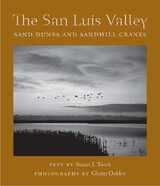
cover of The San Luis Valley: Sand Dunes and Sandhill Cranes

The San Luis Valley

Sand Dunes and Sandhill Cranes

Text by Susan J. Tweit; Photographs by Glenn Oakley

University of Arizona Press, 2005

It is a high valley edged by serrated peaks, a remote expanse the size of Connecticut lying, as if forgotten, between two mountain ranges. Here, North America’s tallest sand dunes blow against glacier-gouged summits, the Rio Grande begins its long journey from snowflake to saltwater, and vast reaches of desert scrub hide verdant pocket wetlands. Colorado’s San Luis Valley is not a place for the timid. Sizzling hot in summer, frigid cold in winter, this huge landscape is humbling in its openness, a place defined by the rhythms of nature—and by the thrust and parry of male courting female in the ritual dance of sandhill cranes. These majestic birds arrive by the thousands twice a year to feed, rest, and socialize in the valley’s wetlands—invisible except from the air—and their cries temper the constant wind. Susan Tweit lives in the high desert of southern Colorado not far from the valley’s dunes and wetlands. With the precision of a scientist and the passion of a poet, she guides readers through this land of sand dunes and sandhill cranes, describing its natural features and tracing its human history from buffalo hunters and conquistadors to Hispanic farming communities and UFO observatories. And in stunning images, photographer Glenn Oakley brings his intimate feel for light and landscape to portraying not only the subtle beauty of this high-desert sanctuary but also the grandeur of the cranes in flight. As an intimate look at Great Sand Dunes National Park and Preserve and the San Luis Valley, this book reveals a desert place as seductive and sobering as existence itself.
[more]