Results by title
7 books match the query 'Sandburg, Carl'
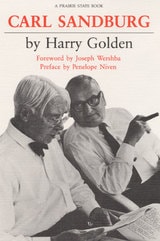
CARL SANDBURG
Harry Golden
University of Illinois Press, 1988
mutual. Toward the end of his life, Sandburg shared his papers, letters,
photographs, and memories with Golden. Combining these materials with his
own recollections, Golden reconstructs the life of his closest friend. His
anecdotal account is both an engaging portrait of Sandburg and a tribute
to their friendship. Generations of Sandburg's devoted readers will want
to own this very personal biography.

Carl Sandburg - American Writers 97
University of Minnesota Pamphlets on American WritersGay Wilson Allen
University of Minnesota Press, 1972
Carl Sandburg - American Writers 97 was first published in 1972. Minnesota Archive Editions uses digital technology to make long-unavailable books once again accessible, and are published unaltered from the original University of Minnesota Press editions.

Chicago Poems
Carl Sandburg
University of Illinois Press, 1992
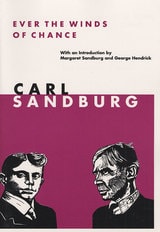
Ever the Winds of Chance
POEMSCarl Sandburg
University of Illinois Press, 1983
Ever the Winds of Chance opens in 1898 when the twenty-year-old Sandburg, recently returned from the Spanish-American war, enrolls at Lombard College in his native Galesburg, Illinois. Sandburg writes about his job at the fire station; his teachers, inspired or otherwise; his classmates and their camaraderie; his observations on great literary works and writers; and his own writings for the school newspaper, literary review, and yearbook and for the Galesburg Mail. But he also includes much about life between school years and after college, recounting his various brief careers as a fireman, salesman of stereoscopic views, advertising copywriter, vagabond, "jailbird," and budding poet and socialist. Together these reminiscences provide an intimate look at the formative years of a preeminent figure in American letters.
Fables, Foibles, and Foobles
Carl Sandburg
University of Illinois Press, 1988
Sandburg often incorporated proverbs, riddles, aphorisms, and vernacular wisdom in lectures, poetry, children’s stories, and in his novel Remembrance Rock. Believing that silliness and fun helped preserve sanity and balance, he put together a collection of fanciful anecdotes - alive with alliteration - for his own amusement. Now, more than twenty years after his death, the publication of Fables, Foibles, and Foobles truly reveals, for perhaps the first time, the playful spirit of this great American poet.
George Hendrick has compiled the best of these never-before-published nonsensical pieces, which include Flies, Fleas, Flinyons, Flicks, Flooches, Flacks, Flatches, and assorted F-friends deep in dialogue about books and reading; the fascinating worlds of the curious hoomadooms, hongdorshes, and onkadonks; fables to rival Thurber; jokes about every conceivable type of nut; and cameo appearances by Hank the Honk and Flitty the Wid, among others. Robert Harvey’s whimsical drawings, scattered throughout the book, illuminate this charming cast of characters.

The Poet and Dream Girl
The Love Letters of Lilian Steichen and Carl SandburgEdited by Margaret Sandburg
University of Illinois Press, 1987
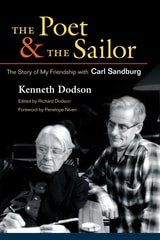
The Poet and the Sailor
The Story of My Friendship with Carl SandburgKenneth Dodson. Edited by Richard Dodson. Foreword by Penelope Niven
University of Illinois Press, 2006
Carl Sandburg first encountered Kenneth Dodson through a letter written at sea during World War II. Though Dodson wrote the letter to his wife, Letha, Sandburg read it in tears and told her, "I've got to meet this man." Composed primarily of their correspondence that continued until Sandburg's death in 1967, The Poet and the Sailor is a chronicle of the deep friendship that followed. Ranging over anything they found important, from writing to health and humor, the letters are arranged by Richard Dodson and are accompanied by a foreword from Sandburg's noted biographer, Penelope Niven.