Results by title
4 books match the query 'Sartorius, Joachim'
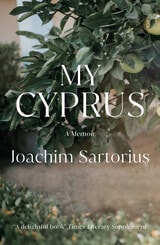
My Cyprus
A MemoirJoachim Sartorius
Haus Publishing, 2021
A sensory and poetic guide to the island of Cyprus.
The island of Cyprus has been a site of global history and conquest, and its strategic position means it has been coveted by one foreign power after another. The Phoenicians, Greeks, Romans, Byzantines, Venetians, Genoese, Ottomans, and British have all left their mark. Along with the Roman and Byzantine ruins of Salamis, the island holds impressive monuments dating from the Frankish and Venetian times: the Abbey of Bellapais, the fortified harbor of Kyrenia, and the magnificent cathedrals of Nicosia and Famagusta, the setting for Shakespeare’s Othello.
Having lived in Cyprus for three years, Joachim Sartorius returns to the island’s cultures and legends and brings to life the colors and lights of the Levant area of the Middle East. He sifts through the sediments of the island’s history, including its division after the Turkish invasion of 1974 and the difficulties that followed. Rather than focusing solely on historical or political factors, this book is the work of a poet, who, with the help of both Greek and Turkish Cypriot friends, tries to understand this unique place.
[more]
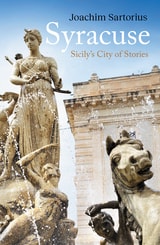
Syracuse
Sicily's City of StoriesJoachim Sartorius
Haus Publishing, 2026
A poetic and historical travelogue of Syracuse, Sicily.
Twenty-five hundred years ago, the city of Syracuse on the eastern coast of Sicily was, for the Ancient Greeks, one of the centers of the classical world. It was in Syracuse that Aeschylus premiered his plays, and to Syracuse that Plato would visit from Athens, where the tyrant Dionysius bought Euripides's lyre at auction, and the languishing nymph Arethusa hid in the papyrus grove.
Living in the city, the poet Joachim Sartorius learned that this history and myth are still present today. At Sartorius's side, we walk with nymphs and cyclops through the old town of Ortigia and meet the people of the city: its notables, police officers, artists, and barbers.
Unraveling the depths of Sicilian history and bringing the juxtaposition, superimposition, and commingling of cultures, styles, and attitudes to life, Sartorius shows a city of ancient luminosity, bringing us, through the baroque, to the contemporary world.
[more]
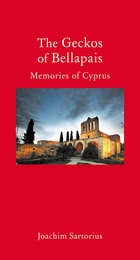
The Geckos of Bellapais
Memories of CyprusJoachim Sartorius
Haus Publishing, 2013
The history of Cyprus offers a reflection of larger world history. Coveted by a succession of foreign powers, it has been repeatedly occupied: the Phoenicians, Greeks, Romans, Byzantines, crusaders, Venetians, Genoese, Ottomans, and British have all left their mark on this Mediterranean island. Alongside the Roman and early Byzantine ruins of Salamis, other impressive monuments date from the Frankish and Venetian times, including the Abbey of Bellapais; the fortified harbor of Kyrenia; the magnificent cathedrals of Nicosia; and Famagusta, the setting for Shakespeare’s Othello.
In The Geckos of Bellapais, Joachim Sartorius shares the cultures and legends, colors and lights of the Levant. He explores the island’s history—including its division after the Turkish invasion of 1974 and the difficulties that followed. A revealing exploration of Cyprus after the Turkish partition and an evocative account of one poet’s life on one of the most beautiful islands in the Mediterranean, this book belongs among the world’s best travel writing.
In The Geckos of Bellapais, Joachim Sartorius shares the cultures and legends, colors and lights of the Levant. He explores the island’s history—including its division after the Turkish invasion of 1974 and the difficulties that followed. A revealing exploration of Cyprus after the Turkish partition and an evocative account of one poet’s life on one of the most beautiful islands in the Mediterranean, this book belongs among the world’s best travel writing.
[more]
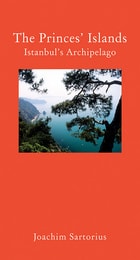
The Princes' Islands
Istanbul's ArchipelagoJoachim Sartorius
Haus Publishing, 2023
Off the coast of Istanbul, in the Marmara Sea, lie the Princes Islands, an archipelago of unusual natural beauty, which has long been considered the maritime suburb of the imperial capital on the Bosporus and effectively shaped by its manifold history. The poet Joachim Sartorius draws a loving portrait of the landscape and the light, the political observer Sartorius describes the microcosm, which was always a reflection of Istanbul-Constantinople-Byzantium, while the novelist Sartorius introduces us to the characters, who inhabit this time capsule.
[more]