Results by title
3 books match the query 'Sayings'
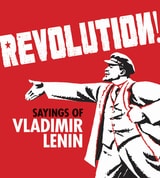
Revolution!
Sayings of Vladimir LeninEdited by the Bodleian Library
Bodleian Library Publishing, 2017
Revolution! Sayings of Vladimir Lenin is a compilation of Lenin’s most famous sayings, taken from speeches, lectures, letters, and recorded conversations. Together, they show his views on topics ranging from democracy to terrorism, from religion to Stalin’s untrustworthiness, and from education to music. Accompanied by a range of striking images, including contemporary propaganda posters, photographs, portraits, illustrations, and Soviet art, these aphoristic proclamations offer an insight into the atmosphere of pre- and post-revolutionary Russia and the mind of one of the twentieth century’s most defining political figures.
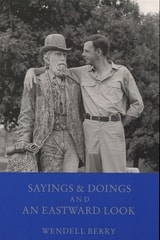
Sayings and Doings and An Eastward Look
Wendell Berry
Ohio University Press, 1990
Published in 1990 by Gnomon Press
This volume combines two small books of poetry by Wendell Berry, both with expanded texts. In Sayings and Doings the inner lives of the country people Berry knows so well surface in sayings, stories, reminiscences, and a number of jocular dialogues. Many are expressions we hear and often mean to remember but, when we start to retell them, find that we have forgotten the exact wording, without which they lose their effectiveness. Here the poet remembers well. One can hear as one reads, and the rural speech has been whittled so that not a syllable is wasted.
The condensed nature of Sayings and Doings is mirrored in the Asian influence of An Eastward Look, which includes haiku, the journal-like sequence "A Long Journey and a Small Notebook," and the masterful "Chinese Painting Poems."
For those familiar with many other collections of Berry's poems, this volume will acquaint them with other facets of his work, until now too little known.
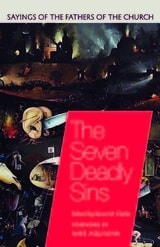
The Seven Deadly Sins
Sayings of the Fathers of the ChurchKevin M. Clarke
Catholic University of America Press, 2018
Sacred Scripture did not neatly list the seven deadly sins, so where did this tradition come from? Unsurprisingly, it can be traced back to the Church Fathers. But were there eight or seven? In a sense, the answer is “both.” The tradition of the capital sins has a rich development in the patristic era, not only in the presentation of the list of vices but in the preaching and teaching of the early shepherds of the Church. So how do the capital sins spawn other vices in the soul? How does one cultivate the virtues that heal the soul from those vices? How are gluttony and lust related? Is sadness really a vice? How is vainglory different from pride? What role does almsgiving have in soothing the passion of anger? The Fathers of the Church answer these questions and more in this volume.
The capital vices are the gateway drugs to countless sins. The path of the book descends through the vices, culminating with their queen ruler, pride. The words of the Fathers will assist the reader in being more realistic about the attacks upon the soul. The text should also be edifying and medicinal. Since each chapter begins with vice and ends with virtue, one’s path through the chapters represents a sort of ascent out of vice and into the freedom of the virtues. The text gives special attention throughout to the thought of Augustine of Hippo, Evagrius of Pontus, John Cassian, Gregory the Great, and Maximus the Confessor.