Results by title
34 books match the query 'Scandinavia'

Consensual Policy-making in the Nordic World
Peter Munk Christiansen
University of Wisconsin Press, 2023
The preconditions for these policies are strong civil societies, that is, strong capacities for collective mobilization and collective action among groups, relatively strong unitary states, and high levels of generalized trust. The institutional apparatus of these consensual policies has been labeled corporatism. Scandinavian corporatism has implied consent to a norm of affected interests. Groups that are supposedly affected by state policies have access to the processes leading up to political decision-making and are involved in the implementation of policies. This access often has public commissions or committees charged with preparing political decisions and delivering advice, as well as policy implementation committees.
Corporatist and consensual policymaking come at a price. The exchange between interest groups (in pursuit of policy influence) and state actors (in pursuit of information and political support from groups) tends to be time-consuming and confined to solutions that are accepted by all actors. Corporatist policies are consequently not very conducive to more radical reforms. After the heyday of corporatist policymaking in the 1970s, all the Scandinavian countries have loosened their corporatist structures to pave the way for reforms.
Crime and Justice, Volume 40
Crime and Justice in ScandinaviaEdited by Michael Tonry and Tapio Lappi-Seppälä
University of Chicago Press Journals, 2012
Since 1979 the Crime and Justice series has presented a review of the latest international research, providing expertise to enhance the work of sociologists, psychologists, criminal lawyers, justice scholars, and political scientists. The series explores a full range of issues concerning crime, its causes, and its cure.
Volume 40, Crime and Justice in Scandinavia, offers the most comprehensive and authoritative look ever available at criminal justice policies, practices, and research in the Nordic countries. Topics range from the history of violence through juvenile delinquency, juvenile justice, and sentencing to controversial contemporary policies on prostitution, victims, and organized crime. Contributors to this volume include Jon-Gunnar Bernburg, Ville Hinkkanen, Cecilie Høigård, Hanns von Hofer, Charlotta Holmström, Janne Kivivuori, Lars Korsell, Tapio Lappi-Seppälä, Paul Larsson, Martti Lehti, Torkild Hovde Lyngstad, Sven-Axel Månsson, Anita Rönneling, Lise-Lotte Rytterbro, Torbjørn Skardhamar, May-Len Skilbrei, and Henrik Tham.

Economic Performance in the Nordic World
Torben M. Andersen
University of Wisconsin Press, 2021
Economist Torben M. Andersen shows how the Nordic model rests on two pillars: the social safety net, which offers income compensation to the majority of those unable to support themselves, and the provision of services like education, childcare, and healthcare to all. The Nordic model can be characterized as one of employment, since its financial viability rests on a high labor participation rate with few working poor.
Andersen lays out the structure of the model and highlights factors important for understanding its economic performance. He then looks into specific policy areas based on Denmark's experiences regarding labor market policies (flexicurity), pension systems, and preparation for an aging population; and addresses the challenges arising from new technologies and globalization.

Energy in the Nordic World
Mogens Rüdiger and Anna Åberg
University of Wisconsin Press, 2023
Norway and Sweden are among the biggest consumers of energy per capita, yet the Nordic nations also lead the world in clean power production and have ambitious goals of decarbonizing their energy systems by 2050. Denmark, Norway, Sweden, Finland, and Iceland vary drastically in geography and the availability of natural resources, but each consistently generates electricity from renewable sources at multiple times the average rate of other high-income countries.
Mogens Rüdiger and Anna Åberg present a concise and timely history of energy production, trade, and consumption in Norden, starting with a review of the regional energy mix—from wind, solar, tide and wave, geothermal, biomass, nuclear, coal, and gas sources. Brief chapters describe the diversity of Nordic energy markets, assess how far the green transition has come, and explore what comes next as global crises, domestic politics, and technological developments present novel challenges and opportunities. Energy infrastructures and economic activities, Rüdiger and Åberg argue, serve as unique cultural focal points in the region. The coauthors summarize the national policy frameworks for the sector as well as the key energy and economic indicators used in infrastructure planning, regulation, and the opening of the electricity and gas markets to free competition.
Energy in the Nordic World is the essential primer to the power markets at the heart of Europe’s energy transition.

Engaging with Reality
Documentary and GlobalizationIb Bondebjerg
Intellect Books, 2014
Engaging with Reality is framed by theories of globalization and delves into the development of a new global media culture. It also deals with theories of documentary genres and their social and cultural functions. It discusses cosmopolitanism and the role and forms of documentary in a new digital and global media culture. It will be essential reading for those looking to better understand documentary and the new transnational approach to modern media culture.
Equality in the Nordic World
Carsten Jensen
University of Wisconsin Press, 2021
The four types of equality have their origins in unique political compromises made in the twentieth century. The resulting social market economies of these countries affect their growth and levels of equality even today.

Essays on Scandinavian History
H. Arnold Barton
Southern Illinois University Press, 2008
Essays on Scandinavian History examines important aspects of the history of Sweden and its Nordic neighbors between the later eighteenth and the beginning of the twenty-first century. Historian H. Arnold Barton has selected thirteen of the numerous essays he has published over the past forty years on the history of Scandinavia.
This is a companion volume to Barton's The Old Country and the New, an essay collection on Swedish emigration and the Swedes in America. Included here are studies of the special significance of the eighteenth century in Sweden's history and culture, the relationship of King Gustaf III to the eighteenth-century Enlightenment, the impact of the American Revolution in Sweden, and Gustaf III's ambitions in the East Baltic region. Also detailed are the king's early reaction to the French Revolution and his efforts to organize a European coalition to crush it, a reassessment of the reign and internal reforms of Gustaf IV Adolf, and the Swedish succession crises of 1809 and 1810.
In addition, Barton examines the increasing tension between the Pan-Scandinavian movement and the rising Finnish national movement. He deals with the historians of the Danish Agrarian Reforms of 1784-1814, parallel developments in Finland and Norway between 1808 and 1917, the discovery of Norway abroad, Swedish national romanticism, and Sweden's transition from a warfare state to a welfare state, now exemplifying the rational and humane ideals of the twentieth century.
Essays on Scandinavian History highlights important topics in the history of the Scandinavian region, which has remained all too little known outside the Nordic lands themselves, while also offering broader perspectives on Europe since the mid-eighteenth century. Twelve keyed-to-text illustrations, a bibliography of Barton's publications on Scandinavian history, essay endnotes, and an index augment this work.
Eugenics and the Welfare State
Norway, Sweden, Denmark, and FinlandGunnar Broberg
Michigan State University Press, 2005
In 1997 Eugenics and the Welfare State caused an uproar with international repercussions. This edition contains a new introduction by Broberg and Roll-Hansen, addressing events that occurred following the original publication. The four essays in this book stand as a chilling indictment of mass sterilization practices, not only in Scandinavia but in other European countries and the United States--eugenics practices that remained largely hidden from the public view until recently. Eugenics and the Welfare State also provides an in-depth, critical examination of the history, politics, science, and economics that led to mass sterilization programs in Norway, Sweden, Denmark, and Finland; programs put in place for the "betterment of society" and based largely on the "junk science" of eugenics that was popular before the rise of Nazism in Germany. When the results of Broberg's and Roll-Hansen's book were widely publicized in August 1997, the London Observer reported, "Yesterday Margot Wallstrom, the Swedish Minister for Social Policy, issued a belated reaction to the revelations. She said: 'What went on is barbaric and a national disgrace.' She pledged to create a law ensuring that involuntary sterilisation would never again be used in Sweden, and promised compensation to victims." Ultimately, the Swedish government not only apologized to the many thousands who had been sterilized without their knowledge or against their will, but also put in place a program for the payment of reparations to these unfortunate victims.
Happiness in the Nordic World
Christian Bjørnskov
University of Wisconsin Press, 2021
Many experts attribute the region's high levels of happiness to factors such as greater relative national wealth and well-functioning institutions. Yet, a number of other countries in Europe and parts of Asia share those qualities and rank far lower in life satisfaction. Others credit the region's high levels of happiness to its welfare state model, but these have changed considerably over time—and Iceland does not share this feature.
Instead, economist Christian Bjørnskov argues that the most important factor to come out of international comparisons is the importance of social trust—the ability to trust other people one does not know personally. The populations in three of the five countries are also characterized by a very strong sense of personal freedom. These two key factors contribute to a fuller and richer life. Bjørnskov ends by discussing to what extent these factors can be exported to other parts of the world.
History Of Scandinavia
Norway, Sweden, Denmark, Finland, And IcelandT.K. Derry
University of Minnesota Press, 2000
This concise account traces the history of the Scandinavian countries from earliest times to the present, emphasizing common features in their heritage and in their contribution to the modern world. The author’s aim is to describe each country’s history, traditions, and way of life and to examine the political development of the five nations in the context of the whole Nordic region.

Homeward To Zion
The Mormon Migration from ScandinaviaWilliam Mulder
University of Minnesota Press, 2000
The classic history of this emblematic moment in U.S. immigration.
In the late nineteenth century, thirty thousand Mormons from Norway, Sweden, Denmark, and Finland immigrated to Utah, dissatisfied with conditions in their homelands. As their countrymen were farming rich fields in other parts of the United States, Scandinavian Mormons were making their way to Salt Lake City. Homeward to Zion tracks this movement from northern Europe to the western desert, examining the Mormon recruiting efforts in Scandinavia as well as the arduous journey across the Great Plains. Mulder draws extensively from personal narratives of these immigrants to relate their pioneering experience and their role in the history of Scandinavian migration and of the settlement of the American West.
Ice Floe II
International Poetry of the Far NorthEdited by Shannon Gramse and Sarah Kirk
University of Alaska Press, 2011
The long-awaited second volume of the newly revived Ice Floe series, Ice Floe II features new and exciting works of poetry from a vibrant and diverse group of writers from Alaska, Canada, Russia, Sweden, Iceland, and beyond. All work is presented here in both its original language and in English translation. With contributors that include former Alaska poet laureate Tom Sexton, Riina Katajavuori, Yuri Vaella, Gunnar Randversson, and dozens of other established and emerging poets, this wonderful collection of voices from the northern latitudes will be a great read for all lovers of poetry and international literature.
Ice Floe
New & Selected PoemsEdited by Shannon Gramse and Sarah Kirk
University of Alaska Press, 2010
Ice Floe, the celebrated and award-winning journal of circumpolar poetry, is here reborn as an annual book series. This first volume features the best of the journal's first seven years, along with evocative new poetry from Alaska, Canada, Iceland, Norway, Sweden, Finland, and Russia. All work is presented in both its original language and in English translation. With contributors including former Alaska poet laureate John Haines, Gunnar Harding, Robert Bly, Lennart Sjögren, and dozens of other established and emerging poets, this wonderful collection of voices from the northern latitudes is a great read for all lovers of poetry and international literature.
Journalism Re-examined
Digital Challenges and Professional Orientations (Lessons from Northern Europe)Edited by Martin Eide, Helle Sjøvaag, and Leif Ove Larsen
Intellect Books, 2016

Journeys from Scandinavia
Travelogues of Africa, Asia, and South America, 1840—2000Elisabeth Oxfeldt
University of Minnesota Press, 2010

Louis I. Kahn
The Nordic LatitudesPer Olaf Fjeld
University of Arkansas Press, 2019
Kahn’s Nordic and European ties are emphasized in this study that also covers his early childhood in Estonia, his travels, and his relationships with other architects, including the Norwegian architect Arne Korsmo.
The authors have gathered personal reflections, archival material, and other student work to offer insight into the wisdom that Kahn imparted to his students in his famous masterclass. Louis I. Kahn: The Nordic Latitudes addresses Kahn’s legacy both personally and in terms of the profession, documents a research trip the University of Pennsylvania’s Louis I. Kahn Collection, and confronts the affiliation of Kahn’s work with postmodernism.

Making a Green Machine
The Infrastructure of Beverage Container RecyclingJørgensen, Finn Arne
Rutgers University Press, 2011
Medieval Scandinavia
From Conversion to Reformation, circa 800-1500Birgit Sawyer
University of Minnesota Press, 1993

Migration and Multiculturalism in Scandinavia
Edited by Eric Einhorn, Sherrill Harbison, and Markus Huss
University of Wisconsin Press, 2022
Drawing from personal experiences and theoretical perspectives in such varied fields as sociology, political science, literature, and media studies, nineteen scholars assess recent shifts in Scandinavian societies and how they intertwine with broader transformations in Europe and beyond. Chapters explore a variety of topics, including themes of belonging and identity in Norway, the experiences and activism of the Nordic countries’ Indigenous populations, and parallels between the racist far-right resurgence in Sweden and the United States.
Contributors: Ellen A. Ahlness, Julie K. Allen, Grete Brochmann, Eric Einhorn, Sherrill Harbison, Anne Heith, Markus Huss, Peter Leonard, Barbara Mattsson, Kelly McKowen, Andreas Önnerfors, Elisabeth Oxfeldt, Tony Sandset, Carly Elizabeth Schall, Ryan Thomas Skinner, Admir Skodo, Benjamin R. Teitelbaum, Sayaka Osanami Törngren, Ethelene Whitmire
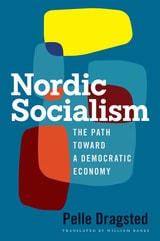
Nordic Socialism
The Path Toward a Democratic EconomyPelle Dragsted, Translated by William Banks
University of Wisconsin Press, 2025
In Dragsted’s analysis, Denmark and the rest of the Nordic countries are already socialist, but only in part. The dangers come (and here many conservative Americans will disagree) from the unhealthy encroachment of capitalism. His provocative argument is that capitalism and socialism are not in fact mutually exclusive, and already Nordic economies are hybrids, a mix of decommodified, democratically governed sectors and undemocratic, privately controlled enterprises. The relevant question is the degree to which one dominates the other. Currently, undemocratic forces are ascendant, but it need not be so. Dragsted offers both his diagnosis and his proposed solution, a comprehensive plan for a gradual (re)democratization of the economy and a move to fully and firmly embrace, and redefine, “Nordic socialism.”

Northern Arcadia
Foreign Travelers in Scandinavia, 1765 - 1815H. Arnold Barton
Southern Illinois University Press, 1998
Northern Arcadia is a comparative study of the accounts of foreign visitors to the Nordic lands during the late eighteenth and early nineteenth centuries.
Before the late eighteenth century, few foreigners ventured as far as Scandinavia. The region seemed a cold hyperborean wilderness and a voyage there a daring adventure. From the mid-1760s on, however, foreigners arrived in the Nordic lands in increasing numbers, leaving numerous accounts that became increasingly popular, satisfying a growing curiosity about regions beyond the traditional grand tour.
The pre-Romantic mood of the period—with its predilection for untamed nature and for peoples uncorrupted by overrefined civilization—further stimulated fascination with the North. European titerati discovered the Nordic sagas, finding them exhilarating, passionate, imaginative, and original. The French Revolution and the ensuing European wars effectively closed off much of the Continent to foreign travel, turning attention to the still neutral northern kingdoms.
Travel literature about Scandinavia thus illuminates the shift in the European intellectual climate from the enlightened rationalism and utilitarianism of the earlier travelers in this period to the pre-Romantic sensibility of those who followed them. In a Europe torn by war and revolution, sensitive souls could find their new Arcadia in the North—at least until the Scandinavian kingdoms themselves became engulfed by the Napoleonic wars after 1805.
The first scholar to examine as a whole the travel literature dealing with Denmark, Schleswig-Holstein, Norway, Sweden, Finland, Iceland, and the Færø Islands, H. Arnold Barton discusses accounts left by both the celebrated and the obscure. Well-known travelers include Vittorio Alfieri, Francisco de Miranda, Mary Wollstonecraft, Thomas Malthus, and Aaron Burr. Literary travelers of the day included Nathanael Wraxall, William Coxe, Charles Gottlob Küttner, Edward Daniel Clarke, and John Carr.
Northern Arcadia brings out contrasts: among the various Nordic lands and regions; among the reactions of travelers of differing nationality; between the earlier as opposed to the later travelers of the time; between native Scandinavian and foreign perceptions of the North; between conditions in Scandinavia and those in other parts of the Western world; between then and now. It incorporates continuity and change, reality and mentality.
Peoplehood in the Nordic World
Ove Korsgaard
University of Wisconsin Press, 2022

Restless Pilgrim
Andrew Jenson's Quest for Latter-day Saint HistoryReid L. Neilson and Scott D. Marianno
University of Illinois Press, 2022
Engaging and informed, Restless Pilgrim is a groundbreaking study of an important figure in Latter-day Saint intellectual life during a transformative era in Church history.
Scandinavia since 1500
Second EditionByron J. Nordstrom
University of Minnesota Press, 2023
An updated edition of the definitive history of Scandinavia over the past five centuries
Despite certain distinctions and differences, the lands of Scandinavia, or Norden—Sweden, Norway, Finland, Iceland, Denmark, and the Faroe Islands—are united by bonds of culture, language, and geography, and by a shared history that comes richly to life in this landmark work. Now in an expanded, updated edition, this authoritative chronicle of five centuries of Scandinavian history incorporates the geopolitical developments and momentous events that have marked the Nordic world in recent decades.
Scandinavia since 1500 situates the region’s political history within the traditional European chronology—in which the long “modern” period is subdivided into the Renaissance, early modern, modern, and contemporary. Within this framework, Byron J. Nordstrom traces the various ways in which economic, social, and cultural ideas and practices have come to Scandinavia from abroad, only to be modified and recast in a uniquely Nordic character. Long-unquestioned national mythologies come under Nordstrom's scrutiny, along with historical blind spots and erasures, as he ranges from canonical figures like Gustavus Adolphus of Sweden and Christian IV of Denmark to the constitutions of the nineteenth and twentieth centuries, the resistance movements in World War II, and the Scandinavian welfare states, literary culture, and modern design. Expanded to include the nature and realities of the increasingly postindustrial economies of the late twentieth and early twenty-first centuries—including environmental concerns, integration with Europe, globalization, and immigration—Scandinavia since 1500 offers a comprehensive yet nuanced portrait of this unique region in all its political, diplomatic, social, economic, and cultural complexity.
Cover alt text: Bold white title and author name across breathtaking snowy landscape of sun-touched cliffs beside a waterway and scattering of homes.

Scandinavian Folk Belief and Legend
Reimund Kvideland
University of Minnesota Press, 1991
An entertaining collection of over 400 folk tales of legends, stories, and magic. Translated from the original Norwegian, Danish, and Swedish, this highly acclaimed work is perfect for bedside or fireside reading.

Standardizing Sex
A History of Trans MedicineKetil Slagstad
University of Chicago Press, 2025
Standardizing Sex traces the emergence of trans medicine in Scandinavia in the twentieth century, exploring the construction and negotiation of medical expertise among medical professionals, patients, and activists in the media and government bureaucracy. The book combines the author’s analysis of medical records and other archival sources with oral history interviews with former patients, activists, doctors, psychologists, and civil servants. Physician-historian Ketil Slagstad uses the Scandinavian story of sex reassignment to anchor not only the role of the state but also bureaucracy and social rights. Scandinavian countries, he shows, played a foundational role in the emergence of trans medicine internationally. As a result, Standardizing Sex tells a transnational history of medicine that sheds light on a set of relations and problems that continue to impact discussions of trans medicine and trans rights around the world.
Slagstad’s sources offer a rare opportunity to explore the emergence of trans medicine in action in the clinic, laboratory, waiting room, and operating room, as well as in the bureaucrat’s office, on the psychologist’s couch, and in the publications and meetings of activist groups. Together, these sources allow for the analysis of the increasingly complex negotiations of nosological criteria, medical knowledge, and medical practices in a formative period for transgender medicine. More generally, the book offers a story about the reshaping of the normal and the pathological in modern societies.

The Great Debate
Nietzsche, Culture, and the Scandinavian Welfare SocietyGeorg Brandes and Harald Høffding
University of Wisconsin Press, 2024
Marking the moment at which the uniquely Nordic concept of social democratic welfare was first contested in the public sphere, this debate provides insights into not only Nietzschean philosophy and its immediate reception but also the foundational concept of modern Scandinavian social, cultural, and political organization. This volume presents, for the first time in any language other than Danish, the debate in its entirety: three essays by Brandes and three by Høffding. A critical introduction by editor and translator William Banks explores the exchange in its context and convincingly argues that the principles contested by the two Danish luminaries still very much resonate in Western society today.

The Languages of Scandinavia
Seven Sisters of the NorthRuth H. Sanders
University of Chicago Press, 2017
While the two linguistic families that comprise Scandinavia’s languages ultimately have differing origins, the Seven Sisters have coexisted side by side for millennia. As Sanders reveals, a crisscrossing of names, territories, and even to some extent language genetics—intimate language contact—has created a body of shared culture, experience, and linguistic influences that is illuminated when the story of these seven languages is told as one. Exploring everything from the famed whalebone Lewis Chessmen of Norse origin to the interactions between the Black Death and the Norwegian language, The Languages of Scandinavia offers profound insight into languages with a cultural impact deep-rooted and far-reaching, from the Icelandic sagas to Swedish writer Stieg Larsson’s internationally popular Millennium trilogy. Sanders’s book is both an accessible work of linguistic scholarship and a fascinating intellectual history of language.

The Madisonian Turn
Political Parties and Parliamentary Democracy in Nordic EuropeTorbjörn Bergman and Kaare Strøm, editors
University of Michigan Press, 2013
"The Madisonian Turn is an outstanding assessment of the functioning of democratic institutions in the Nordic countries. If democracy is in trouble in Scandinavia, then it is surely facing problems everywhere, so the book will be read carefully by those concerned about contemporary governance in all modern democracies."
---Michael Gallagher, Trinity College, Dublin
"This welcome and timely re-evaluation of Nordic politics constitutes a major contribution to comparative government, and is likely to stand as the definitive treatment of politics in the region for many years to come."
---Peter Mair, European University Institute
"This book is unique in its comparative scope and the wealth of information on the state of parliamentary democracy in the Nordic countries. It is particularly useful for the comparativists who do not come from these countries, because the original literature which it covers in detail is often not accessible for the English-speaking audience."
---Hanspeter Kriesi, University of Zurich
"The strength of The Madisonian Turn is to interface detailed empirical evidence on the dynamics of democratic politics in Scandinavia with an elaboration and test of rival theories of change in the politics of postindustrial democracies. This book is an inspiration for students of Northern Europe, but also for scholars of comparative legislatures and political parties more generally."
---Herbert Kitschelt, Duke University
Parliamentary democracy is the most common regime type in the contemporary political world, but the quality of governance depends on effective parliamentary oversight and strong political parties. Denmark, Finland, Iceland, Norway, and Sweden have traditionally been strongholds of parliamentary democracy. In recent years, however, critics have suggested that new challenges such as weakened popular attachment, the advent of cartel parties, the judicialization of politics, and European integration have threatened the institutions of parliamentary democracy in the Nordic region.
This volume examines these claims and their implications. The authors find that the Nordic states have moved away from their previous resemblance to a Westminster model toward a form of parliamentary democracy with more separation-of-powers features---a Madisonian model. These features are evident both in vertical power relations (e.g., relations with the European Union) and horizontal ones (e.g., increasingly independent courts and central banks). Yet these developments are far from uniform and demonstrate that there may be different responses to the political challenges faced by contemporary Western democracies.
Torbjörn Bergman is Professor of Political Science at Umeå University, Sweden.
Kaare Strøm is Professor of Political Science at the University of California, San Diego.
Jacket Credit: Heidi Hobde Dailey
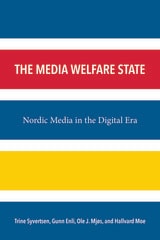
The Media Welfare State
Nordic Media in the Digital EraTrine Syvertsen, Gunn Enli, Ole J. Mjøs, and Hallvard Moe
University of Michigan Press, 2014
The Media Welfare State: Nordic Media in the Digital Era comprehensively addresses the central dynamics of the digitalization of the media industry in the Nordic countries—Sweden, Norway, Denmark, Finland, and Iceland—and the ways media organizations there are transforming to address the new digital environment. Taking a comparative approach, the authors provide an overview of media institutions, content, use, and policy throughout the region, focusing on the impact of information and communication technology/internet and digitalization on the Nordic media sector. Illustrating the shifting media landscape the authors draw on a wide range of cases, including developments in the press, television, the public service media institutions, and telecommunication.
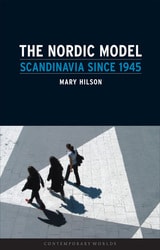
The Nordic Model
Scandinavia since 1945Mary Hilson
Reaktion Books, 2008
Respected Scandinavian historian Mary Hilson surveys the political bureaucracies of the five Nordic countries—Denmark, Finland, Iceland, Norway, and Sweden—and traces their historical influences and the ways they have changed, individually and as a group, over time. The book investigates issues such as economic development, foreign policy, politics, government, and the welfare state, and it also explores prevailing cultural perceptions of Scandinavia in the twentieth century. Hilson then turns to the future of the Nordic region as a unified whole within Europe as well as in the world, and considers the re-emergence of the Baltic Sea as a pivotal region on the global stage.
The Nordic Model offers an incisive assessment of Scandinavia yesterday and today, making this an essential text for students and scholars of political science, European history, and Scandinavian studies.
The Welfare State and Beyond
Success and Problems in ScandinaviaGunnar Heckscher
University of Minnesota Press, 1984
The Welfare State and Beyond was first published in 1984. Minnesota Archive Editions uses digital technology to make long-unavailable books once again accessible, and are published unaltered from the original University of Minnesota Press editions.
The welfare state emerged in a number of industrialized countries after the First World War as a middle ground between capitalism and socialism. The aim of architects of the welfare state was to abolish the injustices and hardships that accompanied capitalism and to do so without wholesale social or economic revolution. Establishment of the welfare state created something close to euphoria among many observers; it was, it seemed, the answer to many, if not all, troubling social questions. But it eventually became obvious that this type of society was not immune to problems.
In The Welfare State and Beyond Gunnar Heckscher examines four Nordic countries—Denmark, Finland, Norway, and Sweden—not to either criticize or defend the welfare state but to shed some light on a number of questions: Has the welfare state achieved what it attempted? Are the results generally held to be satisfactory? What important problems remain unsolved and what types of solutions have been proposed? Although Heckscher has been associated with the Conservative party in Sweden, his objective, clear-eyed analysis cites both the accomplishments of the welfare state and the troubling problems that still await resolution.
Urban Planning in the Nordic World
Ellen Braae
University of Wisconsin Press, 2022
Urban planning is a keystone in the materialization of the Nordic welfare states. That is not to say that there is one particular city form or planning practice that is synonymous with the emerging welfare city, as welfare per se is far from normative. On the contrary, welfare is a highly ambiguous and contested notion that has changed over the postwar decades, which is also reflected in the development of the welfare city.
However, welfare in urban planning has mainly been associated with ideas of “the good life” and egalitarianism. In a Nordic context, the state has taken the lead in providing the social engineering “hardware” for advancing this universal aim. Social demographic welfare is economically based on full employment, and in this regard housing and caregiving support are key components. Yet education, infrastructure, and leisure facilities are also basic features in the distribution of universal welfare services for citizens’ entire lives. The results, ideally, are green and spacious welfare cities.
This book outlines the origins, development, challenges, and lived realities of the changing welfare city, focusing primarily on Denmark. Strategies have changed over the decades as models of development have shifted and as the needs of society and a warming planet have come into focus. The current welfare city can be described as an urban landscape characterized by, on the one hand, a division of functions and, on the other, mutual competition. The role of the state has been minimized, turning municipalities into the new major agents in attracting taxpayers and providing goods—both by means of urban planning.
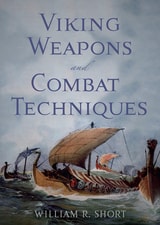
Viking Weapons and Combat Techniques
William R. Short
Westholme Publishing, 2009
A source of enduring fascination, the Vikings are the most famous raiders of medieval Europe. Despite the exciting and compelling descriptions in the Icelandic sagas and other contemporary accounts that have fueled this interest, we know comparatively little about Viking age arms and armor as compared to weapons from other historical periods. We know even less about how the weapons were used. While the sagas provide few specific combat details, the stories are invaluable. They were written by authors familiar with the use of weapons for an audience that, likewise, knew how to use them. Critically, the sagas describe how these weapons were wielded not by kings or gods, but by ordinary men, as part of their everyday lives. Viking Weapons and Combat Techniques provides an introduction to the arms and armor of the people who lived in Northern Europe during the Viking age, roughly the years 793–1066. Using a variety of available sources, including medieval martial arts treatises, and copiously illustrated with images of historical artifacts, battle sites, and demonstrations of modern replicas of Viking weapons, the author and his colleagues at Hurstwic (a Viking-age living history organization) and at the Higgins Armory Sword Guild have reconstructed the combat techniques of the Viking age and what is known about the defensive and offensive weapons of the time in general. Throughout, the author corrects some popular misconceptions about Viking warriors and warfare, such as the belief that their combat techniques were crude and blunt rather than sophisticated. In addition, the book provides an overview of Viking history and culture, focusing on the importance of weapons to the society as well as the Vikings’ lasting impact on Europe through their expeditions of trade and exploration.