Results by title
9 books match the query 'Schiffer, Michael Brian'
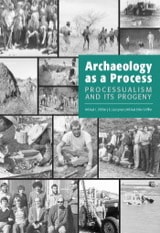
Archaeology as a Process
Processualism and Its ProgenyMichael J O'Brien
University of Utah Press, 2007
Archaeology as a Process traces the intellectual history of Americanist archaeology in terms of the research groups that were at the forefront of these various approaches, concentrating as much on the archaeologists as it does on method and theory, thus setting it apart from other treatments published in the last fifteen years.
Peppered with rare photographs of well-known archaeologists in some interesting settings, the book documents the swirl and excitement of archaeological controversy for the past forty years with over 1,600 references and an in-depth treatment of all the major intellectual approaches. The contributors examine how archaeology is conducted—the ins and outs of how various groups work to promote themselves—and how personal ambition and animosities can function to further rather than retard the development of the discipline.
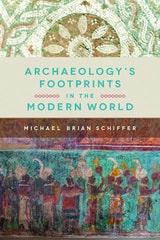
Archaeology's Footprints in the Modern World
Michael Brian Schiffer
University of Utah Press, 2017
What is the social value of archaeological research to present-day society? Michael Schiffer answers this question with forty-two case studies from a global perspective to demonstrate archaeology’s diverse scientific and humanistic contributions. Drawing on nearly five decades of research, he delivers fascinating yet nontechnical discussions that provide a deeper understanding of what archaeologists do and why they do it.
From reconstructing human evolution and behavior in prehistoric times to providing evidence that complements recorded history or debunks common legends, archaeologists help us understand our human past. They have also played crucial roles in developing techniques essential for the investigation of climate change along with tools for environmental reconstruction. Working for cities, tribes, and federal agencies, archaeologists manage cultural resources and testify in court. In forensic contexts, archaeological expertise enables the gathering of critical evidence. With engaging and lively prose, Archaeology’s Footprints brings to life a full panorama of contributions that have had an impact on modern society.
Behavioral Archaeology
Michael Brian Schiffer
University of Utah Press, 1995
Behavioral archaeology is an emerging branch of anthropology emphasizing the study of relationships between human behavior and artifacts (material culture) in all times and places. As such, it aspires to make contributions beyond the confines of archaeology to other behavioral sciences and to society in general.
Behavioral Archaeology is a selection of writings by Michael Schiffer, one of the field’s primary proponents. The chapters include important works published between 1972 and 1987, the formative period of behavioral archaeology. Schiffer has crafted a lengthy introduction to the coume, a personal history that contextualizes the development of these works. Also new is the last chapter, which lists—and keys to the preceding chapters—the field’s most important principles, tenets, and premises.
Readers will discover that although behavioral archaeologist have put archaeological inference on a scientific footing and have fostered the growth of experimental archaeology and ethnoarchaeology as research strategies, behavioral archaeology is not confined to methodology.
Indeed, cultivation of the fields established here is leading to the development of new behavioral science focused on studies of people-artifact interactions. By closely juxtaposing method and theory, principles and applications, science and history, this book illustrates the coherence and scope of behavioral archaeology’s conceptual framework.
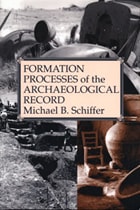
Formation Processes of the Archaeological Record
Michael Brian Schiffer
University of Utah Press, 1987
This handbook synthesizes the most important principles of cultural and environmental formation processes for both students and practicing archaeologists.
Formation Process of the Archaeological Record embodies a vision that the cultural past is knowable, but only when the nature of the evidence is thoroughly understood. It shows how the past is accessible in practice by identifying variability introduced by the diverse effects of people and nature that in some sum, form the archaeological record.
For students, it is intended as both an introduction and guide in method and theory, field work, and analysis. Practicing archaeologists will find it a valuable checklist of sources of variability when observations on the archaeological record are used to justify inferences.

Social Theory In Archaeology
Michael Brian Schiffer
University of Utah Press, 2000
Since the debut of the New Archaeology in the 1960s, approaches to the science of interpreting the material past have proliferated.
Seeking to find common ground in an increasingly fractious and polarized discipline, a group of archaeological theorists representing various schools of thought gathered in a roundtable, during the fall of 1997. As organizer, Michael Schiffer sought to build bridges that might begin to span the conceptual chasms that have formed in archaeology during the past few decades. Many participants in the roundtable accepted the challenge of building bridges, but some rejected the premise that bridge building is desirable or feasible. Even so, every chapter in the resulting volume contributes something provocative or significant to the enterprise of constructing social theory in archaeology and setting the agenda for future social-theoretic research.
With contributions from every major school of thought, whether informed by evolutionary theory, feminism, chaos theory, behavioralism, or post-processualism, this volume serves as both handbook to an array of theoretical approaches and as a useful look at each school’s response to criticism.

Studying Technological Change
A Behavioral ApproachMichael Brian Schiffer
University of Utah Press, 2011
Studying Technological Change synthesizes nearly four decades of research by Michael Brian Schiffer, a cofounder of the field of behavioral archaeology. This new book asks historical and scientific questions about the interaction of people with artifacts during all times and in all places. The book is not about the history or prehistory of technology, nor is it a catalog of methods and techniques for inferring how specific technologies were made or used. Rather, it supplies conceptual tools that can be used to help craft an explanation of any technological change in any society.
Technological Perspectives on Behavioral Change
Michael Brian Schiffer
University of Arizona Press, 1992

The Portable Radio in American Life
Michael Brian Schiffer
University of Arizona Press, 1991
The Strong Case Approach in Behavioral Archaeology
Edited by Michael Brian Schiffer, Charles R. Riggs, and J. Jefferson Reid
University of Utah Press, 2017
The chapters employ a wide range of data classes, demonstrating the versatility and productivity of the approach for fashioning rigorous inferences in history, historical archaeology, ethnoarchaeology, and prehistory. By illustrating the strong case approach with convincing case studies from behavioral archaeology, the editors aim to alert the archaeological community about how the process of archaeological inference can be improved.