Results by title
6 books match the query 'School Safety'
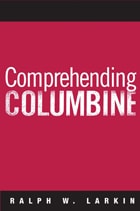
Comprehending Columbine
Ralph W Larkin
Temple University Press, 2007
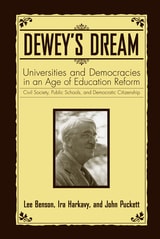
Dewey's Dream
Universities and Democracies in an Age of Education ReformLee Benson
Temple University Press, 2007
This timely, persuasive, and hopeful book reexamines John Dewey's idea of schools, specifically community schools, as the best places to grow a democratic society that is based on racial, social, and economic justice. The authors assert that American colleges and universities bear a responsibility for-and would benefit substantially from-working with schools to develop democratic schools and communities.
Dewey's Dream opens with a reappraisal of Dewey's philosophy and an argument for its continued relevance today. The authors-all well-known in education circles-use illustrations from over 20 years of experience working with public schools in the University of Pennsylvania's local ecological community of West Philadelphia, to demonstrate how their ideas can be put into action. By emphasizing problem-solving as the foundation of education, their work has awakened university students to their social responsibilities. And while the project is still young, it demonstrates that Dewey's "Utopian ends" of creating optimally participatory democratic societies can lead to practical, constructive school, higher education and community change, development, and improvement.

Dr. David Murray
Superintendent of Education in the Empire of Japan, 1873-1879Duke, Benjamin
Rutgers University Press, 2018
Benjamin Duke has compiled this comprehensive biography of David Murray to showcase Murray’s work, both in assisting around 100 samurai students in their studies at Rutgers, and in his unprecedented role in early Japanese-American relations. This fascinating story uncovers a little-known link between Rutgers University and Japan, and it is the only book to conclude that Rutgers made a greater contribution to the development of modern education in the early Meiji Era than any other non-Japanese college or university in the world.

European Higher Education, Social Responsibility, and the Local Democratic Mission
Sjur Bergan
Temple University Press, 2025
Bergan outlines the political and institutional complexity of European universities. He explains how history, cultural traditions, and national identities impact education across Europe. He also describes the roles of the Council of Europe and U.S. higher education in the development of a transatlantic cooperation on the democratic mission of higher education. Other chapters explore education programs for developing and maintaining democracy and human rights, pragmatic and creative ways that European universities are working with their local communities, and the development of education opportunities for refugees.
Ultimately, Bergan’s book explores not only the local democratic mission of higher education as it has developed in Europe, but also how it could continue to develop, and why it is important it does so.
In the series Higher Education, Place, and Social Responsibility.
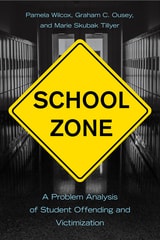
School Zone
A Problem Analysis of Student Offending and VictimizationPamela Wilcox, Graham C. Ousey, and Marie Skubak Tillyer
Temple University Press, 2022
Schools should be safe—but they are not always safe for everybody. Authors Pamela Wilcox, Graham Ousey, and Marie Skubak Tillyer studied crime among students located across diverse middle- and high-school settings to investigate why some students engage in delinquency—but others do not—and why some students are more prone to victimization. School Zone focuses on the three key interactional elements—context, victims, and offenders—to understand and explain the impact of common crimes such as theft, weapon carrying, drug possession and the verbal, physical, and sexual harassment of classmates.
The authors also consider how individual students and schools respond to crime and threats. They analyze the variables that schools can control in planning and practice that explain why some schools have higher crime rates. School Zone uses empirical studies to provide a comprehensive understanding of the patterns and causes of variation in individual- and aggregate-level school-based offending and victimization experiences while also addressing the adequacy of wide-ranging criminological explanations and crime prevention policies.
In their conclusion, the authors assess the extent to which currently popular strategies of school crime prevention align with what they have discovered through their problem-analysis framework and scientific understandings of student offending and victimization.

The Crisis of School Violence
A New PerspectiveMarianna King
Michigan State University Press, 2020