Results by title
46 books match the query 'Science & Nature'
A Meeting at the Mighty Mac
Alia Kirsch
Michigan Publishing Services, 2023
A Woodland Counting Book
Claudia McGehee
University of Iowa Press, 2006
Big Belching Bog
Phyllis Root
University of Minnesota Press, 2010
The biggest bog secret of all, we learn, is the remarkable process of methane gas belching out of the bog. The gas is created by decaying peat moss and forms a bulge in the surface of the moss six inches or taller before breaking through. Does this "belch" make a sound? No one knows, says Root, because no one has ever heard it. In fact, bogs are known as some of the quietest places on earth. Maybe you will be the first to hear the big bog belch!
Illustrated by renowned woodcut artist Betsy Bowen, Big Belching Bog also contains a section of bog facts, including more information about the plants and animals mentioned in the book as well as tips for visiting a bog. Big Belching Bog will stir the imagination of young readers and teach them about the landscape and environment of these mysterious and, ahem, gassy places.
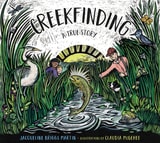
Creekfinding
A True StoryJacqueline Briggs Martin
University of Minnesota Press, 2017
Once upon a time a creek burbled up and tumbled across a prairie valley. It was filled with insects and brook trout that ate them, frogs that chirruped and birds watching for bugs and fish. This is a true story about a man named Mike who went looking for that creek long after it was buried under fields of corn. It is the story of how a creek can be brought back to life, and with it a whole world of nature.
In the words of award-winning author Jacqueline Briggs Martin and the enchanting illustrations by Claudia McGehee, this heartening tale of an ecosystem restored in the Driftless Area of northeast Iowa unfolds in a way that will charm and inform young readers who are drawn to a good mystery, the wonders of nature—and, of course, big earth-moving machines.
Dunes - Are Alive!
Krysten Dorfman
Michigan Publishing Services, 2022
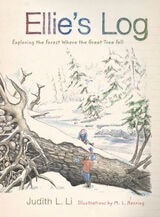
Ellie's Log
Exploring the Forest Where the Great Tree FellJudith L. Li
Oregon State University Press, 2013
After a huge tree crashes to the ground during a winter storm, ten-year-old Ellie and her new friend, Ricky, explore the forest where Ellie lives. Together, they learn how trees provide habitat for plants and animals high in the forest canopy, down among mossy old logs, and deep in the pools of a stream. The plants, insects, birds, and mammals they discover come to life in colored pen-and-ink drawings.
An engaging blend of science and storytelling, Ellie’s Log also features:
• Pages from Ellie’s own field notebook, which provide a model for recording observations in nature
• Ellie’s advice to readers for keeping a field notebook
• Ellie’s book recommendations Online resources for readers and teachers—including a Teacher’s Guide—are available at ellieslog.org.
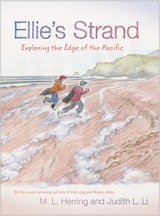
Ellie's Strand
Exploring the Edge of the PacificM. L. Herring
Oregon State University Press, 2018
Green Earth Book Award, Honor Book
There are days in late winter when the Pacific coast enjoys a brief spell of clear, warm weather. Most of the winter storms have passed and the summer fog has not yet settled in. This is when some coastal communities plan their annual beach clean-ups.
In this sequel to Ellie’s Log and Ricky’s Atlas, Ellie and Ricky travel to the Oregon coast from their home in the Cascade Mountains to help with a one-day beach clean-up. Hoping to find a prized Japanese glass float, they instead find more important natural treasures, and evidence of an ocean that needs its own global-scale clean-up.
Ellie and Ricky are amazed by their discoveries at the edge of the world’s largest ocean. Together, they realize the power of volunteering and grapple with the challenges of ocean conservation. In her journal Ellie records her observations of their adventures in her own words and pictures.
With charming pen-and-ink drawings and a compelling story, Ellie's Strand makes coastal science exciting for upper elementary school students. It will be a treasured companion for young beach explorers everywhere.
From the Forest to the Shore
Julia Glassman
Michigan Publishing Services, 2022
H.O.M.E.S.
Amani Tolin
Michigan Publishing Services, 2023
How to Grow a Community
Kyle Lough
Michigan Publishing Services, 2023
The objective was to create a book that uses the topic of urban gardening to teach young readers about the importance of environmental stewardship— respecting and caring for Earth and the diversity of life it sustains.
Through art and science, we can better understand complex environmental issues like access to food and water, loss of biodiversity, and land-use. Any reader, of any age, can make a difference in their community through forming stronger connections with people and the earth.
Hush Hush, Forest
Mary Casanova
University of Minnesota Press, 2018
Lyrical words and elegant woodcuts capture the quiet beauty of the forest as day fades to night and autumn gives way to the North Woods winter
While we are tucked in, snug in warm blankets as we listen to bedtime stories, the woods around us whisper another tale. As the golden leaves waft through the lengthening shadows, the loon sings one last lullaby, the whirring hummingbird takes one last sip, the industrious beaver saws one last branch for her lodge. Here, in enchanting words and woodcuts, is the magic of night falling and winter approaching in the North Woods. Hush Hush, Forest peers through twilight’s window at the raccoon preening, the doe and fawn bedding down, the last bat of the season flitting away. The owl surveys, the rabbit scurries, the bear hunkers, readying her den.
Marking the rhythm between the falling leaf and the falling snowflake, picturing the rituals of creatures big and small as they prepare for the long winter’s sleep, this charming book captures a time of surpassing wonder for readers of all ages—and bids everyone in the hushed forest a peaceful good night.
If Trees Could Talk
Stories About Wisconsin TreesR. Bruce Allison
Wisconsin Historical Society Press, 2009
Ishkode
A Story of FireEvan Larson
University of Minnesota Press, 0
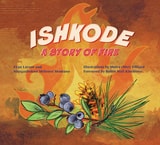
Igniting connection with the forests of the Great Lakes region through Indigenous teachings
When an invitation arrives from the forest, what will you hear? What will you learn? How will you respond? Ishkode: A Story of Fire brings readers into a beautiful stand of ancient red pines where Aanikoobijigan, a grandmother red pine, guides a young woman, Animikiimiikanikwe, toward healing and renewal through fire. Embracing the power of memory, storytelling, and restoration, this lyrical narrative is a celebration of hope, healing, and the lessons we can learn from the land.
Including an Ojibwe pronunciation guide and glossary, this book weaves Anishinaabe teachings with the science of tree rings to reveal the deep, enduring relationships between people, fire, pines, and the wider web of ecosystems in the Great Lakes region. Ishkode highlights the role of fire in the environment, bringing to light the connections between ecological restoration, cultural revival, and reciprocal stewardship.
KEEP BOOKS Digital Editions Kindergarten Science Set 1
Weather-Related ConceptsMarsha Levering
Keep Books, 2020
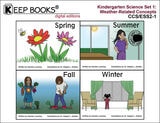
Stories include: Spring, Summer, Fall, & Winter.
Stories include: Spring, Summer, Fall, & Winter.
Age Level: 5/6
Grade Level: Kindergarten
Reading level: not leveled
KEEP BOOKS digital editions include text features and design elements that give beginning readers what they need to start reading on their own with high interest titles that they can easily manage.
KEEP BOOKS Digital Editions Kindergarten Science Set 2
Weather-Related ConceptsMarsha Levering
Keep Books, 2020
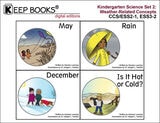
This set of four books offers engaging stories that combine features of early literacy learning while exploring weather-related concepts from Common Core State Standards and Next Generation Science Standards.
Stories include: May, Rain, December, & Is It Hot or Cold?.
Age Level: 5/6
Grade Level: Kindergarten
Reading level: not leveled
KEEP BOOKS digital editions include text features and design elements that give beginning readers what they need to start reading on their own with high interest titles that they can easily manage.
Leaf Town Forever
Beth Rooney
University of Minnesota Press, 2025
The true story of a Midwestern “town” created with leaves, sticks, and children’s imaginations
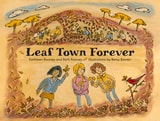
Leaf Town suddenly springs up. One day the clearing outside the school is empty, and the next it’s a bustling town complete with a hotel, shop, and mayor. Children gather and find treasures everywhere: feathers, acorns, lost rings, an old medal, and plenty of leaves and pine needles. They even uncover a silver skeleton key in the muddy banks of a nearby creek and proclaim it the heart of Leaf Town. As the town grows, it attracts the attention of the kids up the street, and a colossal fight threatens to destroy everything that was built. But the heart of Leaf Town is saved, and the kids rally to rebuild their city together, expanding to welcome the neighboring kids as well as all sorts of birds and animals. They hang a sign, Leaf Town Forever, and pass the key to the next generation of children who will look after their beloved town.
Based on a true story, Leaf Town Forever is the gentle tale of a town created by children with vivid imaginations. The timeless and universal saga, written in haiku, reminds both kids and adults that some dreams are worth protecting. Unfurling over the cycle of seasons, this is the story of an enchanting place full of tenacity and hope, creativity and fun—a connection to the natural world within reach for us all if we unite to make and maintain it.

Learning from the Land
Wisconsin Land Use; 2nd EditionBobbie Malone
Wisconsin Historical Society Press, 2011
How has the landscape of Wisconsin affected its history? How have people living here changed that landscape over time? What are the implications for the future? The second edition of Learning from the Land addresses these and other questions, asking elementary and middle school readers to think about land use issues throughout Wisconsin's history. This revised edition includes expanded chapters on logging and the lumber industry, land use and planning, and agriculture in the 20th century from farmers' markets to organic farming. New profiles of Gaylord Nelson, pioneer of Earth Day, and Will Allen, founder of Growing Power in Milwaukee, round out this history of land use in Wisconsin.
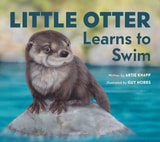
Little Otter Learns To Swim
Artie Knapp
Ohio University Press, 2018
Mandy's Prairie Home
Gillian Moore
Michigan Publishing Services, 2023
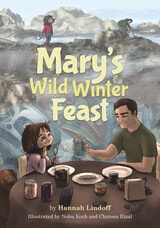
Mary's Wild Winter Feast
Hannah Lindoff
University of Alaska Press, 2014
Featuring brilliant collages from artists Nobu Koch and Clarissa Rizal, Mary’s Wild Winter Feast is a celebration of food, family, and finding fun in unexpected places.
Meg
Jenni Fuller
Michigan Publishing Services, 2021
Mizhibizhu and the Black Snake
Esha Biswas
Michigan Publishing Services, 2022
My Trip with the Great Plants of Lake Michigan
Jacob Napier
Michigan Publishing Services, 2022
Nessie Visits the Great Lakes
Anna Urso
Michigan Publishing Services, 2022
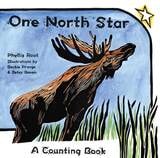
One North Star
A Counting BookPhyllis Root
University of Minnesota Press, 2016
Five toads hop, four brook trout swim, three elk graze, two loons call, and one beaver gnaws on a paper birch tree, all under one North Star. Through bog and marsh, along river and lake, across prairie and into the woods, children learn what lives where by counting the creatures on foot or in flight, swimming or perching in exquisite woodcut and watercolor illustrations created by Beckie Prange and Betsy Bowen in an artistic collaboration. For those looking for more about the pictured wildlife, Phyllis Root includes fascinating facts and information on the state’s ecosystems and the plants and animals that make their homes there.

One Winter Up North
John Owens
University of Minnesota Press, 2022
A picture-book journey through the Boundary Waters Canoe Area Wilderness in winter, snowshoeing the frozen lakes and silent forest with family, encountering the wonders of northern wildlife in the cold season
In winter the Boundary Waters, way up north in Minnesota, is not the same place you canoed last summer—but still it beckons and welcomes you. Grab a pack, strap on snowshoes, make a path (Oh! they take some getting used to!), and venture out across the frozen lakes and through the snowy woods. The vast wintery world here is so still and quiet, you might think you’re all alone—but no! Who made these tracks? A deer? A hare? A fox? And far off there’s a musher, making tracks with his sled dogs.
It’s a magical place. The bright sun brilliant on the snow, the sparkling silence—wait, is that a wolf calling? Try to answer! And when the dark descends, the stars and pine trees holding up the night, your nose gets cold and it’s back to camp, to your warm winter tent, where Father feeds the stove with wood you gathered, Mother snuggles into her big sleeping bag, and you curl up in the fire’s glow and know that in your dreams and memories you will return again and again to this one winter up north.
A wintery adventure that unfolds in pictures, John Owens’s delightful book gives readers a chance to discover—or rediscover—another season full of wonder in the Boundary Waters Canoe Area Wilderness.
Penguin's Way
Johanna Johnston
Bodleian Library Publishing, 2015
In Penguin’s Way, a playful colony of emperor penguins lives on the edge of a faraway secret sea. During the summers, the penguins are content to fish and swim in the icy waters. But, when the seasons change, they must travel more than one hundred miles to the snowy lands surrounding the South Pole. All across the snow plain, the penguins sing songs to welcome newly hatched chicks into the world, but how will the fluffy newborns survive the freezing winter?
Few things pique children’s curiosity about the world around them better than a good book. Brought back for a new generation of young readers, Penguin’s Way offers a fun and creative introduction to these fascinating animals.
Plant a Pocket of Prairie
Phyllis Root
University of Minnesota Press, 2014
Author Phyllis Root and illustrator Betsy Bowen last explored the vast, boggy peatlands of northern Minnesota in their book Big Belching Bog. Now, in Plant a Pocket of Prairie, Root and Bowen take young readers on a trip to another of Minnesota’s important ecosystems: the prairie.
Once covering almost 40 percent of the United States, native prairie is today one of the most endangered ecosystems in the world. Plant a Pocket of Prairie teaches children how changes in one part of the system affect every other part: when prairie plants are destroyed, the animals who eat those plants and live on or around them are harmed as well. Root shows what happens when we work to restore the prairies, encouraging readers to “plant a pocket of prairie” in their own backyards.
By growing native prairie plants, children can help re-create food and habitat for the many birds, butterflies, and other animals that depend on them. “Plant cup plants,” Root suggests. “A thirsty chickadee might come to drink from a tiny leaf pool. Plant goldenrod. A Great Plains toad might flick its tongue at goldenrod soldier beetles.” An easy explanation of the history of the prairie, its endangered status, and how to go about growing prairie plants follows, as well as brief descriptions of all the plants and animals mentioned in the story.
With Betsy Bowen’s beautiful, airy illustrations capturing the feel of an open prairie and all its inhabitants, readers of all ages will be inspired to start planting seeds and watching for the many fascinating animals their plants attract. What a marvelous transformation could take place if we all planted a pocket of prairie!
Raising Whoopers
Saving North America’s Whooping CranesMaria Parrott-Ryan
Wisconsin Historical Society Press, 2027
The inspiring story of ingenuity and dedication that saved a remarkable bird from the brink of extinction.
The distinctive whoop-whoop call of the whooping crane could once be heard across North America. By the middle of the twentieth century, however, habitat loss and hunting pushed these towering birds—the tallest on the continent—to the brink of extinction, with only fifteen individuals left in the wild. In the 1970s, two young visionaries founded the International Crane Foundation in Baraboo, Wisconsin, launching innovative efforts that would help change the species’ future and bring “whoopers” back into our wetlands.
Rich with fascinating natural history, larger-than-life personalities, and unforgettable adventures, Raising Whoopers tells the remarkable true story of one of North America’s most ambitious wildlife conservation efforts. Young readers will meet unforgettable cranes with names like Gee Whiz and Whoopsie, along with conservation heroes who hatched chicks by hand, performed crane courtship dances, and piloted ultralight aircraft across hundreds of miles to teach young birds how and where to migrate. Through triumphs, setbacks, and decades of perseverance, these wildlife conservationists demonstrated how creativity, science, and dedication can make a difference for endangered wildlife.
Geared toward ages 10–14, this engaging and accessible book, written in conjunction with the International Crane Foundation, introduces young readers to the captivating world of whooping cranes—and the scientists and ordinary citizens who worked together to ensure these birds had a future. The book concludes by showing that conservation is not just the work of experts—it’s something anyone can be part of. By connecting the story of whooping cranes to wildlife and habitats in our own communities, Raising Whoopers inspires the next generation to look more closely at the natural world and consider the role they can play in protecting it.
Ricky in the City
Where the Wildlife LiveJudith L. Li
Oregon State University Press, 2019
The kids find insects and reptiles moving about garden patches and bioswales, song birds and squirrels in neighborhood tree canopies, falcons and eagles crossing spacious river floodplains. As they record and map how wildlife and people are connected in these city spaces, they become community scientists, contributing to actual regional databases. After they see the young trees Marcus planted in his neighborhood, the feeders Jenny tends for hummingbirds, and the fascinating wildlife underpasses built in the wetlands, Ricky and Ellie realize there are many ways people actively care for the city’s wildlife.
In this fourth and final story of their award-winning children’s series, M. L. Herring’s vivid pen and watercolor illustrations complement the engaging storytelling of Judith Li. Readers will delight in the journal pages and maps “hand drawn” by Ricky and Ellie at the end of each chapter, while the “Dear Reader” section offers further tips for budding citizen scientists.
Ricky's Atlas
Mapping a Land on FireLi
Oregon State University Press, 2016
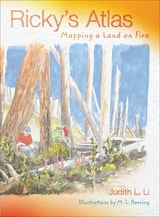
In this sequel to Ellie’s Log: Exploring the Forest Where the Great Tree Fell, Ricky Zamora brings his love of map-making and his boundless curiosity to the arid landscapes east of the Cascades Mountains. He arrives during a wild thunderstorm, and watches his family and their neighbors scramble to deal with a wildfire sparked by lightning. Joined by his friend Ellie, he sees how plants, animals, and people adjust to life with wildfires.
While hiking across a natural prairie, climbing up a fire tower, and studying historical photos and maps, Ricky and Ellie learn about the role of fire in shaping the landscape of the semi-arid plateau east of the mountains. They experience the scary days of wildfire in progress, explore a gritty site after a wildfire, and discover how some plants and animals depend on fire to survive.
Color pen-and-ink drawings accompany the text and vividly illustrate plants, animals, and events encountered in this exciting summer adventure. With his friend Ellie, Ricky creates a brightly colored diary of the fire, with maps, timelines, and sketches of what they see in this fire-prone land. Ricky’s notebook about his summer visit to his uncle’s ranch becomes an atlas of fire ecology, weather patterns, and life in the rain shadow.
Upper elementary kids will enjoy the mixture of amazing adventures with actual historical, physical, and ecological data about the region. Woven into the story are the small pleasures of ranch life, intriguing histories of Native Americans and early settlers, and almost unbelievable views of ancient fossils. Ricky and Ellie’s explorations, accompanied by their hand-written notes, introduce readers to a very special landscape and history east of the mountains.

Rugged RAX
The Little Satellite that CouldSuzanne Lipshaw
Fifth Avenue Press, 2025
Saving Our Sturgeon
Protecting Wisconsin's Ancient FishRebecca Hogue Wojahn
Wisconsin Historical Society Press, 2025
The story of a fascinating fish and the forward-thinking people who saved them in Wisconsin
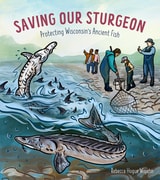
For millennia, sturgeon swam the waterways of Wisconsin. Before the 1800s, an estimated eleven million sturgeon lived in Lake Michigan alone. Menominee and Ojibwe people depended on the fish for food and harvested them sustainably. But in the early 1900s, the lake sturgeon was near extinction. Saving Our Sturgeon tells the remarkable story of lake sturgeon in Wisconsin, the conservation efforts to save the species, and what is being done to keep the population healthy and thriving today.
Readers will learn about the natural history of the lake sturgeon—its anatomy, behavior, and habitat—and the factors that threatened its survival, from overharvesting to the building of dams that prevented sturgeon from reaching spawning areas. The book, written for young readers aged eleven and up, explains how government agencies, conservationists, and citizen groups worked together to save the sturgeon population in Wisconsin.
Saving Our Sturgeon includes a chapter about the Menominee Nation’s work to revitalize cultural traditions focused on the sturgeon and restore access to the fish on their reservation. The book also highlights how young people can get involved with sturgeon conservation efforts.
A great resource for classroom use, Saving Our Sturgeon contains maps, photos, and diagrams, plus a glossary of terms, a timeline of events, a Who’s Who list of individuals and groups featured in the book, and a bibliography that highlights kid-friendly sources to learn more. Young readers will learn basic facts about sturgeon biology, what it means for a species to be threatened or endangered, and how scientists use data to support repopulation. This inspiring book shares a conservation success story about one remarkable (and plenty peculiar) species of fish and shows young readers how they, too, can help protect these incredible creatures.
Ages 11 - 14; Grade level 6 - 9; Lexile® measure 1060L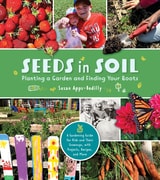
Seeds in Soil
Planting a Garden and Finding Your RootsSusan Apps-Bodilly
Wisconsin Historical Society Press, 2022
natural curiosity about nature. Seeds in Soil includes all the details to start planting and growing, whether working with a whole yard, a community or school garden, or just a balcony.
Chapters feature advice for selecting the seeds and tools to get started; ideas for planning and being creative in the garden; and tips for harvesting, storing, and cooking with fresh produce. Written by a second-grade teacher, the book includes engaging lessons about the science of climate, soil, and pollinators; and connections to history through the stories of First Nations and immigrant gardeners. Told through the author’s family stories and experience, Seeds in Soil will get kids having fun in the garden while digging, planting, growing, and finding their roots.
Super Creatures of the Huron River
Sara Adlerstein-Gonzalez
Michigan Publishing Services, 2021
Super Creatures of the Huron River aims to teach children about stream ecology, with a focus on the fascinating “bugs” that can be found in the Huron River. State and national inventories record one hundred dams on the Huron River system, which is typical of rivers and tributaries in the Great Lakes Basin. What was once a free-flowing system is now interrupted by dams on both the river’s main stem and its tributaries. Although dams can provide some benefits, they produce severe negative impacts on the rivers they harness. Dams alter a river’s chemical, physical, and biological processes, including fragmenting and blocking the natural movement of fish and other aquatic species. Although these negative impacts have become more obvious over the past two decades, the environmental costs of dams have only recently captured scientific attention.
Super Creatures of the Huron River is a project conducted by a team of University of Michigan (UM) faculty and students, in collaboration with Huron River Watershed Council (HRWC) researchers. Sara Adlerstein developed the project. Working closely with her were Carolyn Berge, Jeffrey Evans, and Mike Wiley from UM and Paul Steen and Pam Labadie from HRWC. Illustrations for the book were created by master of science student Jennifer Fuller. The picture book will be used as a tool to support streamside activities led by the HRWC.
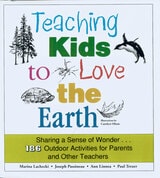
Teaching Kids To Love The Earth
Marina Lachecki
University of Minnesota Press, 2002
Teaching Kids to Love the Earth is a collection of 186 earth-caring activities designed for use with children of all ages to help them experience and appreciate the earth. This book leads you through the authors’ Sense of Wonder Circle: curiosity, exploration, discovery, sharing, and passion. Each chapter contains a story, instructions for a main activity, suggestions for related activities, and a lsit of additional resources. Teaching Kids to Love the Earth will enable you and the children you work with to experience a “sense of wonder” about the world we share.
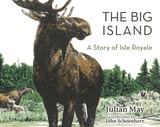
The Big Island
A Story of Isle RoyaleJulian May
University of Minnesota Press, 2021
First published in 1968, this engrossing and beautiful picture book about wildlife on Isle Royale is available again
Isle Royale, “the big island” of this book, is a wilderness national park in Lake Superior and home to a unique and fascinating ecosystem of animals, most notably the iconic wolf and majestic moose. Here is author Julian May’s story about the island’s beginning, the kinds of animals that came to populate it, and their effects on the pristine landscape. Among them were the moose, who swam to the island from the distant shore to fend off starvation. The moose found conditions on Isle Royale so favorable that they reproduced quickly—but then faced another food shortage. The wolves arrived by floating to the island on an ice floe in winter and soon became important to the island’s ecology as successful predators of the moose.
Complementing this fascinating text, John Schoenherr’s magnificent illustrations convey the strength of these animals and the beauty of the island that is their home.
First published in 1968, and reprinted here with a new note by renowned wolf expert L. David Mech, The Big Island is an enchanting introduction to the wilderness and wildlife of Isle Royale.
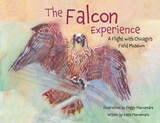
The Falcon Experience
A Flight with Chicago’s Field MuseumIllustrations by Peggy Macnamara; Written by Katie Macnamara
Northwestern University Press, 2026
A joyful, educational flight from the halls of Chicago’s Field Museum to the nests of mighty peregrine falcons
Rosie the Tarantula, famous for her adventure in the corridors and collections of Chicago’s celebrated Field Museum of Natural History, is back. This time, Rosie is focused not on spiders, but on falcons! The Falcon Experience brings us with Rosie as she follows Mary Hennen, the museum’s real-life peregrine program director, giving children and parents alike a front-row seat to the lives of these majestic birds and the scientist who cares for them. Rosie learns how falcons fly, hunt, eat, mate, construct nests and raise chicks (via the peregrine webcam!) in unexpected and challenging places in the city. Mary’s teachings also show how humans can be the key to helping our natural environment.
Beautifully illustrated with watercolors by renowned Field Museum artist-in-residence Peggy Macnamara, The Falcon Experience is told by Peggy’s daughter, author and educator Katie Macnamara, in rhyme ideal for reading aloud to children. This keepsake-quality book will delight budding young scientists and their families while providing a colorful, interactive experience with one of Chicago’s foremost cultural institutions.
The Great Lakes Adventures with Auntie M
Maite Elizondo
Michigan Publishing Services, 2022
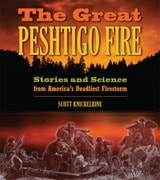
The Great Peshtigo Fire
Stories and Science from America’s Deadliest FireScott Knickelbine
Wisconsin Historical Society Press, 2012
On the night of October 8, 1871, a whirlwind of fire swept through northeastern Wisconsin, destroying the bustling frontier town of Peshtigo. Trees, buildings, and people burst into flames. Metal melted. Sand turned into glass. People thought the end of the world had come. When the “tornado of fire” was over, 2,500 people were dead, and Peshtigo was nothing but a smoking ruin. It was the deadliest wildfire in U.S. history.
The Great Peshtigo Fire: Stories and Science from America’s Deadliest Firestorm explores the history, science, and legacy of the 1871 Peshtigo Fire at a fourth-grade reading level. Readers will learn about the history of settlement, agriculture, and forestry in 19th-century Wisconsin. This illuminating text covers a diverse range of topics that will enrich the reader’s understanding of the Peshtigo Fire, including the building and land-use practices of the time that made the area ripe for such a fire, the weather patterns that fostered widespread fires throughout the upper Midwest in the summer and fall of 1871, and exciting first-person accounts that vividly bring the `victims’ stories to life. Connections made between the Peshtigo Fire and the history of fire prevention in the United States encourage critical thinking about issues that remain controversial to this day, such as planned burns and housing development restrictions near forested areas. The Great Peshtigo Fire: Stories and Science from America’s Deadliest Firestorm will inform and captivate its readers as it journeys through the horrifying history of the Peshtigo Fire.
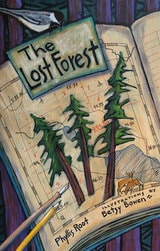
The Lost Forest
Phyllis Root
University of Minnesota Press, 2019
The story of a forest “lost” by a surveying error—and all the flora and fauna to be found there
A forest, of course, doesn’t need a map to know where to grow. But people need a map to find it. And in 1882 when surveyors set out to map a part of Minnesota, they got confused, or tired and cold (it was November), and somehow mapped a great swath of ancient trees as a lake. For more than seventy-five years, the mistake stayed on the map, and the forest remained safe from logging—no lumber baron expects to find timber in a lake, after all.
The Lost Forest tells the story of this lucky error and of the 144 acres of old-growth red and white pine it preserved. With gentle humor, Phyllis Root introduces readers to the men at their daunting task, trekking across Minnesota, measuring and marking the vast land into townships and sections and quarters. She takes us deep into a stand of virgin pine, one of the last and largest in the state, where U.S. history and natural history meet. With the help of Betsy Bowen’s finely observed and beautiful illustrations, she shows us all the life that can be found in the Lost Forest.
Accompanying the story is a wealth of information about the Cadastral Survey and about the plants and animals that inhabit forests—making the book a valuable guide for readers who might want to look even deeper into the history of Minnesota, the flora and fauna of old-growth forests, and the apportioning of land in America.
The March Wind
Inez Rice
Bodleian Library Publishing, 2017
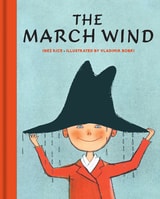
That's what happens to a little boy in The March Wind. Finding a large black hat lying in the street, he tries it on . . . and instantly becomes a host of exciting characters: a soldier marching proudly through puddles, a cowboy galloping on his steed, a bandit fleeing the law under cover of night, a circus ringleader entertaining the crowd. But then the owner of the hat returns, and the boy finds himself face to face with the March Wind. Is this part of his imagination, too, or is something bigger happening?
This charming children’s book, first published in 1957, is brought to life by the timeless illustrations of Vladimir Bobri, whose wonderfully imaginative renderings of the boy’s flights of fancy are endearing and captivating. It will charm parents and children alike.
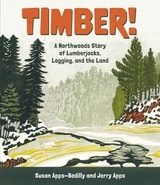
Timber!
A Northwoods Story of Lumberjacks, Logging, and the LandSusan Apps-Bodilly
Wisconsin Historical Society Press, 2024
How did the logging boom begin? What was it like to work in the woods? What happened to the land after the trees were cut down? The latest book for young readers from father-daughter duo Jerry Apps and Susan Apps-Bodilly explores the origin story of Wisconsin’s logging boom, the devastation it caused to the land, and the extraordinary efforts to restore the cutover land and log sustainably.
Timber! helps young readers examine a complex and pivotal chapter in our state and nation’s history, covering a wide range of topics, including:
• how Native people used, shared, and relied on natural resources for thousands of years
• the forced removal of Native people from forested lands
• how the lumber industry made possible the westward expansion of the United States
• what it was like to work in a logging camp, on a log drive, and inside a sawmill
• the roles on a logging team, from sawyer to cook
• the destructive legacy of early logging practices and early efforts to restore the land
• the emergence of sustainable forestry practices
This comprehensive yet easy-to-read history includes letters, postcards, and other primary sources paired with discussion questions designed to engage young readers’ creativity and critical-thinking skills. Timber! also features more than 100 images, a glossary, suggested activities, and an extensive list of related resources, including books, websites, teaching materials, museums, and outdoor places to visit. Timber! will inspire readers of all ages to explore, protect, and learn about trees and forests in their own communities.
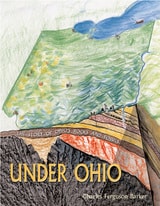
Under Ohio
The Story of Ohio’s Rocks and FossilsCharles Ferguson Barker
Ohio University Press, 2007
Wake Up, Island
Mary Casanova
University of Minnesota Press, 2016
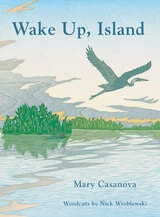
Wake up, little one, a soft voice beckons, the world around you is already stirring. As Wake Up, Island gently rouses the sleepy child, it summons a world of nature coming to life on a summer island in the magical North Woods. Sunlit fingers touch the shores, pine trees stretch their limbs, and lichen warms on ancient rock. Doe and fawn rise from their grass bed and pearls of dew bead a spider’s finely woven web. Mallards skim the water’s surface. Ravens perch and gargle greetings, chickadees call dee, dee, dee, and a heron swoops—minnows flee! The moose and her calf wade, munching on plants. The red squirrel chatters. The black bear lazily scratches her back against a tree.
Conjuring the morning life around a cabin fragrant with berry pancakes, this timeless book wakens the child in every reader to the wonders of nature that greet every new day in the charmed world of a northern woodland island.
What Am I?
By Mary Neel Green
University of Texas Press, 1999
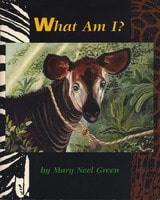
In the dense, shady rain forest, it's easy for a little guy to get lost from his mother. When a young okapi wanders away from his mom, he discovers the world of people and learns that he is a very special animal, different from all the rest. But still he misses his mother and their home in the forest. How can he get back?
This heartwarming tale with a happy ending introduces children from ages three to eight to the okapi, a graceful, elusive animal native to the Ituri Forest of Congo-Zaire. Based on the true story of an okapi calf that escaped from captivity, it is sure to delight young animal lovers, while teaching them basic facts about the family life of the okapi. A brief afterword provides more information for parents and older children.