Results by title
4 books match the query 'Scientific Discovery'
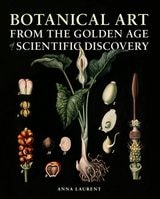
Botanical Art from the Golden Age of Scientific Discovery
Anna Laurent
University of Chicago Press, 2016
This beautifully illustrated oversized book gives the humble wall chart its due, reproducing more than two hundred of them in dazzling full color. Each wall chart is accompanied by captions that offer accessible information about the species featured, the scientists and botanical illustrators who created it, and any particularly interesting or innovative features the chart displays. And gardeners will be pleased to discover useful information about plant anatomy and morphology and species differences. We see lilies and tulips, gourds, aquatic plants, legumes, poisonous plants, and carnivorous plants, all presented in exquisite, larger-than-life detail.
A unique fusion of art, science, and education, the wall charts gathered here offer a glimpse into a wonderful scientific heritage and are sure to thrill naturalists, gardeners, and artists alike.
Gravity's Ghost
Scientific Discovery in the Twenty-first CenturyHarry Collins
University of Chicago Press, 2010
In theory, at least, gravitational waves do exist. We are constantly bathed in gravitational radiation, which is generated when stars explode or collide and a portion of their mass becomes energy that ripples out like a disturbance on the surface of a serene pond. But unfortunately no gravitational wave has ever been directly detected even though the search has lasted more than forty years.
As the leading chronicler of the search for gravitational waves, Harry Collins has been right there with the scientists since the start. The result of his unprecedented access to the front lines of physical science is Gravity’s Ghost, a thrilling chronicle of high-stakes research and cutting-edge discovery. Here, Collins reveals that scientific discovery and nondiscovery can turn on scientific traditions and rivalries, that ideal statistical analysis rests on impossible procedures and unattainable knowledge, and that fact in one place is baseless assumption in another. He also argues that sciences like gravitational wave detection, in exemplifying how the intractable is to be handled, can offer scientific leadership a moral beacon for the twenty-first century. In the end, Gravity’s Ghost shows that discoveries are the denouements of dramatic scientific mysteries.
Imagined World
A Story of Scientific DiscoveryJune Goodfield
University of Michigan Press, 1991
Victorian Relativity
Radical Thought and Scientific DiscoveryChristopher Herbert
University of Chicago Press, 2001
Christopher Herbert shows that the idea of relativity produced revolutionary changes in one field after another in the nineteenth century. Surveying a long line of thinkers including Herbert Spencer, Charles Darwin, Alexander Bain, W. K. Clifford, W. S. Jevons, Karl Pearson, James Frazer, and Einstein himself, Victorian Relativity argues that the early relativity movement was bound closely to motives of political and cultural reform and, in particular, to radical critiques of the ideology of authoritarianism. Recuperating relativity from those who treat it as synonymous with nihilism, Herbert portrays it as the basis of some of our crucial intellectual and ethical traditions.