Results by title
3 books match the query 'Scientific Method'
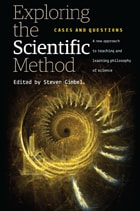
Exploring the Scientific Method
Cases and QuestionsEdited by Steven Gimbel
University of Chicago Press, 2011
From their grade school classrooms forward, students of science are encouraged to memorize and adhere to the “scientific method”—a model of inquiry consisting of five to seven neatly laid-out steps, often in the form of a flowchart. But walk into the office of a theoretical physicist or the laboratory of a biochemist and ask “Which step are you on?” and you will likely receive a blank stare. This is not how science works. But science does work, and here award-winning teacher and scholar Steven Gimbel provides students the tools to answer for themselves this question: What actually is the scientific method?
Exploring the Scientific Method pairs classic and contemporary readings in the philosophy of science with milestones in scientific discovery to illustrate the foundational issues underlying scientific methodology. Students are asked to select one of nine possible fields—astronomy, physics, chemistry, genetics, evolutionary biology, psychology, sociology, economics, or geology—and through carefully crafted case studies trace its historical progression, all while evaluating whether scientific practice in each case reflects the methodological claims of the philosophers. This approach allows students to see the philosophy of science in action and to determine for themselves what scientists do and how they ought to do it.
Exploring the Scientific Method will be a welcome resource to introductory science courses and all courses in the history and philosophy of science.
Nature and Scientific Method
Daniel O. Dahlstrom
Catholic University of America Press, 2018
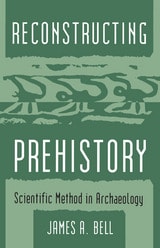
Reconstructing Prehistory
Scientific Method in ArchaeologyJames Bell
Temple University Press, 1994
Reevaluating the method of scientific investigation, James A. Bell provides a bold philosophical framework for developing and assessing archaeologists' theories of the past. More informed and judicious decisions, the author asserts, are made when archaeologists explore questions such as:
•How can theories be formulated so that they increase understanding and provide insight, and are theories still useful when they do not?
•
How can theories be adjusted when anomalies are revealed?
•
How can theories be assessed against competing theories?
•
When should theories be abandoned, and when should they be pursued further?
With numerous examples from archaeology as well as comparative examples from the physical and biological sciences, Bell illustrates how exploring the answers to these and related inquiries will lead to improved formulation and testing of theories.