Results by title
63 books match the query 'Scientists' and 3 start with a
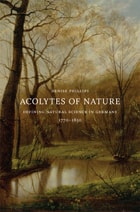
Acolytes of Nature
Defining Natural Science in Germany, 1770-1850Denise Phillips
University of Chicago Press, 2012
Although many of the practical and intellectual traditions that make up modern science date back centuries, the category of “science” itself is a relative novelty. In the early eighteenth century, the modern German word that would later mean “science,” naturwissenschaft, was not even included in dictionaries. By 1850, however, the term was in use everywhere. Acolytes of Nature follows the emergence of this important new category within German-speaking Europe, tracing its rise from an insignificant eighteenth-century neologism to a defining rallying cry of modern German culture.
Today’s notion of a unified natural science has been deemed an invention of the mid-nineteenth century. Yet what Denise Phillips reveals here is that the idea of naturwissenschaft acquired a prominent place in German public life several decades earlier. Phillips uncovers the evolving outlines of the category of natural science and examines why Germans of varied social station and intellectual commitments came to find this label useful. An expanding education system, an increasingly vibrant consumer culture and urban social life, the early stages of industrialization, and the emergence of a liberal political movement all fundamentally altered the world in which educated Germans lived, and also reshaped the way they classified knowledge.

Alexander Dallas Bache
Building the American Nation through Science and Education in the Nineteenth CenturyAxel Jansen
Campus Verlag, 2011
Alexander Dallas Bache (1806–1867) was one of the leaders of American science in the nineteenth century. Driven by a vision of science as a key component of an integrated U.S. nation-state, he guided the nascent American Association for the Advancement of Science and also led what was at that point the nation’s largest scientific enterprise, the U.S. Coast Survey. In this analytical biography, Axel Jansen explains and explores Bache’s efforts to build and shape public institutions as aids to his goal of creating a national foundation for a shared culture—efforts that culminated in his work during the Civil War as one of the founders of the National Academy of Sciences, which he saw as a key symbol of the continued viability of a unified American nation.
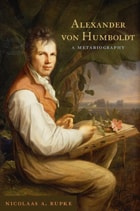
Alexander von Humboldt
A MetabiographyNicolaas A. Rupke
University of Chicago Press, 2008
This volume, the first metabiography of the great scientist, traces Humboldt’s biographical identities through Germany’s collective past to shed light on the historical instability of our scientific heroes.
“Rupke’s study . . . will doubtless become a standard reference for the Humboldt industry and for writers of scientific metabiographies to come.”—Isis
“Engaging. . . . Rupke’s meticulous analysis is fascinating on many scores.”—Times Higher Education Supplement (UK)
“A study borne of considerable scholarship and one with important methodological implications for historians of geography.”—Charles W. J. Withers, Progress in Human Geography