Results by title
5 books match the query 'Score'
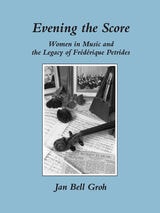
Evening the Score
Women in Music and the Legacy of Frédérique PetridesJan Bell Groh
University of Arkansas Press, 1994
Despite the suffragist activities of the 1920s and the heightened pressures brought to bear on traditionally “male-only” institutions in American society during the past three decades, many vocations remain sanctuaries of male dominance. One such area is the classical music world; though, as Jan Bell Groh asserts in Evening the Score, inroads into this field have bene made, sometimes at great cost.
At the center of this work is a unique set of newsletters edited and published by Frédérique Petrides, one of America’s first and most influential female conductors. In Petride’s time, most women musicians were forced to ply their trade in all-female orchestras; through the thirty-seven issues of Women in Music published from 1935 to 1940, the achievements of these musicians were championed, and the prejudices, misconceptions, and deliberately discriminatory policies of many of their male counterparts were exposed and condemned.
Evening the Score is an ambitious endeavor that seeks not only to preserve these early documents and explain them within the context of the 1930s music industry but also to garner for Petrides the long-overdue praise to which she is entitled. It is at once a celebration and a source of inspiration.

Following the Score
The Ravel TrilogyOliver Smith
Intellect Books, 2024
This book frames the playtexts of The Ravel Trilogy—Bolero (2014), Concerto (2016), and Solo (2018)—alongside a series of reflective essays and provocations on contemporary dramaturgy and musicology from academics and artists in drama, music, linguistics, and fine art. It contextualizes the themes and approaches of the trilogy and serves as a critical companion to a body of devised work, stimulating a debate about dramaturgy and composition and inviting discussion about post-dramatic theater's relationship to music.
This publication marks the culmination of the trilogy and its critical legacy, exploring the work through the dual lenses of postdramatic theater and research questions articulated and addressed by the practice-research undertaken by its co-creators. The dramaturgical context for The Ravel Trilogy and the reflective essays around it allow the editors to explore the relationship between theater and music, raising questions about practice-research and notions of creating playtexts from musical scores. In this volume, Michael Pinchbeck and Ollie Smith reflect on making and performing The Ravel Trilogy and the process of researching, devising, and presenting work inspired by music where score becomes script and dynamics become stage directions.
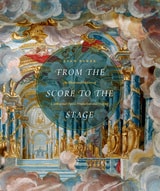
From the Score to the Stage
An Illustrated History of Continental Opera Production and StagingEvan Baker
University of Chicago Press, 2013
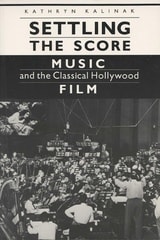
Settling the Score
Music and the Classical Hollywood FilmKathryn Kalinak
University of Wisconsin Press, 1992
Beginning with the earliest experiments in musical accompaniment carried out in the Edison Laboratories, Kathryn Kalinak uses archival material to outline the history of American music and film. Focusing on the scores of several key composers of the sound era, including Erich Wolfgang Korngold’s Captain Blood, Max Steiner’s The Informer, Bernard Herrmann’s The Magnificent Ambersons, and David Raksin’s Laura, Kalinak concludes that classical scoring conventions were designed to ensure the dominance of narrative exposition. Her analyses of contemporary work such as John Williams’ The Empire Strikes Back and Basil Poledouris’ RoboCop demonstrate how the traditions of the classical era continue to influence scoring practices today.
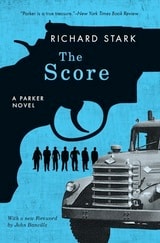
The Score
A Parker NovelRichard Stark
University of Chicago Press, 2009
The absolute wildest of all the novels in the classic hard-boiled crime series starring Parker, the deadliest heister of all!
Richard Stark's Parker novels are the hardest of hard-boiled, classic crime novels where the heists are huge, the body counts are high, and the bad guys usually win.
The Parker novels have been a huge influence on countless writers and filmmakers, including Quentin Tarantino, Stephen King, George Pelecanos, Colson Whitehead, Lucy Sante, John Banville, and many more. Their stripped-down language and hard-as-nails amorality create an unforgettable world where the next score could be the big one, but your next mistake could also be your last. There's nothing else like them.
It was an impossible crime: knock off an entire town—a huge plant payroll, all the banks, and all the stores—in one night. But there was one thief good enough to try—Parker. In The Score, Parker takes on his biggest job yet. All he needs are the right men, the right plan, and the right kind of help from Lady Luck. But as everyone knows, you can never count on that last one. This chilling caper could either be the perfect crime . . . or a set-up that would land him in jail—for life.