Results by title
4 books match the query 'Seals (Animals)'
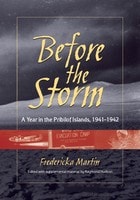
Before the Storm
A Year in the Pribilof Islands, 1941-1942Fredericka Martin
University of Alaska Press, 2010
From June of 1941 through the following summer, Fredericka Martin lived with her husband, Dr. Samuel Berenberg, on remote St. Paul Island in Alaska. During that time, Martin delved into the complex history of the Unangan people, and Before the Storm draws from her personal accounts of that year and her research to present a fascinating portrait of a time and a people facing radical change. A government-ordered evacuation of all Aleuts from the island in the face of World War II, which Martin recounts in her journal, proved but the first step in a long struggle by native peoples to gain independence, and, as editor Raymond L. Hudson explains, Martin came to play a significant role in the effort.
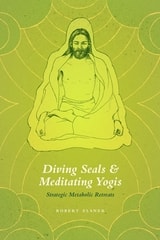
Diving Seals and Meditating Yogis
Strategic Metabolic RetreatsRobert Elsner
University of Chicago Press, 2015
As Elsner reveals, survival in extreme conditions such as those faced by seals is often not about running for cover or coming up for air, but rather about working within the confines of an environment and suppressing normal bodily function. Animals in this withdrawn state display reduced resting metabolic rates and are temporarily less dependent upon customary levels of oxygen. For diving seals—creatures especially well-adapted to prolonged submergence in the ocean’s cold depths—such periods of rest lengthen dive endurance. But while human divers share modest, brief adjustments of suppressed metabolism with diving seals, it is the practiced response achieved during deep meditation that is characterized by metabolic rates well below normal levels, sometimes even approaching those of non-exercising diving seals. And the comparison does not end here: hibernating animals, infants during birth, near-drowning victims, and clams at low tide all also display similarly reduced metabolisms.
By investigating these states—and the regulatory functions that help maintain them—across a range of species, Elsner offers suggestive insight into the linked biology of survival and well-being.
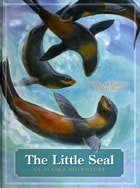
Little Seal
An Alaska AdventureWritten and Illustrated by Ram Papish
University of Alaska Press, 2009
The northern fur seal spends most of its life in the open ocean of the North Pacific, from California up through Alaska and down to Japan. These seals travel hundreds of miles, farther than any other seal or sea lion, to reach their remote breeding grounds. Most fur seals go to the Pribilof Islands of Alaska, where, historically, several million fur seals converged annually, but the population counted in the Pribilofs in 2008 was less than one million and dropping rapidly. Ram Papish’s richly illustrated story follows these magnificent—and increasingly vulnerable—creatures through the most important part of their lives.
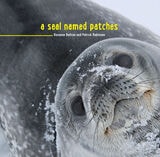
Seal Named Patches
Roxanne Beltran and Patrick Robinson
University of Alaska Press, 2017
Scientists Roxanne Beltran and Patrick Robinson set off on a polar adventure, traveling to Antarctica to study the lives of Weddell seals. By finding Patches, a wily seal they’ve been tracking since its birth, they’ll be able to learn a lot about how much the seals get to eat and how many pups they raise. A Seal Named Patches takes young readers into the world at the very bottom of the globe, where they meet the extraordinary animals that live in cold, icy conditions. Through breathtaking photos and real-life stories, young readers will learn about how scientists do fieldwork, the challenges of researching animals in harsh climates, and even what it’s like to fly a helicopter over Antarctica. This engaging story will especially entertain and educate children in grades K-2 (ages 5–8.)