Results by title
13 books match the query 'Search for'
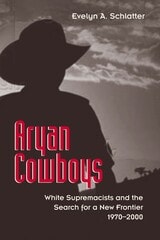
Aryan Cowboys
White Supremacists and the Search for a New Frontier, 1970–2000By Evelyn A. Schlatter
University of Texas Press, 2006
During the last third of the twentieth century, white supremacists moved, both literally and in the collective imagination, from midnight rides through Mississippi to broadband-wired cabins in Montana. But while rural Montana may be on the geographical fringe of the country, white supremacist groups were not pushed there, and they are far from "fringe elements" of society, as many Americans would like to believe. Evelyn Schlatter's startling analysis describes how many of the new white supremacist groups in the West have co-opted the region's mythology and environment based on longstanding beliefs about American character and Manifest Destiny to shape an organic, home-grown movement.
Dissatisfied with the urbanized, culturally progressive coasts, disenfranchised by affirmative action and immigration, white supremacists have found new hope in the old ideal of the West as a land of opportunity waiting to be settled by self-reliant traditional families. Some even envision the region as a potential white homeland. Groups such as Aryan Nations, The Order, and Posse Comitatus use controversial issues such as affirmative action, anti-Semitism, immigration, and religion to create sympathy for their extremist views among mainstream whites—while offering a "solution" in the popular conception of the West as a place of freedom, opportunity, and escape from modern society. Aryan Cowboys exposes the exclusionist message of this "American" ideal, while documenting its dangerous appeal.
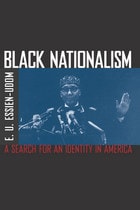
Black Nationalism
The Search for an IdentityE. U. Essien-Udom
University of Chicago Press, 1995
"An excellent standard treatment of black nationalist belief and practice in the 50's."—Michael Eric Dyson, New York Times Book Review
"This is an absorbing exercise in first class reporting. . . . In the light of his scrupulous fairness, the book is another illustration of how the press prejudges a story. And most provocatively, Essien-Udom has emphasized that even after the current campaigns for wide-scale integration are won, there will be an even wider chasm between the 'liberated' Negro middle class and the rootless Negro poor."—Nat Hentoff,Commonweal
Critical Digital Humanities
The Search for a MethodologyJames E. Dobson
University of Illinois Press, 2019
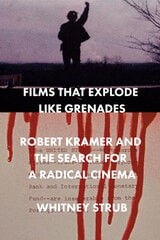
Films That Explode Like Grenades
Robert Kramer and the Search for a Radical CinemaWhitney Strub
University of Chicago Press, 2026
Robert Kramer (1939–99) was the emblematic filmmaker of the late-1960s New Left in the United States. Yet because most of his three dozen films have been out of circulation for decades, he has long been neglected by film historians and the Left. Kramer was the cofounder of the leftist documentary collective Newsreel and the director of underground films such as Ice (1970), Milestones (1975), and Route One/USA (1989). His films provide distinctive insights into how America’s political terrain has changed over time, capturing each era’s revolutionary ethos and its contradictions. Whitney Strub’s Films That Explode Like Grenades tracks the histories of leftist film and global revolutionary movements via Kramer’s life and travels. Moving among New York City, Chicago, North Vietnam, Paris, Portugal, Angola, and other crucial flashpoints, Kramer left a major and influential body of work in his wake that has fundamentally shaped the work of radical filmmakers across the globe.
For Strub, Kramer’s career is a key thread in an intimate history of the 1960s New Left, one that emphasizes the complexities of the movement’s internal tensions and its legacies. Drawing on visual analysis, extensive archival research across the United States and France, and myriad interviews with Kramer contemporaries, including Bernardine Dohrn, Tom Hayden, Jonas Mekas, and Kramer’s relatives, Strub transforms Kramer’s life story into a dynamic and engaging social history of 1960s radicalism and its generational legacies.
With detailed mapping of Robert Kramer’s many social and artistic contexts, Films That Explode Like Grenades restores him to a place of global importance in leftist cinema.
History 4° Celsius
Search for a Method in the Age of the AnthropoceneIan Baucom
Duke University Press, 2020

Palestinians Born in Exile
Diaspora and the Search for a HomelandBy Juliane Hammer
University of Texas Press, 2005
In the decade following the 1993 Oslo Peace Accords, some 100,000 diasporic Palestinians returned to the West Bank and Gaza. Among them were children and young adults who were born in exile and whose sense of Palestinian identity was shaped not by lived experience but rather through the transmission and re-creation of memories, images, and history. As a result, "returning" to the homeland that had never actually been their home presented challenges and disappointments for these young Palestinians, who found their lifeways and values sometimes at odds with those of their new neighbors in the West Bank and Gaza.
This original ethnography records the experiences of Palestinians born in exile who have emigrated to the Palestinian homeland. Juliane Hammer interviews young adults between the ages of 16 and 35 to learn how their Palestinian identity has been affected by living in various Arab countries or the United States and then moving to the West Bank and Gaza. Their responses underscore how much the experience of living outside of Palestine has become integral to the Palestinian national character, even as Palestinians maintain an overwhelming sense of belonging to one another as a people.

Phenomenology of Merleau-Ponty
A Search For The Limits Of ConsciousnessGary Brent Madison
Ohio University Press, 1981
The first study of its kind to appear in English, The Phenomenology of Merleau-Ponty is a sustained ontological reading of Merleau-Ponty which traces the evolution of his philosophy of being from his early work to his late, unfinished manuscripts and working notes. Merleau-Ponty, who contributed greatly to the theoretical foundations of hermeneutics, is here approached hermeneutically.
Most commentators are agreed that towards the end Merleau-Ponty’s philosophy underwent a strange and interesting mutation. The exact nature of this mutation or conceptual shift is what this study seeks to disclose. Thus, although Madison proceeds in a generally progressive, chronological fashion, examining Merleau-Ponty’s major works in the order of their composition, his reading is ultmately regressive in that Merleau-Ponty’s earlier works are viewed in the light of the new and enigmatic ontological orientation which makes its appearance in his later work. The merit of this approach is that, as Paul Ricoeur has remarked, it enables the author to expose the “anticipatory, hollowed-out presence” of Merleau-Ponty’s late philosophy “in the difficulties of his early phenomenology,” such that “the unifying intention between his first philosophy of meaning and the body and the late, more ontological philosophy is made manifest.”
This book begins with a detailed study of Merleau-Ponty’s two major early works, The Structure of BehaviorThe Phenomenology of Perception. In the following three chapters, Madison traces the development of Merleau-Ponty’s thought from the beginning to the end of his philosophical career in regard to three topics of special concern to the French phenomenologist: painting, language, philosophy. In the final chapter, he is concerned to articulate, as much as the unfinished state of Merleau-Ponty’s final work allows, the unspoken thought of this work and of The Visible and Invisible in particular. Merleau-Ponty’s notion of “wild being” and his attempt to work out an “indirect” or “negative” ontology are thoroughly analyzed.
In the end the reader will see that through his self-criticism and the development in his own phenomenology Merleau-Ponty has brought phenomenology itself to its limits and to the point where it must transcend itself as a philosophy of consciousness in the Husserlian sense if it is to remain faithful to Husserl’s own goal of bringing “experience to the full expression of its own meaning.” Because Madison submits Merleau-Ponty to the same kind of interpretive retrieval as the latter did with Husserl, Roger Cailloise has said of this “clear and very complete book” that it “goes will beyond a simple exposition and merits being read as an original work.”
Rising Ground
A Search for the Spirit of PlacePhilip Marsden
University of Chicago Press, 2016
Rising Ground is a record of that journey, but it is also so much more: a beautifully written meditation on place, nature, and human life that encompasses history, archaeology, geography, and the love of place that suffuses us when we finally find home. Firmly in a storied tradition of English nature writing that stretches from Gilbert White to Helen MacDonald, Rising Ground reveals the ways that places and peoples have interacted over time, from standing stones to footpaths, ancient habitations to modern highways. What does it mean to truly live in a place, and what does it take to understand, and honor, those who lived and died there long before we arrived?
Like the best travel and nature writing, Rising Ground is written with the pace of a contemplative walk, and is rich with insight and a powerful sense of the long skein of years that links us to our ancestors. Marsden’s close, loving look at the small patch of earth around him is sure to help you see your own place—and your own home—anew.
Search for a Common Language
Environmental Writing and Educationedited by Melody Graulich & Paul Crumbley
Utah State University Press, 2005
The Amazing Colossal Apostle
The Search for the Historical PaulRobert M. Price
Signature Books, 2012
As adults reading the New Testament, we catch glimpses of a very different kind of disciple—a wild ascetic whom Tertullian dubbed “the second apostle of Marcion and the apostle of the heretics.” What does scholarship tell us about the enigmatic thirteenth apostle who looms larger than life in the New Testament? The epistles give evidence of having been written at the end of the first century or early in the second—too late to have been Paul’s actual writings. So who wrote (and rewrote) them? F. C. Baur, a nineteenth-century theologian, pointed persuasively to Simon Magus as the secret identity of “Paul.” Robert M. Price, in this exciting journey of discovery, gives readers the background for a story we thought we knew.

The Palestinian Refugee Problem
The Search for a ResolutionEdited by Rex Brynen and Roula El-Rifai
Pluto Press, 2013
In this unique volume, leading analysts – many of whom have been actively involved in past negotiations on this issue – provide an overview of the key dimensions of the Palestinian refugee problem. Mindful of the sensitive and contested nature of the subject, none offers a single solution. Instead, each contribution summarises and synthesises the existing scholarly and governmental work on the topic.
Each paper develops an array of policy options for resolving various aspects of the refugee issue, written in such a way as to provide a broad menu of choices rather than a single narrow set of recommendations.
No other work on the Palestinian refugee issue has undertaken such a task. The Palestinian Refugee Problem: The Search for a Resolution is likely to be a pre-eminent reference and analytical work on the topic for many years to come.
The Search for a Socialist El Dorado
Finnish Immigration to Soviet Karelia from the United States and Canada in the 1930sAlexey Golubev and Irina Takala
Michigan State University Press, 2014
The Search for the Codex Cardona
Arnold J. Bauer
Duke University Press, 2009
Bauer first saw the Codex Cardona in 1985 in the Crocker Nuclear Laboratory at the University of California, Davis, where scholars from Stanford and the University of California were attempting to establish its authenticity. Allowed to gently lift a few pages of this ancient treasure, Bauer was hooked. By 1986, the Codex had again disappeared from public view. Bauer’s curiosity about the Codex and its whereabouts led him down many forking paths—from California to Seville and Mexico City, to the Firestone Library in Princeton, to the Getty Museum in Los Angeles and Christie’s in New York—and it brought him in contact with an international cast of curators, agents, charlatans, and erudite book dealers. The Search for the Codex Cardona is a mystery that touches on issues of cultural patrimony, the workings of the rare books and manuscripts trade, the uncertainty of archives and evidence, and the ephemerality of the past and its remains.