Results by title
9 books match the query 'Searching for'
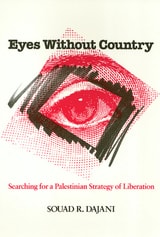
Eyes Without Country
Searching for a Palestinian Strategy of LiberationSouad R. Dajani
Temple University Press, 1994
Since Israel's occupation of the West Bank and Gaza Strip in 1967, the quest for just and lasting peace has been a fountainhead of debate, negotiation, and violent friction. Souad Dajani traces the Palestinians' struggle and argues for a strategy of nonviolent civilian resistance based on deterrence and defense. This strategy would defeat Israel's political will to maintain their occupation and prepare Palestinians for a time beyond the interim period of self-rule agreed upon by Israel and the PLO in September 19932.
Dajani's formulation of nonviolent civilian resistance is examined against a backdrop of early developments in Mandate Palestine, the impact of Zionist ideology, and the realities of life for Palestinians under occupation. Her assessment of the role of the PLO, objectives of the Palestinian National Movement, developments since the Gulf War, and other factors crucial to an effective strategy raises critical questions surrounding the operation of nonviolent techniques for the Palestinian community, Israeli politics, and international actors, most prominently the United States.
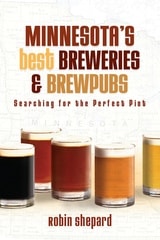
Minnesota’s Best Breweries and Brewpubs
Searching for the Perfect PintRobin Shepard
University of Wisconsin Press, 2011
Based on four years of travel and research, Minnesota’s Best Breweries and Brewpubs is a welcome addition to Robin Shepard’s series of guides to the best of the Midwest’s beer industries. From large-scale breweries such as Cold Spring, to chains like Granite City, to individual brewpubs like Fitger’s Brewhouse, Shepard provides commentary for more than thirty beer makers and three-hundred Minnesota beers. Accessible enough for people at all stages in their journeys to discover great-tasting beer, the information-packed guidebook also features a list of helpful books and websites, as well as information on Minnesota’s beer tastings and festivals.
For each brewery and brewpub site you’ll find:
• a description and brief history, plus many “don’t miss” features
• a description of beers on tap and a list of seasonal and specialty beers
• a space for the brewmaster’s autograph
• notes on the pub food, with recommendations
• suggestions of nearby sights and activities
• general directions to the location
• Shepard’s personal ratings of the experience, plus room to add your own.
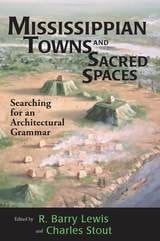
Mississippian Towns and Sacred Spaces
Searching for an Architectural GrammarEdited by R. Barry Lewis and Charles Stout
University of Alabama Press, 1998
Archaeologists and architects draw upon theoretical perspectives from their fields to provide valuable insights into the structure, development, and meaning of prehistoric communities.
Architecture is the most visible physical manifestation of human culture. The built environment envelops our lives and projects our distinctive regional and ethnic identities to the world around us. Archaeology and architecture find common theoretical ground in their perspectives of the homes, spaces, and communities that people create for themselves. Although archaeologists and architects may ask different questions and apply different methods, the results are the same—a deeper understanding of what it means to be human.
In this volume, prominent archaeologists examine the architectural design spaces of Mississippian towns and mound centers of the eastern United States. The diverse Mississippian societies, which existed between A.D. 900 and 1700, created some of the largest and most complex Native American archaeological sites in the United States. The dominant architectural feature shared by these communities was one or more large plazas, each of which was often flanked by buildings set on platform mounds. The authors describe the major dimensions of an architectural grammar, centered on the design of the plaza and mound complex that was shared by different societies across the Mississippian world. They then explore these shared architectural features as physical representations or metaphors for Mississippian world views and culture.
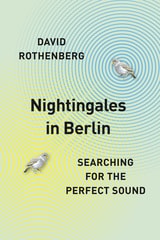
Nightingales in Berlin
Searching for the Perfect SoundDavid Rothenberg
University of Chicago Press, 2019
But have you ever listened closely to a nightingale’s song? It’s a strange and unsettling sort of composition—an eclectic assortment of chirps, whirs, trills, clicks, whistles, twitters, and gurgles. At times it is mellifluous, at others downright guttural. It is a rhythmic assault, always eluding capture. What happens if you decide to join in?
As philosopher and musician David Rothenberg shows in this searching and personal new book, the nightingale’s song is so peculiar in part because it reflects our own cacophony back at us. As vocal learners, nightingales acquire their music through the world around them, singing amidst the sounds of humanity in all its contradictions of noise and beauty, hard machinery and soft melody. Rather than try to capture a sound not made for us to understand, Rothenberg seeks these musical creatures out, clarinet in tow, and makes a new sound with them. He takes us to the urban landscape of Berlin—longtime home to nightingale colonies where the birds sing ever louder in order to be heard—and invites us to listen in on their remarkable collaboration as birds and instruments riff off of each other’s sounds. Through dialogue, travel records, sonograms, tours of Berlin’s city parks, and musings on the place animal music occupies in our collective imagination, Rothenberg takes us on a quest for a new sonic alchemy, a music impossible for any one species to make alone. In the tradition of The Hidden Life of Trees and The Invention of Nature, Rothenberg has written a provocative and accessible book to attune us ever closer to the natural environment around us.
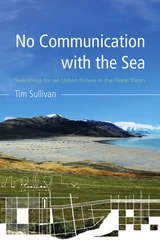
No Communication with the Sea
Searching for an Urban Future in the Great BasinTim Sullivan
University of Arizona Press, 2010
No Communication with the Sea is a journey through this urbanizing Great Basin landscape. Here, the land fosters illusions of limitless space and resources, but its space and resources are severely limited; its people live clustered in cities but are often reluctant to embrace urbanity. These tensions led journalist and urban planner Tim Sullivan to explore the developing centers and edges of the Great Basin cities and the ways some are trying to build livable and sustainable urban environments.
In this highly readable book of creative nonfiction, Sullivan employs a variety of methods—including interviews, research, travelogues, and narrative—to survey the harsh landscape for clues to the ways cities can adapt to their geography, topography, ecology, hydrography, history, and culture. No Communication with the Sea embarks on a quest for a livable future for the heart of the interior West. In the process, it both unearths the past and ponders the present and future Great Basin cities.
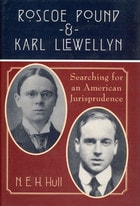
Roscoe Pound and Karl Llewellyn
Searching for an American JurisprudenceN. E. H. Hull
University of Chicago Press, 1997
Through meticulous archival research, Hull shows how the intellectual battles of the day took place against a network of private and public relationships and demonstrates how Pound's and Llewellyn's ideas of jurisprudence sprang from a kind of intellectual bricolage, the pragmatic assemblage of parts rather than the development of a unified whole, that is peculiarly American. Humorous, engaging, and provocative, Roscoe Pound and Karl Llewellyn uncovers the roots of American jurisprudence in the lives of two of its most compelling figures.
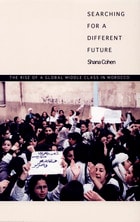
Searching for a Different Future
The Rise of a Global Middle Class in MoroccoShana Cohen
Duke University Press, 2004
Cohen delves into the rupture that has occurred between the middle class, the individual, and the nation in Morocco and elsewhere around the world. Combining institutional economic analysis with cultural theory and ethnographic observation including interviews with seventy young adults in Casablanca and Rabat, she reveals how young, urban, educated Moroccans conceive of their material, social, and political conditions. She finds that, for the most part, they perceive improvement in their economic and social welfare apart from the types of civic participation commonly connected with nationalism and national identity. In answering classic sociological questions about how the evolution of capitalism influences identity, Cohen sheds new light on the measurable social and economic consequences of globalization and on its less tangible effects on individuals’ perception of their place in society and prospects in life.
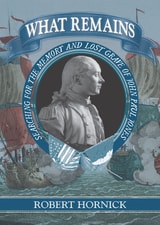
What Remains
Searching for the Memory and Lost Grave of John Paul JonesRobert Hornick
University of Massachusetts Press, 2017
John Paul Jones is now considered a Revolutionary War hero and the father of the American Navy, his defiant words “I have not yet begun to fight!” the epitome of courage under fire. It has not always been so. When the Revolutionary War ended, Jones's celebrity vanished. His death in Paris a decade later went unnoticed; he was buried in a foreign grave and forgotten by his fellow Americans.
In What Remains, Robert Hornick explores why Jones was forgotten, the subsequent recovery of his memory and remains, and the much delayed commemoration of his achievement. The book chronicles the efforts of the men and women who, in the nineteenth and early twentieth centuries, reconstructed Jones's legacy, searched for and finally found his lost grave, and returned both his physical remains and his memory to a place of honor. It also recounts the extraordinary moment when Theodore Roosevelt utilized Jones's commemoration to proclaim America a global power. What Remains offers a fascinating story of opportunists and evangelists: of politicians who needed Jones to advance their agendas, but also of fellow warriors committed to recovering one of their own from obscurity and shame.

Wisconsin's Best Breweries and Brewpubs
Searching for the Perfect PintRobin Shepard
University of Wisconsin Press, 2001
This information-packed guidebook introduces you to more than sixty breweries and brewpubs—from the Shipwrecked Brew Pub in Egg Harbor, to smaller craft breweries like Capital Brewery west of Madison, to the world-famous Miller Brewing Company of Milwaukee. Robin Shepard includes descriptions and his personal ratings of some 600 local beers, plus a taster’s chart you can use to record your own preferences.
For each brewpub and brewery site you’ll find:
• a description and brief history, plus any "Don’t miss" features
• names, comments, and ratings for all their specialty beers
• notes on the pub food, with recommendations
• suggestions of other sites to see and activities in the local area
• information about bottling and distribution
• availability of tours, tastings, gift shops, mug clubs, and "growlers"
• address and contact data, including Web sites and GPS coordinates!
Shepard also introduces novices to the brewing process and a wide variety of beer styles. And, you’ll find a list of helpful books and Web sites, as well as information on Wisconsin beer tastings and festivals. As we say in Wisconsin, "So, have a couple a two, three beers, hey?"