Results by title
4 books match the query 'Seaside resorts'
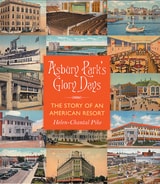
Asbury Park's Glory Days
The Story of an American ResortPike, Helen-Chantal
Rutgers University Press, 2007
In Asbury Park's Glory Days, award-winning author Helen-Chantal Pike chronicles the city's heyday-the ninety-year period between 1890 and 1980. Pike illuminates the historical conditions contributing to the town's cycle of booms and recessions. She investigates the factors that influenced these peaks, such as location, lodging, dining, nightlife, merchandising, and immigration, and how and why millions of people spent their leisure time within this one-square-mile boundary on the northern coast of the state. Pike also includes an epilogue describing recent attempts to resurrect this once-vibrant city.

By the Beautiful Sea
The Rise and High Times of That Great American Resort, Atlantic CityFunnell, Charles
Rutgers University Press, 1983

Queering Rehoboth Beach
Beyond the BoardwalkJames T. Sears
Temple University Press, 2024
Sears draws upon extensive oral history accounts, archival material, and personal narratives to chronicle “the Battle for Rehoboth,” which unfolded in the late 20th century, as conservative town leaders and homeowners opposed progressive entrepreneurs and gay activists. He recounts not just the emergence of the gay and lesbian bars, dance clubs, and organizations that drew the queer community to the region, but also the efforts of local politicians and homeowners, among other groups who fought to develop and protect the traditional identity of this beach town. Moreover, issues of race, class, and gender and sexuality informed opinions as residents and visitors struggled with the AIDS crisis and the legacy of Jim Crow.
Queering Rehoboth Beach is more than just an inspiring story about a community’s resilience and determination to establish a safe space for itself in the wake of the era of Don’t Ask, Don’t Tell. It is also a terrific beach read.

The Country of the Pointed Firs and Other Stories
Sarah Orne Jewett
University of New Hampshire Press, 1997
The Country of the Pointed Firs (1896) is Sarah Orne Jewett's most popular book. In its elegantly constructed sketches, a worldly, anonymous writer spends the summer in a tiny Maine fishing village where she hopes to find peace and solitude. As she gains the acceptance and trust of her hosts, the community's power and complexity are slowly revealed. While its episodes portray the difficulty and loneliness of rural life, they also display its dignity and strength, particularly as expressed in the bonds between women: mothers, daughters, and friends.
This centennial edition contains a facsimile of the original text, thereby restoring the novel to Jewett's own version, which had been considerably altered in other published versions, plus four related stories. Further enhancing the importance of this volume is editor Sarah Way Sherman's introduction, which includes a sketch of Jewett's life and professional development, a commentary on textual accuracy, and a discussion of the book's themes and techniques as well as its historical context.