Results by title
24 books match the query 'Seasons'
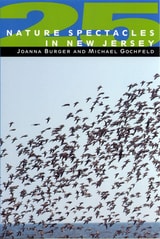
25 Nature Spectacles in New Jersey
Burger, Joanna
Rutgers University Press, 2000
Join Joanna Burger and Michael Gochfeld as they guide readers to New Jersey’s most marvelous natural spectacles. From mating horseshoe crabs in the Delaware Bay to goldenclub and orchids at Web’s Mill Bog, the authors show us Garden State nature at its best.
While New Jersey boasts far more than 25 nature spectacles, the authors have selected those that are the most dramatic, predictable, and characteristic of the state so readers can easily enjoy them over and over again. Being in the right place at the right time makes all the difference, so the guidebook is organized by season to ensure the best viewing.
Each chapter begins with a photo and a brief description of the spectacle. A listing of key locations, directions, and the best time to visit follows. A prime habitat section provides a brief characterization of the appropriate surroundings to look for the plant or animal spectacle. The description provides ambiance, natural and life history information allowing readers to enjoy fully what they are observing. A final section lists an agency or organization where more information can be found.
The book contains maps as well as a calendar of recommended events, including the Lambertville Shad Festival and the Barnegat Bay Duck Decoy Festival. The authors also list a number of other spectacles that while they didn’t make the top 25 list, but are well-worth checking out—including a tongue-in-cheek look at what may be New Jersey’s best-known wildlife, humans at the shopping mall.
This book grows from the authors’ quarter century of exploring the state’s estuaries, bays, fields, and forests, observing and enjoying its natural habitats. They’ve written the perfect guidebook for everyone, whether you are ready to head off to the great outdoors or prefer to read about nature from the comfort of your armchair.
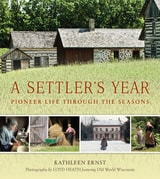
A Settler's Year
Pioneer Life through the SeasonsKathleen Ernst
Wisconsin Historical Society Press, 2015
"This is a book with great meaning for those of us who grew up on farms, and a book to be shared with young people eager to know more about pioneer life." --Jerry Apps, author of "Old Farm: A History" and "Whispers and Shadows: A Naturalist's Memoir"
"A Settler's Year" provides a rare glimpse into the lives of early immigrants to the upper Midwest. Evocative photographs taken at Old World Wisconsin, the country's largest outdoor museum of rural life, lushly illustrate stories woven by historian, novelist, and poet Kathleen Ernst and compelling firsthand accounts left by the settlers themselves.
In this beautiful book, readers will discover the challenges and triumphs found in the seasonal rhythms of rural life in the nineteenth and early twentieth centuries. As they turn the pages--traveling from sprawling farm to tidy crossroads village, and from cramped and smoky cabins to gracious, well-furnished homes--they'll experience the back-straining chores, cherished folk traditions, annual celebrations, and indomitable spirit that comprised pioneer life.
At its heart "A Settler's Year" is about people dreaming of, searching for, and creating new homes in a new land. This moving book transports us back to the pioneer era and inspires us to explore the stories found on our own family trees.
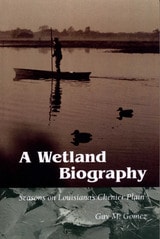
A Wetland Biography
Seasons on Louisiana’s Chenier PlainBy Gay M. Gomez
University of Texas Press, 1998
Louisiana's Chenier Plain is a 2,200-square-mile region of marshes and oak-covered ridges (cheniers) that stretches along the Gulf of Mexico from Sabine Lake to Vermilion Bay. Its inhabitants, some 6,000 people of Cajun and other ancestries, retain strong economic and cultural ties to the land and its teeming wildlife. They call it paradise...but it is a vulnerable paradise. In this multifaceted study, Gay Gomez explores the interaction of the land, people, and wildlife of the Chenier Plain, revealing both the uniqueness of the region and the challenges it faces.
After describing the geography and history of the Chenier Plain, Gomez turns to the lifeways of its people. Drawing on their words and stories, she tells how the chenier dwellers combine modern occupations with traditional pursuits such as alligator and waterfowl hunting, fur trapping, and fishing. She shows how these traditions of wildlife use provide both economic incentives for conservation and a source of personal and place identity. This portrait of a "working wetland" reveals how wildlife use and appreciation can give rise to a stewardship that balances biological, economic, and cultural concerns in species and habitat protection.
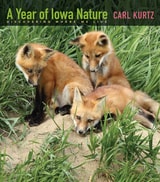
A Year of Iowa Nature
Discovering Where We LiveCarl Kurtz
University of Iowa Press, 2014
Concentrating on Iowa’s tallgrass prairie, Kurtz also points his viewfinder toward the great variety of natural habitats in the eastern United States. Arranged chronologically throughout the year, the fifty-five color photos and their accompanying narratives rotate through the seasons like a nature film. The winter months showcase a frost-covered white-tailed deer, cedar waxwings feeding on winter apples, a muskrat on the surface of an icy pond, and dune-like snowdrifts. Kurtz’s palette warms up in springtime with stunning photos of Virginia bluebells, fox cubs, juvenile chipmunks, and ruddy ducks. Summer brings a host of butterflies, frogs, and goldfinches as well as blooming prairie plants. The colors become more subdued in fall with the change in light, revealing the rich hues of Indian grass and big bluestem and the subtle plumage of migrating warblers.
Just as Kurtz’s Practical Guide to Prairie Reconstruction offers an indispensable manual for individuals and land managers working to create a diverse prairie community, so does A Year of Iowa Nature point the way toward a sincere, month-by-month appreciation of the natural world around us.
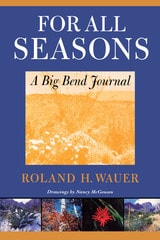
For All Seasons
A Big Bend JournalBy Roland H. Wauer
University of Texas Press, 1997
Something about Big Bend National Park draws visitors again and again. Maybe it's the spare beauty of the mountains and desert, the dawn chorus of birds, or the vivid stars in the velvet night. All of these things have made it Roland Wauer's favorite place. In this book, he shares his love of the Big Bend through journal entries that chronicle a year in the life of the park.
Wauer worked as Chief Park Naturalist from 1966 to 1972 and has visited the park frequently ever since. His journal entries span these thirty years, providing not only a composite portrait of a typical year but also a clear sense of how the park's natural history has changed over three decades. He spices his account with anecdotes, often humorous, ranging from stumbling across a herd of javelinas to being trailed by a mountain lion in the dark to discovering new species of plants and animals.
Few authors know the Big Bend as Roland Wauer does or have written about it in a more engaging way. This beautifully illustrated book is the perfect companion for a visit to the park, whether in person or by armchair.

Gates of the Seasons
Peter S. Knobel
Central Conference of American Rabbis, 1983
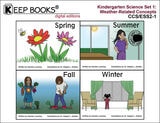
KEEP BOOKS Digital Editions Kindergarten Science Set 1
Weather-Related ConceptsMarsha Levering
Keep Books, 2020
Stories include: Spring, Summer, Fall, & Winter.
Stories include: Spring, Summer, Fall, & Winter.
Age Level: 5/6
Grade Level: Kindergarten
Reading level: not leveled
KEEP BOOKS digital editions include text features and design elements that give beginning readers what they need to start reading on their own with high interest titles that they can easily manage.
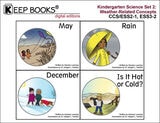
KEEP BOOKS Digital Editions Kindergarten Science Set 2
Weather-Related ConceptsMarsha Levering
Keep Books, 2020
This set of four books offers engaging stories that combine features of early literacy learning while exploring weather-related concepts from Common Core State Standards and Next Generation Science Standards.
Stories include: May, Rain, December, & Is It Hot or Cold?.
Age Level: 5/6
Grade Level: Kindergarten
Reading level: not leveled
KEEP BOOKS digital editions include text features and design elements that give beginning readers what they need to start reading on their own with high interest titles that they can easily manage.
Kids Save the Seasons
Albany Jacobson Eckert
Michigan Publishing Services, 2019
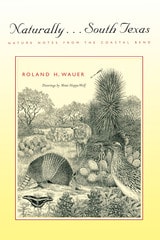
Naturally . . . South Texas
Nature Notes from the Coastal BendBy Roland H. Wauer
University of Texas Press, 2001
The Golden Crescent of South Texas, a fifteen-county region along and inland from the middle Gulf Coast, is often called "the Crossroads" because of its natural diversity. Located in the heart of the Gulf Coast Prairie and Marshes, the area also encompasses the trailing edges of the South Texas Plains, Post Oak Savannah, and Blackland Prairie. This confluence of ecological zones makes it a wonderful place for birding and for observing the changing face of nature, especially during seasonal transitions.
In this book, Ro Wauer describes a typical year in the natural life of South Texas. Using selected entries from his weekly column in the Victoria Advocate newspaper, he discusses numerous topics for each month, from the first appearance of butterflies in January, to alligators making a comeback in July, to the Christmas bird count in December. His observations are filled with intriguing natural history lore, from what sounds mockingbirds will imitate (almost any noise in their neighborhood) to how armadillos swim (by inflating themselves to increase their buoyancy).
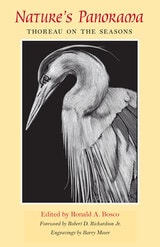
Nature's Panorama
Thoreau on the SeasonsRonald A. Bosco
University of Massachusetts Press, 2005
Sponsored by the Thoreau Society, the brief, handsomely presented books in this series offer the thoughts of a great writer on a variety of topics, some that we readily associate with him, some that may be surprising. Each volume includes selections from his familiar published works as well as from less well known lectures, letters, and journal entries. The books include original engravings by renowned illustrator and book artist Barry Moser.
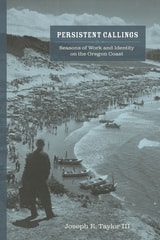
Persistent Callings
Seasons of Work and Identity on the Oregon CoastJoseph E. Taylor
Oregon State University Press, 2019
The Nestucca Valley is a small watershed, tucked away in one corner of a county in far western Oregon. There are no incorporated towns, and cows outnumber humans. It has long been a place without a written history, yet its past offers many surprising twists on received wisdom about rural economies. In crisp prose and succinct chapters, Persistent Callings carries readers from aboriginal times to the present, illustrating the wisdom of seasonal labor, the complex relationships between work and identity, and the resilience of rural economics across more than a century of almost continual change.
Life in this watershed, known to locals as “South County,” has always been demanding. Farming, fishing, and logging were difficult occupations, but work had deeper meanings. Challenges arrived in many forms, including climate shifts, market crashes, regulatory changes, and industry consolidations. Residents’ ability to innovate was their greatest resource, and their persistence helps us to recognize the callings they pursued.
During the late twentieth and early twenty-first centuries, disruptions came more quickly, and they coincided with infusions of capital that dramatically altered the structure of employment, with devastating results for the valley’s hardest working residents. Unemployment and poverty skyrocketed while health and life expectancy dropped to alarming levels. Moreover, the arrival of retirees and rise of environmental amenities actually exacerbated some ecological problems. Little in this history plays out as expected, and much of it will make readers reconsider how they think about the social, economic, and environmental contours of rural life in the American West.
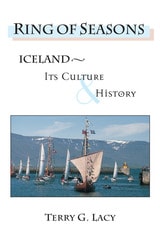
Ring of Seasons
Iceland--Its Culture and HistoryTerry G. Lacy
University of Michigan Press, 2000
In Ring of Seasons, Terry Lacy--an American who has lived in Iceland for twenty-four years-- brings both the perspective of the outsider and the familiar eye of the long-term resident to this delightful exploration of all facets of Iceland, past and present. She conveys her story with a skillful interlacing of history, religion, politics, and culture to paint a vivid picture of the way Icelanders live today as members of a wealthy society still very dependent upon nature--from a reliance on her icy waters to support an international fishing industry to a watchful cohabitation with the volcanoes that both destroy villages and create new islands.
This is a book for all who have been charmed by reading the Norse sagas, for all those intrigued by the country that can claim the oldest living democracy. It is an excellent introduction for anyone planning to visit Iceland and a delightful read for all those who do their exploration from the comfort of an armchair.
Terry G. Lacy is an American currently residing in Reykjavik, Iceland.
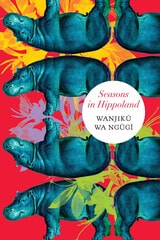
Seasons in Hippoland
Wanjiku Wa Ngugi
Seagull Books, 2021
Victoriana is a country ruled by an Emperor-for-Life who is dying from an illness not officially acknowledged in a land where truth and facts are decided by the Emperor. The elite goes along with the charade. Their children are conditioned to conform. It is a land of truthful lies, where reality has uncertain meaning.
Mumbi, a rebellious child from the capital of Westville, and her brother are sent to live in rural Hippoland. But what was meant to be a punishment turns out to be a glorious discovery of the magic of the land, best captured in the stories their eccentric aunt Sara tells them. Most captivating to the children is the tale of a porcelain bowl supposed to possess healing powers. Returning to Westville as an adult, Mumbi spreads the story throughout the city and to the entire country. Exhausted by years of endless bleak lies, the people are fascinated by the mystery of the porcelain bowl. When word of its healing powers reaches the Emperor himself, he commands Mumbi to find it for him—with dramatic consequences for everyone in Victoriana.
Captivating and enchanting, Seasons in Hippoland plays with the tradition of magic realism. Every image in this novel is a story, and every story is a call for resistance to anyone who tries to confine our imagination or corrupt our humanity.
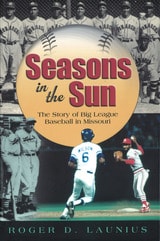
Seasons in the Sun
The Story of Big League Baseball in MissouriRoger D. Launius
University of Missouri Press, 2002

Seasons of Hunger
Fighting Cycles of Starvation Among the World's Rural PoorStephen Devereux, Samuel Hauenstein Swan, and Bapu Vaitla
Pluto Press, 2008
Every year, millions of the rural poor suffer from predictable and preventable seasonal hunger. This hunger is less dramatic but no less damaging than the starvation associated with famines, wars and natural disasters. Seasons of Hunger explores why the world does not react to a crisis that we know will continue year after year.
Seasonal hunger is caused by annual cycles of shrinking food stocks, rising prices, and lack of income. This hidden hunger pushes millions of children to the brink of starvation every year, permanently stunting their physical and cognitive development, weakening their immune systems and opening the door for killer diseases. Action Against Hunger argue that ending seasonal hunger could save millions of young lives and is key to achieving the Millennium Development Goals. This book documents seasonal hunger in four countries - India, Malawi, Mali and Myanmar - including personal stories and country-wide data which shows the magnitude of the problem.
The authors also find encouraging examples of interventions designed to address seasonality - initiatives led by governments, donors and NGOs, and poor people themselves - and propose a package of advocacy messages that could contribute to the global eradication of seasonal hunger. This book will be a valuable resource for journalists, policy makers, NGO members and students of development studies.
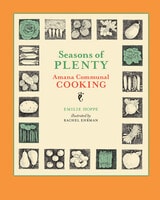
Seasons of Plenty
Amana Communal CookingEmilie Hoppe
University of Iowa Press, 2008
Seasons of Plenty provides colorful descriptions, folk stories, appealing photgraphs and illustrations, excerpts from journals and ledgers, recipes for good food like savory dumpling soup, mashed potatoes with browned bread crumbs, Sauerbraten, and feather light apple fritters.
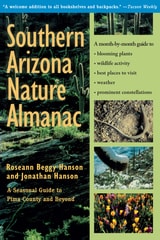
Southern Arizona Nature Almanac
Roseann Beggy Hanson and Jonathan Hanson
University of Arizona Press, 2003
In addition to original illustrations by Jonathan Hanson, the guide includes photos and weather charts. Handy appendixes include lists of birds, mammals, reptiles, butterflies, and a desert plants "blooming calendar." Accessible to the fledgling naturalist and detailed enough for the natural scientist, the Southern Arizona Nature Almanac is a definitive resource guide to the natural wonders of this fascinating land.
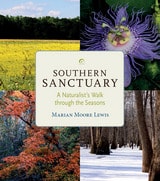
Southern Sanctuary
A Naturalist's Walk through the SeasonsMarian Moore Lewis
University of Alabama Press, 2015
Lewis has organized this beautifully presented volume into twelve monthly chapters. She starts her year in April after the crystalline frosts of winter have thawed. Already a bobcat has stamped a padded paw print in the lush spring muds as crossvine blossoms of magenta and lemon beckon winged pollinators nearby. Walk with her into the months of summer, when trees leaf out into a cathedral of habitats for birds, insects, and small mammals. In language naturalists of any age will enjoy, Lewis explains marvelous compound eyes, called ommatidia, of iridescent dragonflies and the homey carpentry of beavers damming a creek. As colored reflections signal autumn, companionable songbirds migrate south while the last caterpillars of summer roll themselves into a leaf tent, or hibernaculum, to exist in diapause until next spring. In winter, Lewis admires nature at rest and rocks like chert, sought by Native Americans for arrowheads. Chert lies over bedrock of crenellated limestone, remnant of a time when an undersea Alabama reverberated with life preparing to emerge from the sea.
Southern Sanctuary provides a rich compendium of useful features. Lewis uses both common and Latin names for the insects, plants and flowers, fungi, fish, reptiles, and mammals thus enriching knowledge of botany and zoology. Her photos and descriptions make it easy for explorers of Southern Appalachian riparian habitats to use the book to identify species of plants and animals near their own homes. Rounding out this astonishing work are handy guides to additional resources, taxonomy and measurements, rainfall, soil types, and native trees.
Southern Sanctuary will be of value to educators and students, professional and amateur naturalists, hikers, birdwatchers, botanists, and ecologists. Infusing a wealth of useful information into an elegant design, it encourages an awareness of Alabama’s rich biodiversity. Marian Moore Lewis’s Southern Sanctuary is a new classic in the best tradition of nature writing.
The Seasons Of Fire
Reflections On Fire In The WestDavid J. Strohmaier
University of Nevada Press, 2001
Fire is a fearsome constant in the America West. As the author David J. Strohmaier notes, "Whether we have tended a campfire along Oregon's Deschutes River in March, engaged the advancing front of a Great Basin wildfire in the torrid heat of August, or watched fire settle into the subdued, smoldering leaf piles of October, all of our lives, to one degree or another, are bracketed by fire." In The Seasons of Fire, Strohmaier effectively blends nature writing, personal essay, and philosophical analysis as he deliberately crosses disciplinary boundaries. He discusses the "moral" dimensions of fire—not only whether fires are good, bad, or indifferent phenomena, but also how fire, more generally understood, shapes meaning for human life. The consequences of discussing the moral side of fire speak directly to the contours of the human soul, and to our sense of our place on the land. Strohmaier, a long-term firefighter himself, includes accurate and sometimes gut-wrenching descriptions of the firefighter's experience.
The Seasons of the Robin
By Don Grussing
University of Texas Press, 2009
In a small nest in a large oak tree, the drama begins. A young American Robin breaks open his shell and emerges into a world that will provide the warmth of sunny days and the life-threatening chill of cold, rainy nights; the satisfaction of a full stomach and the danger of sudden predator attacks; and the chance to mature into an adult robin who'll begin the cycle of life all over again come next spring.
In The Seasons of the Robin, Don Grussing tells the uncommon life story of one of the most common birds, the North American Robin. Written as fiction to capture the high drama that goes on unnoticed right outside our windows, the book follows a young male robin through the first year of life. From his perspective, we experience many common episodes of a bird's life—struggling to get out of the egg; awkwardly attempting to master flight; learning to avoid predators; migrating for the first time; returning home; establishing a territory; finding a mate; and beginning the cycle again. This creative approach of presenting natural history through a fictional, yet factually based, story allows us to experience the spine-tingling, nerve-wracking, adrenaline-flowing excitement that is so much a part of the life of every wild thing. As Don Grussing concludes in his preface, "Once you experience the world through a robin's eyes, I hope you'll look at every wild thing with new appreciation and respect for what they accomplish by living."
The Table
Seasons on a Colorado RanchLara Richardson
University Press of Colorado, 2024
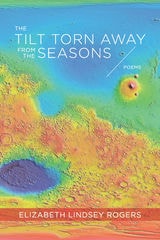
The Tilt Torn Away from the Seasons
PoemsElizabeth Lindsey Rogers
Acre Books, 2020
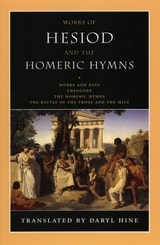
Works of Hesiod and the Homeric Hymns
Including Theogony and Works and DaysEdited by Daryl Hine
University of Chicago Press, 2004
In Works of Hesiod and the Homeric Hymns, highly acclaimed poet and translator Daryl Hine brings to life the words of Hesiod and the world of Archaic Greece. While most available versions of these early Greek writings are rendered in prose, Hine's illuminating translations represent these early classics as they originally appeared, in verse. Since prose was not invented as a literary medium until well after Hesiod's time, presenting these works as poems more closely approximates not only the mechanics but also the melody of the originals.
This volume includes Hesiod's Works and Days and Theogony, two of the oldest non-Homeric poems to survive from antiquity. Works and Days is in part a farmer's almanac—filled with cautionary tales and advice for managing harvests and maintaining a good work ethic—and Theogony is the earliest comprehensive account of classical mythology—including the names and genealogies of the gods (and giants and monsters) of Olympus, the sea, and the underworld. Hine brings out Hesiod's unmistakable personality; Hesiod's tales of his escapades and his gritty and persuasive voice not only give us a sense of the author's own character but also offer up a rare glimpse of the everyday life of ordinary people in the eighth century BCE.
In contrast, the Homeric Hymns are more distant in that they depict aristocratic life in a polished tone that reveals nothing of the narrators' personalities. These hymns (so named because they address the deities in short invocations at the beginning and end of each) are some of the earliest examples of epyllia, or short stories in the epic manner in Greek.
This volume unites Hine's skillful translations of the Works of Hesiod and the Homeric Hymns—along with Hine's rendering of the mock-Homeric epic The Battle of the Frogs and the Mice—in a stunning pairing of these masterful classics.