Results by title
36 books match the query 'Secrets'
Aristotle and the Secrets of Life
An Aristotle Detective NovelMargaret Doody
University of Chicago Press, 2014
With Aristotle and the Secrets of Life, tensions between the Athenians and the Makedonians—followers of another of Aristotle’s former students, Alexander the Great—draw our heroes across the Aegean Sea. Even as Aristotle and Stephanos escape from pirates, uncover conspiracy, and face the horrors of war, Aristotle finds time to discuss his studies of the natural world in this gripping tale of their quest into darkness.
Books of Secrets
Natural Philosophy in England, 1550-1600Allison Kavey
University of Illinois Press, 2007
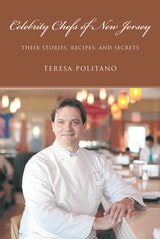
Celebrity Chefs of New Jersey
Their Stories, Recipes, and SecretsTeresa Politano
Rutgers University Press, 2010
Not so long ago, perhaps even just at the turn of this century, it was easy to lament the lack of sophisticated food in New Jersey. Oh sure, a few restaurants always sparkled, but, for the most part, New Jerseyans looked across at the bright lights of the big city, wistfully yearning for a table in glamorous Manhattan. Now, however, the most sought- after tables are right here and we have the best seats in the house, made even sweeter perhaps because they're our own little secret. We can dine frequently and dine well, with a smug sense that if only New Yorkers knew, they'd be looking across the river wishing they were us.
In Celebrity Chefs of New Jersey, Teresa Politano profiles Craig Shelton, the chef who crystallized New Jersey's place in culinary history with his legendary Ryland Inn, along with other chefs, telling their personal stories of both creativity and survival. Some of these men and women rose from humble or difficult childhoods to fame in the food world. Others were not only talented but lucky enough to be in the right place at the right time. Their stories are arranged into three categories: legends, stars, and chefs to watch, and then topped off with a sweet surprise finish. Politano includes photographs, cooking secrets, and some of their sought-after signature recipes that are sophisticated but manageable for the skilled home chef.

Discovering the Secrets of Soft-Paste Porcelain at the Saint-Cloud Manufactory, ca. 1690-1766
Bertrand Rondot
Bard Graduate Center, 1999
Egyptian Oedipus
Athanasius Kircher and the Secrets of AntiquityDaniel Stolzenberg
University of Chicago Press, 2013
Frankenstein
Penetrating the Secrets of NatureLederer, Susan E
Rutgers University Press, 2002
As science penetrates the secrets of nature, with each discovery generating new questions, Mary Shelley's Frankenstein will sound its note of warning. Many scientific developments have provoked references to Frankenstein, a story that, for nearly two centuries, has gripped our imaginations and haunted our nightmares. How can society balance the benefits of medical discoveries against the ethical or spiritual questions posed?
Frankenstein: Penetrating the Secrets of Nature accompanies a traveling exhibit of the same name. This lavishly illustrated volume begins by highlighting Shelley's novel and the context in which she conceived it. It next focuses on the redefinition of the Frankenstein myth in popular culture. Here, the fate of the monster becomes a moral lesson illustrating the punishment for ambitious scientists who seek to usurp the place of God by creating life. The final section examines the continuing power of the Frankenstein story to articulate present-day concerns raised by new developments in biomedicine such as cloning and xenografting (the use of animal organs in human bodies), and the role scientists and citizens play in determining acceptable limits of scientific and medical advances.
Graceland Cemetery
Chicago Stories, Symbols, and SecretsAdam Selzer
University of Illinois Press, 2022
Chosen for the 2024 Illinois Reads Program by the Illinois Reading Council
One of Chicago’s landmark attractions, Graceland Cemetery chronicles the city’s sprawling history through the stories of its people. Local historian and Graceland tour guide Adam Selzer presents ten walking tours covering almost the entirety of the cemetery grounds. While nodding to famous Graceland figures from Marshall Field to Ernie Banks to Ludwig Mies van der Rohe, Selzer also leads readers past the vaults, obelisks, and other markers that call attention to less recognized Chicagoans like:
- Jessie Williams de Priest, the Black wife of a congressman whose 1929 invitation to a White House tea party set off a storm of controversy;
- Engineer and architect Fazlur Khan, the Bangladeshi American who revived the city's skyscraper culture;
- The still-mysterious Kate Warn (listed as Warn on her tombstone), the United States’ first female private detective.
Filled with photographs and including detailed maps of each tour route, Graceland Cemetery is an insider's guide to one of Chicago's great outdoor destinations for city lore and history.
Kept Secret
The Half-Truth in NonfictionJen Hirt
Michigan State University Press, 2017
No Species Is an Island
Bats, Cacti, and Secrets of the Sonoran DesertTheodore H. Fleming; Illustrations by Kim Kanoa Duffek
University of Arizona Press, 2017
The Sonoran Desert is the most biologically diverse desert in the world. Four species of columnar cacti, including the iconic saguaro and organ pipe, are among its most conspicuous plants. No Species Is an Island describes Theodore H. Fleming’s eleven-year study of the pollination biology of these species at a site he named Tortilla Flats in Sonora, Mexico, near Kino Bay.
Now Fleming shares the surprising results of his intriguing work. Among the novel findings are one of the world’s rarest plant-breeding systems in a giant cactus; the ability of the organ pipe cactus to produce fruit with another species’ pollen; the highly specialized moth-cactus pollination system of the senita cactus; and the amazing lifestyle of the lesser long-nosed bat, the major nocturnal pollinator of three of these species.
These discoveries serve as a primer on how to conduct ecological research, and they offer important conservation lessons for us all. Fleming highlights the preciousness of the ecological web of our planet—Tortilla Flats is a place where cacti and migratory bats and birds connect such far-flung habitats as Mexico’s tropical dry forest, the Sonoran Desert, and the temperate rain forests of southeastern Alaska. Fleming offers an insightful look at how field ecologists work and at the often big surprises that come from looking carefully at a natural world where no species stands alone.

Prairie Keepers, The, 2nd ed
Secrets of the ZumwaltMarcy Houle
Oregon State University Press, 2007
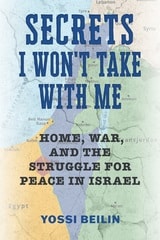
Secrets I Won't Take with Me
Home, War, and the Struggle for Peace in IsraelYossi Beilin
University of Alabama Press, 2025
An Israeli political leader’s riveting first-hand account of pivotal moments from recent Israeli history, including the Oslo Peace Accords, the founding of the Birthright Initiative, the assassination of Yitzhak Rabin, the rise of the Israeli far right, and more
In Secrets I Won't Take with Me, Yossi Beilin, a key Israeli political and ministerial leader, offers an intimate and candid memoir that chronicles pivotal events in the nation’s recent history. From the crucible of its founding to the complexities of the modern era, Beilin reveals an insider’s perspective and previously undocumented insights about the events that have and continue to shape Israel.
Beginning his career as an academic and a journalist, Beilin became the spokesperson of the Labor Party in 1977. Among his many career highlights include the chairmanship of the Meretz-Yachad Party, Minister of Justice, Minister of Religious Affairs, and Deputy Finance Minister, and perhaps most significantly, as Deputy Foreign Minister during the Israel-PLO Oslo Peace Accords. As a key architect of the Oslo Peace Accords, he shares unprecedented details of the negotiations that defined an era.
Beyond diplomacy, Beilin illuminates his role in shaping Israel’s identity, from steering Israel away from its alliance with apartheid South Africa to the foundation of the influential Birthright program. With unflinching honesty, Beilin navigates the triumphs and tragedies of a nation, from the euphoria of the Six-Day War to the heartbreak of Yitzhak Rabin’s assassination. A deeply personal memoir of one man’s life interwoven with a nation’s, Beilin’s stunning account of his career serves as a masterful tour d’horizon of Israel’s recent past and evolving future.
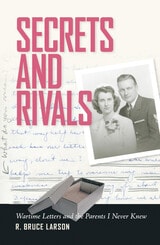
Secrets and Rivals
Wartime Letters and the Parents I Never KnewR. Bruce Larson
University of Missouri Press, 2015
Reading through the letters, he is drawn into his parents’ courtship amid the hardships of separation and war. Beyond the tumultuous romance, Larson finds that he barely recognizes his father, whom he knew only as distant and impassive. He uncovers shocking truths about his mother, Ruth, whom family lore had pigeonholed as sweetly pious.
At the time of the letters, Bob is a young Coast Guard clerk fighting off depression with thoughts of his dream girl back home. Back in Minnesota, Ruth passes the days adrift in romantic fantasies and liaisons with local admirers. Bob’s suspicions about Ruth and his obsession with her from afar threaten the young man’s fragile hold on his sanity, but he will not give her up. Decades later, their son comes to feel a tenderness for both his parents and to understand how their losses, fears, and reluctance can transform and refashion family bonds.
Secrets and Truths
Ethnography in the Archive of Romania's Secret PoliceKatherine Verdery
Central European University Press, 2014
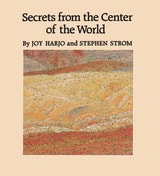
Secrets from the Center of the World
Joy Harjo and Stephen E. Strom
University of Arizona Press, 1989
This is Navajo country, a land of mysterious and delicate beauty. "Stephen Strom's photographs lead you to that place," writes Joy Harjo. "The camera eye becomes a space you can move through into the powerful landscapes that he photographs. The horizon may shift and change all around you, but underneath it is the heart with which we move." Harjo's prose poems accompany these images, interpreting each photograph as a story that evokes the spirit of the Earth. Images and words harmonize to evoke the mysteries of what the Navajo call the center of the world.
Secrets in a Dead Fish
The Spying Game in the First World WarMelanie King
Bodleian Library Publishing, 2014
Throughout World War I, spymasters and their networks of secret agents developed many clever—and sometimes comical—methods of covert communication. Stacks of bread in a bakery window, puffs of smoke from a chimney, and even woolen pullovers were all used to pass on secret messages that were decipherable only to the well-trained eye. Drawing on the memoirs of eight spies, Melanie King divulges these and other tricks of the trade while sharing details from their astonishing stories. Among her informants are British intelligence officers working undercover in Germany and France, including a former Metropolitan police officer who once hunted Jack the Ripper; a German secret service officer codenamed “Agricola;” an American newspaperman; and an Austrian agent who disguised himself during his career as everything from a Jewish peddler to a Russian officer.
A fascinating compendium of clever and long-forgotten ruses—interspersed with the stories of the spies themselves—Secrets in a Dead Fish sheds new light on the shadowy world of Great War espionage.

Secrets of Life with Brachial Plexus Palsy
Written by Denise Justice; Illustrated by Susan Eatmon; Edited by Holly Wagner
Michigan Publishing Services, 2020
Secrets of Life with Brachial Plexus Palsy is the story of a baby girl who grows up with dreams and ambitions like everybody else. Some of her dreams are to play like other children, to show others that there is nothing that she cannot do, and to pursue any career that she chooses when she grows up. Life with this condition can be challenging, and as the years pass, Marie uncovers secrets that allow her to overcome the stigma of her Brachial Plexus Palsy – secrets she would like to share with you…
Let Marie show you that living life with Brachial Plexus Palsy is an exciting journey!
Secrets of Responsibility
Jacques Derrida
University of Chicago Press, 2027
Jacques Derrida on the problem of secrecy, the first in a ten-seminar series on questions of responsibility.
Delivered at the École des hautes études en sciences sociales in Paris during the 1991–92 academic year, Secrets of Responsibility is the first of ten seminars given by Jacques Derrida under the umbrella “Questions of Responsibility,” a cycle that includes Hospitality, Perjury and Pardon, Death Penalty, and The Beast and the Sovereign—each also published by the University of Chicago Press.
In this seminar, Derrida asks a basic question—what is a secret?—which he then explores across scientific, technical, social, political, and religious domains. Over twelve sessions, we are treated to analyses of industrial, state, military, professional, and religious secrets as well as secret societies and secret police. Derrida also tackles secrecy in literary fiction (especially in Melville, James, Poe, and Baudelaire) and philosophical texts (including Freud, Kant, Heidegger, Kierkegaard, Patočka, Nietzsche, Levinas, and others). The result is a set of profound and surprising insights delivered as only Derrida can.
Secrets of the English War Bow
Hugh D. H. Soar
Westholme Publishing, 2010
A Complete Recreation of the Deadliest Medieval Arm
Dominating medieval battlefields for more than two centuries but requiring long and arduous practice to command, the English war bow and its battle shaft are the symbols of the rise of British power in Europe. Despite being crafted for hundreds of years and wielded by generations of archers, no example of the war bow—the military version of the longbow—exists, outside of a single broken limb. Now for the first time, expert craftsmen use all available evidence including applied archaeology to unlock the secrets of the English war bow. Historian Hugh D. H. Soar is joined by Mark Stretton, master blacksmith, and Joseph Gibbs, bowyer, in order to demonstrate how a war bow and its associated arrow heads and shafts may have been constructed and used. In addition to showing the complete manufacture of a bow from tree selection to stringing and how specialized arrowheads were forged and attached to shafts, Secrets of the English War Bowprovides information on the actual performance of the war bow, including the bow's effectiveness against various materials and, for the first time, its use against moving targets, since bows were often drawn against mounted soldiers. Armed with this new information, Soar provides an analysis of both successes and failures of the war bow in several important battles. Illustrated in color and black and white, Secrets of the English War Bowprovides an invaluable service for those interested in medieval military history, archery, and technology.
Secrets of the Great Ocean Liners
John G. Sayers
Bodleian Library Publishing, 2020
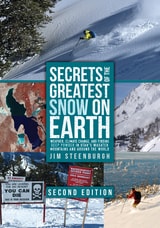
Secrets of the Greatest Snow on Earth, Second Edition
Weather, Climate Change, and Finding Deep Powder in Utah's Wasatch Mountains and Around the WorldJim Steenburgh
Utah State University Press, 2023
Utah has long claimed to have the greatest snow on Earth—the state itself has even trademarked the phrase. In Secrets of the Greatest Snow on Earth, Jim Steenburgh investigates Wasatch weather, exposing the myths, explaining the reality, and revealing how and why Utah’s powder lives up to its reputation. Steenburgh also examines ski and snowboard regions beyond Utah, providing a meteorological guide to mountain weather and snow climates around the world.
Chapters explore mountain weather, avalanches and snow safety, historical accounts of weather events and snow conditions, and the basics of climate and weather forecasting. In this second edition, Steenburgh explains what creates the best snow for skiing and snowboarding using accurate and accessible language and 150 color photographs and illustrations, making Secrets of the Greatest Snow on Earth a helpful tool for planning vacations and staying safe during mountain adventures.
This edition is updated with two new chapters covering microclimates and climate change in greater depth. Steenburgh addresses the declining snowpack and the future of snow across the western United States, as well as the declining snow and ice in several regions of the world—the European Alps in particular. Snowriders, weather enthusiasts, meteorologists, students of snow science, and anyone who dreams of deep powder and bluebird skies will want to get their gloves on this new edition of Secrets of the Greatest Snow on Earth.
Praise for the first edition:
“Everything you always wanted to know about how snow forms and how to follow forecasts so you see
how much an”d where is in the book. It’s a must-have for any fan of snow, sure to get you excited about
winter, and give you a bevy of conversation topics for the chairlift ride.”
—Utah Adventure Journal
“For backcountry enthusiasts that find themselves infatuated with weather patterns, snow-water
equivalents, microclimates, and Utah, this book is a dream come true.”
—The Backcountry Skiing Blog
“Steenburgh shares a career’s worth of knowledge in this book. His love of both snow science and skiing
is obvious, and he adds humor and personality to the scientific discussion.”
—First Tracks!! Online Skiing Magazine
“When it comes to snow, the details—both small- and large-scale—do matter. If we all observed our
surroundings with as much curiosity and enthusiasm as Steenburgh, the world could be a much better-
tended place.”
—American Scientist
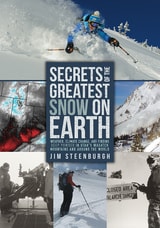
Secrets of the Greatest Snow on Earth
Weather, Climate Change, and Finding Deep Powder in Utah's Wasatch Mountains and around the WorldJim Steenburgh
Utah State University Press, 2014
Chapters explore mountain weather, avalanches and snow safety, historical accounts of weather events and snow conditions, and the basics of climate and weather forecasting. Steenburgh explains what creates the best snow for skiing and snowboarding in accurate and accessible language and illustrates his points with 150 color photographs, making Secrets of the Greatest Snow on Earth a helpful tool for planning vacations and staying safe during mountain adventures. Snowriders, weather enthusiasts, meteorologists, students of snow science, and anyone who dreams of deep powder and bluebird skies will want to get their gloves on Secrets of the Greatest Snow on Earth.
Watch Book Trailer!(Special thanks to Ski Utah)
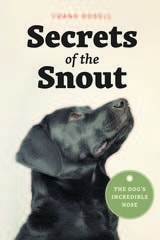
Secrets of the Snout
The Dog’s Incredible NoseFrank Rosell
University of Chicago Press, 2018
With 300 million receptors to our mere 5 million, a dog’s nose is estimated to be between 100,000 and 100 million times more sensitive than a human’s. No wonder, then, that our nasally inferior species has sought to unleash the prodigious power of canine shnozzes. Rosell here takes us for a walk with a pack of superhero sniffers including Tutta, a dog with a fine nose for fine wine; the pet-finder pooch AJ; search-and-rescue dog Barry; the hunting dog Balder; the police dogs Rasko and Trixxi; the warfare dog Lisa; the cancer detection dog Jack; Tucker, who scents floating killer whale feces; and even Elvis, who can smell when you’re ovulating. With each dog, Rosell turns his nose to the evolution of the unique olfactory systems involved, which odors dogs detect, and how they do it.
A celebration of how the canine sense for scents works—and works for us—Secrets of the Snout will have dog lovers, trainers, and researchers alike all howling with delight. Exploring this most pointed of canine wonders, Rosell reveals the often surprising ways in which dogs are bettering our world, one nose at a time.
Secrets of the Sun
A MemoirMako Yoshikawa
The Ohio State University Press, 2024
Secrets of the Universe
How We Discovered the CosmosPaul Murdin
University of Chicago Press, 2009
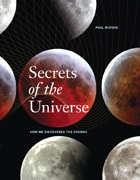
Discoveries in astronomy challenge our fundamental ideas about the universe. Where the astronomers of antiquity once spoke of fixed stars, we now speak of whirling galaxies and giant supernovae. Where we once thought Earth was the center of the universe, we now see it as a small planet among millions of other planetary systems, any number of which could also hold life. These dramatic shifts in our perspective hinge on thousands of individual discoveries: moments when it became clear to someone that some part of the universe—whether a planet or a supermassive black hole—was not as it once seemed.
Secrets of the Universe invites us to participate in these moments of revelation and wonder as scientists first experienced them. Renowned astronomer Paul Murdin here provides an ambitious and exciting overview of astronomy, conveying for newcomers and aficionados alike the most important discoveries of this science and introducing the many people who made them. Lavishly illustrated with more than 400 color images, the book outlines in seventy episodes what humankind has learned about the cosmos—and what scientists around the world are poised to learn in the coming decades. Arranged by types of discovery, it also provides an overarching narrative throughout that explains how the earliest ideas of the cosmos evolved into the cutting-edge astronomy we know today. Along the way, Murdin never forgets that science is a human endeavor, and that every discovery was the result of inspiration, hard work, or luck—usually all three.
The first section of Secrets explores discoveries made before the advent of the telescope, from stars and constellations to the position of our own sun. The second considers discoveries made within our own solar system, from the phases of Venus and the moons of Jupiter to the comets and asteroids at its distant frontier. The next section delves into discoveries of the dynamic universe, like gravitation, relativity, pulsars, and black holes. A fourth examines discoveries made within our own galaxy, from interstellar nebulae and supernovae to Cepheid variable stars and extrasolar planets. Next Murdin turns to discoveries made within the deepest recesses of the universe, like quasars, supermassive black holes, and gamma ray bursters. In the end, Murdin unveils where astronomy still teeters on the edge of discovery, considering dark matter and alien life.
Secrets to Writing Great Papers
Judi Kesselman-Turkel and Franklynn Peterson
University of Wisconsin Press, 2003
Secrets to Writing Great Papers illustrates how to work with ideas—develop them, hone them, and transform them into words. It provides techniques and exercises for brainstorming, choosing the right approach, working with an unknown or boring assigned topic, overcoming writer’s block, and selecting the best point of view.
Secrets, Sex, and Spectacle
The Rules of Scandal in Japan and the United StatesMark D. West
University of Chicago Press, 2006
A leader of a global superpower is betrayed by his mistress, who makes public the sordid details of their secret affair. His wife stands by as he denies the charges. Debates over definitions of moral leadership ensue. Sound familiar? If you guessed Clinton and Lewinsky, try again. This incident involved former Japanese prime minister Sosuke Uno and a geisha.
In Secrets, Sex, and Spectacle, Mark D. West organizes the seemingly random worlds of Japanese and American scandal—from corporate fraud to baseball cheaters, political corruption to celebrity sexcapades—to explore well-ingrained similarities and contrasts in law and society. In Japan and the United States, legal and organizational rules tell us what kind of behavior is considered scandalous. When Japanese and American scandal stories differ, those rules—rules that define what’s public and what’s private, rules that protect injuries to dignity and honor, and rules about sex, to name a few—often help explain the differences. In the cases of Clinton and Uno, the rules help explain why the media didn’t cover Uno’s affair, why Uno’s wife apologized on her husband’s behalf, and why Uno—and not Clinton—resigned.
Secrets, Sex, and Spectacle offers a novel approach to viewing the phenomenon of scandal—one that will be applauded by anyone who has obsessed over (or ridiculed) these public episodes.
Siena
City of SecretsJane Tylus
University of Chicago Press, 2015
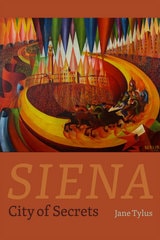
As Tylus leads us through the city, she shares her passion for Siena in novelistic prose, while never losing sight of the historical complexities that have made Siena one of the most fascinating and beautiful towns in Europe. Today, Siena can appear on the surface standoffish and old-fashioned, especially when compared to its larger, flashier cousins Rome and Florence. But first impressions wear away as we learn from Tylus that Siena was an innovator among the cities of Italy: the first to legislate the building and maintenance of its streets, the first to publicly fund its university, the first to institute a municipal bank, and even the first to ban automobile traffic from its city center.
We learn about Siena’s great artistic and architectural past, hidden behind centuries of painting and rebuilding, and about the distinctive characters of its different neighborhoods, exemplified in the Palio, the highly competitive horserace that takes place twice a year in the city’s main piazza and that serves as both a dividing and a uniting force for the Sienese. Throughout we are guided by the assured voice of a seasoned scholar with a gift for spinning a good story and an eye for the telling detail, whether we are traveling Siena’s modern highways, exploring its underground tunnels, tracking the city’s financial history, or celebrating giants of painting like Simone Martini or giants of the arena, Siena’s former Serie A soccer team.
A practical and engaging guide for tourists and armchair travelers alike, Siena is a testament to the powers of community and resilience in a place that is not quite as timeless and serene as it may at first appear.
Telling Narratives
Secrets in African American LiteratureLeslie W. Lewis
University of Illinois Press, 2007
Telling Narratives analyzes key texts from nineteenth- and early twentieth-century African American literature to demonstrate how secrets and their many tellings have become slavery's legacy. By focusing on the ways secrets are told in texts by Jessie Fauset, Charles W. Chesnutt, Pauline Hopkins, Frederick Douglass, and others, Leslie W. Lewis suggests an alternative model to the feminist dichotomy of "breaking silence" in response to sexual violence. This fascinating study also suggests that masculine bias problematically ignores female experience in order to equate slavery with social death. In calling attention to the sexual behavior of slave masters in African American literature, Lewis highlights its importance to slavery’s legacy and offers a new understanding of the origins of self-consciousness within African American experience.
The KGB and the Vatican
Secrets of the Mitrokhin FilesSean Brennan
Catholic University of America Press, 2022
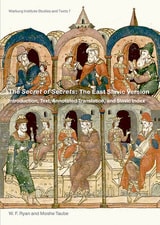
The Secret of Secrets
The East Slavic VersionEdited by W.F. Ryan and Moshe Taube
University of London Press, 2019
The Secret of Secrets
The Scholarly Career of a Pseudo-Aristotelian Text in the Latin Middle AgesSteven J. Williams
University of Michigan Press, 2003
The Secrets of Alchemy
Lawrence M. Principe
University of Chicago Press, 2012
The Secrets of the Hopewell Box
Stolen Elections, Southern Politics, and a City's Coming of AgeJames D. Squires
Vanderbilt University Press, 1996
—Kirkus Reviews
"His richly textured narrative charts the Nashville machine's rupture with the state's top political boss, Edward Crump of Memphis, and traces the sweeping reforms that shattered rural white control of the state legislature. Squires dramatically reenacts the downfall of Nashville lawyer Tommy Osborn, convicted of jury tampering in 1964 after defending Teamsters boss Jimmy Hoffa. He follows Nashville's transformation into a crucible of the civil rights movement in this stirring chronicle of the South's coming-of-age."
—Publishers Weekly
The Woman Who Knew Too Much, Revised Ed.
Alice Stewart and the Secrets of RadiationGayle Greene
University of Michigan Press, 2017
Author Gayle Greene traces Stewart's life and career as she came up against ever more powerful authorities, first the British medical profession, then the U.S. nuclear industry, and finally the regulatory agencies that set radiation safety standards throughout the world. Stewart endured the fate of other women scientists in having her findings dismissed and funding cut, but today is recognized as a pioneering figure in epidemiological research on the dangers of nuclear radiation. In her preface to the second edition, Greene looks at new information that’s come out about the forces and individuals responsible for marginalizing her as a scientist and downplaying the disturbing implications of her research.
The Woman Who Knew Too Much
Alice Stewart and the Secrets of RadiationGayle Greene
University of Michigan Press, 2001
This biography illuminates the life and achievements of the remarkable woman scientist who revolutionized the concept of radiation risk.
In the 1950s Alice Stewart began research that led to her discovery that fetal X rays double a child's risk of developing cancer. Two decades later---when she was in her seventies---she again astounded the scientific world with a study showing that the U.S. nuclear weapons industry is about twenty times more dangerous than safety regulations permit. This finding put her at the center of the international controversy over radiation risk. In 1990, the New York Times called Stewart "perhaps the Energy Department's most influential and feared scientific critic."
The Woman Who Knew Too Much traces Stewart's life and career from her early childhood in Sheffield to her medical education at Cambridge to her research positions at Oxford University and the University of Birmingham.
Gayle Greene is Professor of Women's Studies and Literature, Scripps College.
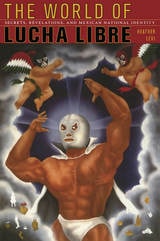
The World of Lucha Libre
Secrets, Revelations, and Mexican National IdentityHeather Levi
Duke University Press, 2008
Levi considers lucha libre in light of scholarship about sport, modernization, and the formation of the Mexican nation-state, and in connection to professional wrestling in the United States. She examines the role of secrecy in wrestling, the relationship between wrestlers and the characters they embody, and the meanings of the masks worn by luchadors. She discusses male wrestlers who perform masculine roles, those who cross-dress and perform feminine roles, and female wrestlers who wrestle each other. Investigating the relationship between lucha libre and the mass media, she highlights the history of the sport’s engagement with television: it was televised briefly in the early 1950s, but not again until 1991. Finally, Levi traces the circulation of lucha libre symbols in avant-garde artistic movements and its appropriation in left-wing political discourse. The World of Lucha Libre shows how a sport imported from the United States in the 1930s came to be an iconic symbol of Mexican cultural authenticity.