Results by title
7 books match the query 'Sections, columns, etc'
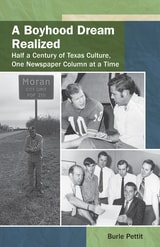
A Boyhood Dream Realized
Half a Century of Texas Culture, One Newspaper Column at a TimeBurle Pettit
University of North Texas Press, 2019

American Women Report World War I
Chris Dubbs
University of North Texas Press, 2021
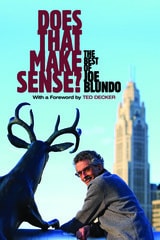
Does That Make Sense?
The Best of Joe BlundoJoe Blundo
The Ohio State University Press, 2019
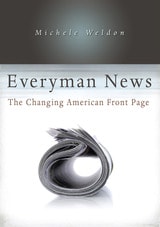
Everyman News
The Changing American Front PageMichele Weldon
University of Missouri Press, 2007
One need only look at the front pages of newspapers over the past few years to see that something has changed. Stories are more personal, more inclusive, less distant from readers’ experiences. Once called the first draft of history, news has become more of an anecdotal companion. The evidence is telling: stories use more unofficial sources than ever before; the “inverted pyramid” form of news writing is barely practiced; and, especially after 9/11, tragedy has become more humanized.
Scanning the crowded media landscape, Michele Weldon—a journalist passionate about her profession—takes a fresh look at how newspapers have carved out a narrative niche that reflects society’s fascination with personal stories and readers’ demands for diversity in content. Comparing some 850 stories, story approaches, and unofficial sourcing in twenty American newspapers for eight dates in 2001 and 2004—a total of 160 front pages—she shows a shift toward features over hard news, along with an increase in anecdotal or humanistic approaches to all stories.
Everyman News offers a provocative look at why American newspapers have become story papers, with their content and style saying as much about our culture as they do about the journalists and the readers. Weldon shows that a variety of forces both inside and outside journalism—blogs, citizen journalism, newsroom diversity, and other factors—have converged to remake the front page, and she unveils the content of “everyman news” as a commodity apart from the mode of delivery. Her assessment also incorporates more than fifty interviews with people connected to journalism about what these changes mean—revealing that not everyone in the industry believes they are for the better.
Is everyman news perhaps right for its time, or is it merely a symptom of what Weldon calls “Chicken Little journalism”? Weighing in on such matters as the New York Times’s “Portraits of Grief” series and the dangers of the blogosphere, she invites readers to make their own calls in this original and important contribution to the study of media. Everyman News is a book that will contribute to our understanding of newspapers in the new century—must reading for professionals and an eye-opener for anyone trying to comprehend the significant shifts in today’s front pages.
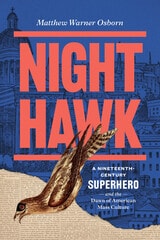
Night Hawk
A Nineteenth-Century Superhero and the Dawn of American Mass CultureMatthew Warner Osborn
University of Chicago Press, 2026
Unmasks the long-forgotten story of how a flying, superhuman vigilante played a pivotal role in the founding of the American labor movement.
On July 5, 1828, more than a century before Superman arrived on Earth, a superhero took flight in Philadelphia’s night sky. Buried on page three of a small local newspaper, the announcement of his arrival appeared under the title “The Night-Hawk, No. 1” with a cryptic epigraph from Romeo and Juliet: “I’ll be a candleholder and look on.” Who and what was the Night Hawk? As Matthew Warner Osborn reveals, this was the sobriquet of a mysterious columnist for the weekly Mechanics’ Free Press, the first radical socialist newspaper in America. Dressed in a mysterious cloak, the Night Hawk soared over Philadelphia, revealing the evil crimes of prominent gentlemen, fighting murderous criminals, and calling out fraudulent moral authorities.
The Night Hawk was the ingenious invention of an impoverished actor, Cornelius A. Logan, who created the character as a public champion of Philadelphia’s Working Men’s movement, the first successful American labor party. The Night Hawk’s nocturnal adventures transformed their socialist ideology into an entertaining fantasy that dramatized the struggle against industrial exploitation and the degradation of working people. The success of the character made Logan into a celebrity, and he went on to become a popular and innovative comedian on the antebellum stage.
A harbinger of the superheroes we know today, the Night Hawk promises to illuminate dark secrets from the past, but he can also shed light on our present. He ignites our need to see corrupt elites unmasked and held accountable for their actions, all while protecting the innocent and oppressed. Americans have always loved to fantasize about powerful superheroes who hide behind masks while chasing bad guys, and Osborn shows in this entertaining history how the Night Hawk was perhaps the first standard bearer for that enduring mystique.
Players, Teams, and Stadium Ghosts
Bob Hunter on SportsBob Hunter
Ohio University Press, 2019
In Players, Teams, and Stadium Ghosts, sportswriter Bob Hunter has assembled a Hall of Fame collection of his best writing from the Columbus Dispatch. Fans will encounter some of the biggest names in sports and relive great moments from games played by amateurs and pros. They’ll encounter forgotten players and teams that struggled.
Hunter shows us LeBron James when he was a 15-year-old high school freshman, already capturing the world’s attention; 20-year-old Derek Jeter’s meteoric rise through the minors, including the Columbus Clippers; a strange encounter with Pete Rose hustling frozen pizzas; and the excitement of watching future WNBA star Katie Smith dominate a Columbus Quest championship game. The common thread is the personal touch that Hunter consistently uses to take readers beyond the final scores and the dazzle of lights. These are the people behind the athletes. They’re remembered for how they played, but Hunter reminds us who they were.
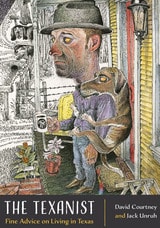
The Texanist
Fine Advice on Living in TexasBy David Courtney and Jack Unruh
University of Texas Press, 2017
The Texanist, Texas Monthly’s perennially popular back-page column, has become the magazine’s most-read feature. With an inimitable style and an unassailable wholesomeness, columnist David Courtney has counseled many a well-intentioned Texan, native or wannabe, on how to properly conduct him- or herself. Until the July 2016 issue, an original illustration by the late award-winning artist Jack Unruh, depicting the Texanist in a situation described in the column, accompanied the Texanist’s sage wisdom. Unruh’s peerless illustrations displayed a sly wit that paired perfectly with Courtney’s humorous ripostes.
The Texanist gathers several dozen of Unruh’s most unforgettable illustrations, along with the fascinating, perplexing, and even downright weird questions that inspired them. Curing the curious, exorcizing bedevilment, and orienting the disoriented, the Texanist advises on such things as: Is it wrong to wear your football team’s jersey to church? When out at a dancehall, do you need to stick with the one that brung ya? Is it real Tex-Mex if it’s served with a side of black beans? Can one have too many Texas-themed tattoos? The Texanist addresses all of these important subjects and more. Whether you heed the good guidance, or just enjoy the whimsical illustrations, The Texanist will both entertain and educate you.