Results by title
26 books match the query 'Security measures'
Anonymity
Alison Macrina
American Library Association, 2019
Authentication Technologies for Cloud Computing, IoT and Big Data
Yasser M. Alginahi
The Institution of Engineering and Technology, 2019

Biohackers
The Politics of Open ScienceAlessandro Delfanti
Pluto Press, 2013
Biohackers explores fundamental changes occuring in the circulation and ownership of scientific information. Alessandro Delfanti argues that the combination of the ethos of 20th century science, the hacker movement and the free software movement is producing an open science culture which redefines the relationship between researchers, scientific institutions and commercial companies.
Biohackers looks at the emergence of the citizen biology community ‘DIYbio’, the shift to open access by the American biologist Craig Venter and the rebellion of the Italian virologist Ilaria Capua against WHO data-sharing policies.
Delfanti argues that these biologists and many others are involved in a transformation of both life sciences and information systems, using open access tools and claiming independence from both academic and corporate institutions.
Business Confronts Terrorism
Risks and ResponsesDean C. Alexander
University of Wisconsin Press, 2004
These scenarios could be part of a future Hollywood movie. Sadly, they are representative of previous terror attacks against industry and government interests worldwide. Moreover, they are harbingers of global terror threats.
Industry constitutes a prime target of contemporary terrorism. This timely book analyzes the threats companies face due to terrorism, industry responses to these dangers, and terrorism’s effects on conducting business in the post-9/11 environment. Dean C. Alexander details the conventional and unconventional terror capabilities facing industry. He describes the activities of terrorists in the economic system and the ways they finance their operations.
Alexander discusses how companies can reduce terrorist threats and that corporate security can minimize political violence. He outlines the dynamics of the public-private partnership against terrorism: government aiding industry, business supporting government, and tensions between the two. He also delineates terrorism’s effects—financial, physical, and emotional—on workers and employers. He highlights the negative financial and economic consequences of terrorism. He discusses the impact of terrorism on traditional business practices and concludes with an assessment of future trends.

Code of Practice for Cyber Security in the Built Environment
The Institution of Engineering and Technology
The Institution of Engineering and Technology, 2014
Cybersecurity in Transport Systems
Martin Hawley
The Institution of Engineering and Technology, 2022

Dealing with Difficult People in the Library
American Library Association, 1999

Guide to Security Considerations and Practices for Rare Book, Manuscript, and Special Collection Libraries
Everett Wilkie, Jr
Assoc of College & Research Libraries, 2011
Internet and Wireless Security
Robert Temple
The Institution of Engineering and Technology, 2002
Library Security
Better Communication, Safer FacilitiesSteve Albrecht
American Library Association, 2015
Library work is really all about people. And the inclusive, welcoming nature of the library means that all kinds of people pass through its doors. Not all difficult patrons are dangerous, but some frighten staff and other library users, which can lead to situations that are distracting, troubling, and fraught with liability. For more than a decade, Albrecht, a 15-year police veteran, has presented workshops for libraries on dealing with challenging patrons. His no-nonsense advice will empower library staff in their personal security and give them the tools to confidently communicate with their colleagues, patrons, and members of law enforcement regarding inappropriate behavior. In this book he addresses security issues important to all libraries, including
- Specific guidance for common situations, such as unruly teens, unwanted sexual advances, chronically homeless substance abusers, and more
- The elements of an effective Code of Conduct and how to enforce it
- Tips on how to manage internet usage to minimize potential problems
- How to align with patrons and use language that defuses the conflict
- Forming partnerships with service organizations, homeless shelters, mental health advocacy groups, and other community resources
- How to know when it's time to call the police, plus ideas for increasing law enforcement support
- Ways to make the library more secure through changes to facilities
Library’s Crisis Communications Planner
A PR Guide for Handling Every EmergencyJan Thenell
American Library Association, 2004
Politics at the Airport
Mark B. Salter
University of Minnesota Press, 2008
Establishes the airport as a crucial site in the rise of the surveillance state
Few sites are more symbolic of both the opportunities and vulnerabilities of contemporary globalization than the international airport.
Politics at the Airport brings together leading scholars to examine how airports both shape and are shaped by current political, social, and economic conditions. Focusing on the ways that airports have become securitized, the essays address a wide range of practices and technologies—from architecture, biometric identification, and CCTV systems to “no-fly lists” and the privatization of border control—now being deployed to frame the social sorting of safe and potentially dangerous travelers. This provocative volume broadens our understanding of the connections among power, space, bureaucracy, and migration while establishing the airport as critical to the study of politics and global life.Contributors: Peter Adey, Colin J. Bennett, Gillian Fuller, Francisco R. Klauser, Gallya Lahav, David Lyon, Benjamin J. Muller, Valérie November, Jean Ruegg.
Punishing Schools
Fear and Citizenship in American Public EducationWilliam Lyons and Julie Drew
University of Michigan Press, 2006
In a society increasingly dominated by zero-tolerance thinking, Punishing Schools argues that our educational system has become both the subject of legislative punishment and an instrument for the punishment of children. William Lyons and Julie Drew analyze the connections between state sanctions against our schools (the diversion of funding to charter schools, imposition of unfunded mandates, and enforcement of dubious forms of teacher accountability) and the schools' own infliction of punitive measures on their students-a vicious cycle that creates fear and encourages the development of passive and dependent citizens.
"Public schools in the United States are no longer viewed as a public good. On the contrary, they are increasingly modeled after prisons, and students similarly have come to mirror the suspicions and fears attributed to prisoners. Punishing Schools is one of the most insightful, thoughtful, and liberating books I have read on what it means to understand, critically engage, and transform the present status and state of schools from objects of fear and disdain to institutions that value young people, teachers, and administrators as part of a broader vision of social justice, freedom, and equality. William Lyons and Julie Drew have done their homework and provide all the necessary elements for understanding and defending schools as public spheres that are foundational to a democracy. This book should be required reading for every student, teacher, parent, and concerned citizen in the United States. In the end, this book is not just about saving schools, it is also about saving democracy and offering young people a future that matters."
--Henry Giroux, McMaster University
"This is an important book . . . a distinctive contribution. The authors move back and forth convincingly between the micropolitics of school discipline and the 'politics writ large' of the liberal left and the utopian right. The result is an expansive, idealistic, and well-grounded book in the spirit of the very best of social control literature."
--Stuart Scheingold, Professor Emeritus, Political Science, University of Washington
William Lyons is Director of Center for Conflict Management and Associate Professor of Political Science, University of Akron.
Julie Drew is Associate Professor of English, University of Akron.
Schools Under Surveillance
Cultures of Control in Public EducationMonahan, Torin
Rutgers University Press, 2009
Securing Library Technology
American Library Association, 2009
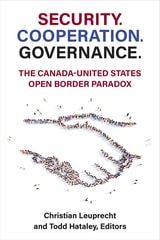
Security. Cooperation. Governance.
The Canada-United States Open Border ParadoxChristian Leuprecht and Todd Hataley, Editors
University of Michigan Press, 2023
The book’s findings show that border governance straddles multiple regional, sectoral, and security scales in ways rarely documented in such detail. These developments have precipitated an Open Border Paradox: extensive, regionally varied flows of trade and people have resulted in a series of nested but interdependent security regimes that function on different scales and vary across economic and policy sectors. These realities have given rise to regional and sectoral specialization in related security regimes. For instance, just-in-time automotive production in the Great Lakes region varies considerably from the governance of maritime and intermodal trade (and port systems) on the Atlantic and Pacific coasts, which in turn is quite different from commodity-based systems that manage diverse agricultural and food trade in the Canadian Prairies and US Great Plains.
The paradox of open borders and their legitimacy is a function of robust bilateral and multilevel governance based on effective partnerships with substate governments and the private sector. Effective policy accounts for regional variation in integrated binational security and trade imperatives. At the same time, binational and continental policies are embedded in each country’s trade and security relationships beyond North America.
Technology Disaster Response and Recovery Planning
A LITA GuideMary Mallery
American Library Association, 2015
The Black Belt Librarian
Real-World Safety & SecurityWarren Graham
American Library Association, 2011
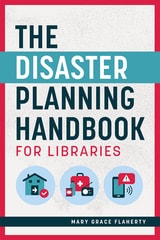
The Disaster Planning Handbook for Libraries
Mary Grace Flaherty
American Library Association, 2021
Your library is a vital information hub and resource provider every single day, and that’s doubly true when calamity strikes. In fact, your library’s role as an “essential community function” during disasters is now encoded in U.S. law. Engaging as a partner in planning and preparedness will build much-needed community support should disaster strike, and even a basic plan will also save you time and stress later on. No matter where your library is in the disaster planning cycle, this handbook will make the process clearer and less daunting. You’ll get tools, activities, easy-to-adapt templates, and hands-on guidance on such topics as
- the six phases of disaster response;
- 15 first-hand accounts of library disaster planning or responses, helping you identify the library services most needed during a disaster;
- three essential factors that will shape the form of your disaster plan;
- preparing for hurricanes, tornadoes, fires, floods, and earthquakes;
- ideas for connecting with your community’s emergency response teams;
- federal government planning resources;
- pointers on working with state and local governments;
- a sample Memorandum of Understanding to outline mutual support for a speedier recovery;
- recommended courses and training, many of which are free;
- targeted advice for archives and special collections;
- sample building inspection checklists; and
- recommended games to help children and families prepare.
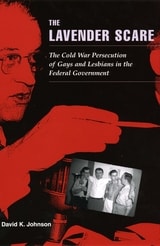
The Lavender Scare
The Cold War Persecution of Gays and Lesbians in the Federal GovernmentDavid K. Johnson
University of Chicago Press, 2003
Historian David K. Johnson here relates the frightening, untold story of how, during the Cold War, homosexuals were considered as dangerous a threat to national security as Communists. Charges that the Roosevelt and Truman administrations were havens for homosexuals proved a potent political weapon, sparking a "Lavender Scare" more vehement and long-lasting than McCarthy's Red Scare. Relying on newly declassified documents, years of research in the records of the National Archives and the FBI, and interviews with former civil servants, Johnson recreates the vibrant gay subculture that flourished in New Deal-era Washington and takes us inside the security interrogation rooms where thousands of Americans were questioned about their sex lives. The homosexual purges ended promising careers, ruined lives, and pushed many to suicide. But, as Johnson also shows, the purges brought victims together to protest their treatment, helping launch a new civil rights struggle.
The Lavender Scare shatters the myth that homosexuality has only recently become a national political issue, changing the way we think about both the McCarthy era and the origins of the gay rights movement. And perhaps just as importantly, this book is a cautionary tale, reminding us of how acts taken by the government in the name of "national security" during the Cold War resulted in the infringement of the civil liberties of thousands of Americans.
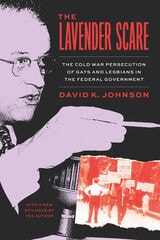
The Lavender Scare
The Cold War Persecution of Gays and Lesbians in the Federal GovernmentDavid K. Johnson
University of Chicago Press, 2023
In The Lavender Scare, David K. Johnson tells the frightening story of how, during the Cold War, homosexuals were considered as dangerous a threat to national security as Communists. Charges that the Roosevelt and Truman administrations were havens for homosexuals proved a potent political weapon, sparking a “Lavender Scare” more vehement and long-lasting than Joseph McCarthy’s Red Scare. Drawing on declassified documents, years of research in the records of the National Archives and the FBI, and interviews with former civil servants, Johnson recreates the vibrant gay subculture that flourished in midcentury Washington and takes us inside the security interrogation rooms where anti-homosexual purges ruined the lives and careers of thousands of Americans. This enlarged edition of Johnson’s classic work of history—the winner of numerous awards and the basis for an acclaimed documentary broadcast on PBS—features a new epilogue, bringing the still-relevant story into the twenty-first century.
The Library Security and Safety Guide to Prevention, Planning, and Response
Miriam B. Kahn
American Library Association, 2008
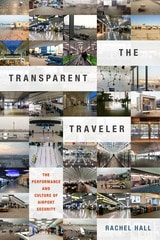
The Transparent Traveler
The Performance and Culture of Airport SecurityRachel Hall
Duke University Press, 2015
Trusted Communications with Physical Layer Security for 5G and Beyond
Trung Q. Duong
The Institution of Engineering and Technology, 2017
Trusted Computing
Chris Mitchell
The Institution of Engineering and Technology, 2005
Trusted Platform Modules
Why, when and how to use themAriel Segall
The Institution of Engineering and Technology, 2017