Results by title
2 books match the query 'Segal, Howard P.'
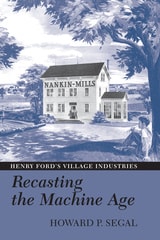
Recasting the Machine Age
Henry Ford's Village IndustriesHoward P. Segal
University of Massachusetts Press, 2005
Recasting the Machine Age recounts the history of Henry Ford's efforts to shift the production of Ford cars and trucks from the large-scale factories he had pioneered in the Detroit area to nineteen decentralized, small-scale plants within sixty miles of Ford headquarters in Dearborn. The visionary who had become famous in the early twentieth century for his huge and technologically advanced Highland Park and River Rouge complexes gradually changed his focus beginning in the teens and continuing until his death in 1947.
Ford may well have been motivated to spend great sums on the village industries in part to prevent the unionization of his company. But these industrial experiments represented much more than “union busting.” They were significant examples of profound social, cultural, and ideological shifts in America between the World Wars as reflected in the thought and practice of one notable industrialist.
Howard P. Segal recounts the development of the plants, their fate after Ford's death, their recent revival as part of Michigan's renewed appreciation of its industrial heritage, and their connections to contemporary efforts to decentralize high-tech working and living arrangements.
Technology, Pessimism, and Postmodernism
Yaron Ezrahi
University of Massachusetts Press, 1995
This collection of essays from international scholars across various disciplines addresses the compelling theme of technological pessimism—the conviction that technology has simultaneously given humanity the means to achieve unlimited progress while simultaneously providing the tools for self-destruction and the degradation of our most cherished values.
Edited by Yaron Ezrahi, Everett Mendelsohn, and Howard P. Segal, this intellectually rigorous anthology examines the paradoxes and contradictions inherent in contemporary technological society through a postmodern lens. The contributors explore how technology shapes human experience, culture, and social structures in the late twentieth century, questioning the foundational narratives of technological progress and enlightenment that have dominated Western thought.