Results by title
21 books match the query 'Selection'
A Selection of Modernized Recipes from Food in the Civil War
The NorthJennifer Billock
Michigan State University Press, 2015
A Selection of Modernized Recipes from Food in the Civil War
The SouthJennifer Billock
Michigan State University Press, 2015
André Leroi-Gourhan on Technology
A Selection of Writings from the 1930s to the 1960sAndré Leroi-Gourhan
Bard Graduate Center, 2023
André Leroi-Gourhan is undoubtedly one of the most acclaimed figures of twentieth-century anthropology and archaeology. In France, his intellectual importance rivals that of the Claude Lévi-Strauss, yet Leroi-Gourhan’s major contributions are almost entirely unknown in the Anglophone world. This collection seeks to change that. This selection highlights some of his chief influences, such as elaborating a theory of technology, which argues that material culture focuses on the object in use and how use is a dynamic feature that has specific consequences for human evolution and human society. With serious ramifications for our understanding of material culture, putting Leroi-Gourhan’s thinking about technology into English will have an immediate and transformative impact on material culture studies.

Censorship and Selection
Issues and Answers for SchoolsHenry Reichman
American Library Association, 2001

EEG Signal Processing
Feature extraction, selection and classification methodsWai Yie Leong
The Institution of Engineering and Technology, 2019

Guidance Note 1
Selection & ErectionThe Institution of Engineering and Technology
The Institution of Engineering and Technology, 2015
Guidance Note 1
Selection & ErectionThe Institution of Engineering and Technology
The Institution of Engineering and Technology, 2018
Guidance Note 1
Selection & ErectionThe Institution of Engineering and Technology
The Institution of Engineering and Technology, 2022
Guidance Note 1
Selection & ErectionThe Institution of Engineering and Technology
The Institution of Engineering and Technology, 2026
Hellenistic Poetry
A SelectionDavid Sider, Editor
University of Michigan Press, 2017
The text of each poem is presented, together with basic help on obscure vocabulary, morphology, dialect, meter, syntax, and similar philological issues. The modern commentators also offer guidance on a poem’s literary significance and a brief introduction to the scholarship.
Among the 44 named and anonymous poets represented here are Apollonius of Rhodes, Archimedes, Aristotle, Callimachus, Cercidas, Corinna, Eratosthenes, Erinna, Ezekiel, Hermesianax, Herodas, Lycophron, and Phanocles.
Contributors to the volume in addition to David Sider include: Silvia Barbantani, James Clauss, Dee Clayman, Christophe Cusset, Claudio De Stefani, Marco Fantuzzi, Andrew Ford, Kathryn Gutzwiller, Johanna Hanink, Regina Hoeschele, Richard Hunter, David Konstan, Pauline LeVen, Kelly MacFarlane, Enrico Magnelli, Jackie Murray, Pura Nieto, Maria Noussia, Douglas Olson, Floris Overduin, Richard Rawles, Ralph Rosen, Chad Schroeder, Alexander Sens, Evina Sistakou, Michael Tueller, and Athanassios Vergados.
Although designed primarily as a textbook for graduate students and upper-level undergraduates, the book offers texts and subsidiary information not easily found (if at all) elsewhere. Since Latin poets made constant allusion to Hellenistic poetry, it will also be an important resource for Latinists.

Herman Gorter
Poems of 1890: A SelectionHerman Gorter
University College London, 2015

John Greenleaf Whittier’s Poetry
An Appraisal and a SelectionRobert Penn Warren
University of Minnesota Press, 1971
John Greenleaf Whittier's Poetry was first published in 1971. Minnesota Archive Editions uses digital technology to make long-unavailable books once again accessible, and are published unaltered from the original University of Minnesota Press editions.
In this volume Robert Warren Penn, the noted critic, poet, and novelist, provides a major new appraisal of the once enormously popular New England port, John Greenleaf Whittier, along with his selection of 36 of Whittier's poems. Through Warren's perceptive and illuminating discussion, the significance of Whittier as a writer for our time becomes clear. In his introduction Warren shows that Whittier's deep commitment to his fellowman, especially his devotion to the cause of abolition, profoundly influenced his writing. In his estimate of Whittier's place in literature, Warren invokes the questions What does the past mean to an American? and in this context he compares Whittier with Cooper, Hawthorne, Melville, and Faulkner. He finds that Whittier's "star belongs in their constellation. If it is less commanding than any of theirs it yet shines with a clear and authentic light."
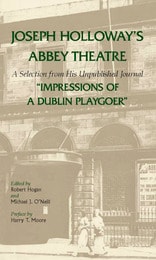
Joseph Holloway's Abbey Theatre
A Selection from His Unpublished Journal "Impressions of a Dublin Playgoer"Edited by Robert Hogan and Michael J. O'Neill. Preface by Harry T. Moore
Southern Illinois University Press, 1967
Until his death in 1944, Holloway attended almost every performance of the Abbey Theatre and daily recorded in his journal his reactions to plays and players and his comments about and conversations with literary and theatrical people. From the journal’s 221 bulky volumes, housed in the National Library of Ireland, Mr. Hogan and Mr. O’Neill have compiled this book of extracts from the approximately 25,000,000 words written by the Irishman. The years from 1899 to 1926 were chosen because they are generally considered to be the significant ones for the Abbey Theatre: the year of its founding to the production of Sean O’Casey’s The Plough and the Stars, which caused a riot in the theatre. Mr. Holloway attended every play during these years, as well as many rehearsals, and talked with nearly everybody who had anything to do with the theatre. This journal reflects the tensions, feuds, and anguish that produced one of the great theatres of modern times.
The meticulous display of minute detail makes Joseph Holloway’s Abbey Theatre imperative reading for the student of modern theatre, particularly since its character as a daily account permits ready checking of dates listed in previous works about the Irish National Theatre.

Letters from Robben Island
A Selection of Ahmed Kathrada's Prison Correspondence, 1964-1989Robert D. Vassen
Michigan State University Press, 1999
Late one night in July, 1963, a South African police unit surrounded the African National Congress headquarters in Rivonia and arrested a group of Movement leaders gathered inside. Eventually eight of them, including Nelson Mandela, who was already serving a sentence, Walter Sisulu, Dennis Goldberg, Govan Mbeki, Raymond Mhlaba, Elias Motsoledi, Andrew Mangeni, and Ahmed Kathrada, were convicted of sabotage and, on June 12, 1964, sentenced to life in prison. Soon, these men became widely known as the "Rivonia Trialists." Despite their imprisonment, the Trialists played active roles in the struggle against South Africa's racist regime. Instead of being forgotten, as apartheid officials had hoped, they became enduring symbols in a struggle against injustice and racism.
Kathrada and his colleagues were classified as high security prisoners, segregated from others and closely watched. Every activity was regulated and monitored. Among the many indignities visited upon them, the prisoners were prohibited from keeping copies of incoming and outgoing correspondence. Kathrada, or "Kathy" as he is known, successfully hid both.
Letters From Robben Island contains a selection of 86 of the more than 900 pieces of correspondence Ahmed Kathrada wrote during his 26 years on Robben Island and at Pollsmoor Prison. Some were smuggled out by friends; others were written in code to hide meaning and content from prison censors. These are among his most poignant, touching, and eloquent communications. They are testimonies to Kathrada, his colleagues, and to their commitment to obtaining human dignity and freedom for all South Africans.
Oblivion and Stone
A Selection of Bolivian Poetry and FictionSandra Reyes
University of Arkansas Press, 1998
In a literature where recognition is hard earned, this anthology demonstrates what distinguishes contemporary Bolivian fiction and poetry from the rest of Latin American writing and shows clearly how Bolivian writers relate to that tradition.
Bolivia is a landlocked nation of mountains and high, arid plains, a place native writer Jesús Urzagasti calls the “Land of Silence.” This crucible of indigenous and European influences has contributed to the creation of a writing style that is always down-to-earth, often grittily realistic.
From this fundamental base, Bolivian writers express provincial customs and values, decry political oppression, and sound universal themes of isolation, even resignation; but, more often, they show the will to move forward as a people. This rich thematic mix encourages what critic Edgar Lora has called the “dynamic and vigorous social dis course” and the resulting “subversive, militant, and revolutionary” qualities of Bolivian literature.
Editor Sandra Reyes has gathered a panoramic sampling of twenty two poets and eighteen fiction writers. Focusing predominantly on living, practicing writers, this anthology defines the current literary voice of Bolivia and gives us a distillation of the contemporary Bolivian consciousness.
Self-Evidence
A Selection of Verse, 1977-1997Pamela White Hadas
Northwestern University Press, 1997
Pamela White Hadas won enthusiastic recognition for her early books of poetry, Designing Women and Beside Herself. In Self-Evidence, she selects the best of her published work and combines it with poems never before collected. This collection contains legendary, mythic, historical, and imaginary characters--Lilith, Pocahontas, Simone Weil, the wives of Watergate, a circus performer, and others. With playful originality and virtuoso voicing, Hadas weaves breathtaking tapestries of women's loves and labors.

Textbooks in Academic Libraries
Selection, Circulation, and AssessmentChris Diaz
American Library Association, 2017

The Nature of Selection
Evolutionary Theory in Philosophical FocusElliott Sober
University of Chicago Press, 1993
"Sober's is the answering philosophical voice, the voice of a first-rate philosopher and a knowledgeable student of contemporary evolutionary theory. His book merits broad attention among both communities. It should also inspire others to continue the conversation."-Philip Kitcher, Nature
"Elliott Sober has made extraordinarily important contributions to our understanding of biological problems in evolutionary biology and causality. The Nature of Selection is a major contribution to understanding epistemological problems in evolutionary theory. I predict that it will have a long lasting place in the literature."-Richard C. Lewontin
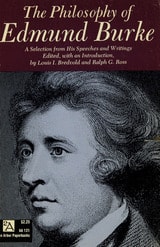
The Philosophy of Edmund Burke
A Selection from His Speeches and WritingsEdmund Burke
University of Michigan Press, 1960
The State University, Its Work and Problems
A Selection from Addresses Delivered Between 1921 and 1933Lotus Coffman
University of Minnesota Press, 1934

Without a Stitch in Time
A Selection of the Best Humorous Short PiecesPeter De Vries
University of Chicago Press, 1972