Results by title
5 books match the query 'Self - Determination'

In Defense of Sovereignty
Protecting the Oneida Nation's Inherent Right to Self-DeterminationRebecca M. Webster
University of Wisconsin Press, 2023
As in so many conflicts between Indigenous nations and local municipalities, the media narrative about the Oneida Nation’s battle for sovereignty has been dominated by the local government’s standpoint. In Defense of Sovereignty offers another perspective, that of a nation citizen directly involved in the litigation, augmented by contributions from historians, attorneys, and a retired nation employee. It makes an important contribution to public debates about the inherent right of Indigenous nations to continue to exist and exercise self-governance within their territories without being challenged at every turn.

Remapping Sovereignty
Decolonization and Self-Determination in North American Indigenous Political ThoughtDavid Myer Temin
University of Chicago Press, 2023
An examination of anticolonial thought and practice across key Indigenous thinkers.
Accounts of decolonization routinely neglect Indigenous societies, yet Native communities have made unique contributions to anticolonial thought and activism. Remapping Sovereignty examines how twentieth-century Indigenous activists in North America debated questions of decolonization and self-determination, developing distinctive conceptual approaches that both resonate with and reformulate key strands in other civil rights and global decolonization movements. In contrast to decolonization projects that envisioned liberation through state sovereignty, Indigenous theorists emphasized the self-determination of peoples against sovereign state supremacy and articulated a visionary politics of decolonization as earthmaking. Temin traces the interplay between anticolonial thought and practice across key thinkers, interweaving history and textual analysis. He shows how these insights broaden the political and intellectual horizons open to us today.

Safe Space
Finding Safety in Solidarity and Self-DeterminationRaphaëlle Red
Seagull Books, 2026
An urgent and intimate meditation on what it means to feel—and to be—safe.
In Safe Space, Raphaëlle Red traces the physiological toll of insecurity on marginalized lives across literature, film, music, and political discourse. In conversation with artists and thinkers such as James Baldwin, Nina Simone, June Jordan, Ja’Tovia Gary, and Leslie Feinberg, she maps the genealogy of “safe spaces,” from their radical origins to their contested place in today’s public debates. Rather than dismissing or defending the concept, Red asks what we might recover if we redefined safety not as fragility or withdrawal, but as self-determination, collective defense, and the right to opacity. She explores the tension between feeling and reality, protection and powerlessness, the language of safety, and the politics it sustains. Along the way, she grounds her reflections in personal narrative, European and North American contexts, and contemporary movements of resistance. At once theoretical and deeply personal, Safe Space refuses easy answers. Instead, it imagines safe space as temporary, regenerative, and insurgent—a practice of care and solidarity that unsettles hierarchies rather than reproducing them. A book for anyone wrestling with fear, vulnerability, and the fragile promise of collective liberation.
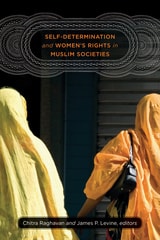
Self-Determination and Women’s Rights in Muslim Societies
Edited by Chitra Raghavan and James P. Levine
Brandeis University Press, 2012

The National Question
Nationalism, Ethnic Conflict, and Self-Determination in the Twentieth Centuryedited by Berch Berberoglu
Temple University Press, 1995