Results by title
8 books match the query 'Self-Management'
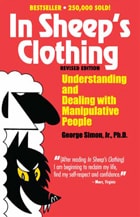
In Sheep's Clothing
Understanding and Dealing with Manipulative PeopleGeorge K. Simon, Ph.D.
Parkhurst Brothers, Inc., 2010
Dr. George Simon knows how people push your buttons. Your children--especially teens--are expert at it, as is your mate. A co-worker may quietly undermine your efforts while professing to be helpful, or your boss may prey on your weaknesses. Manipulative people have two goals: to win and to look good doing it. Often those they abuse are only vaguely aware of what is happening to them. In this eye-opening book, you'll also discover...
* 4 reasons why victims have a hard time leaving abusive relationships
* Power tactics manipulators use to push their own agendas and justify their behavior
*Ways to redefine the rules of engagement between you and an abuser
* How to spot potential weaknesses in your character that can set you up for manipulation.
* 12 tools for personal empowerment to help you maintain greater strength in all relationships
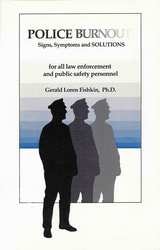
Police Burnout
Signs, Symptoms and SOLUTIONSGerald Loren Fishkin, PH.D.
Parkhurst Brothers, Inc., 0
Police Burnout is the synthesis of Dr. Fishkin’s sixteen years experience as a police psychologist, and is a must read for all police officers, family members, police and public safety administrators, as well as mental health specialists who work in the area of law enforcement. It is a modern classic in the field of police psychology.
Self-Control in Seven Steps
Christine B. Whelan
Templeton Press, 2012

The Burnout-Belonging Connection
Why Burnout is Not Our Fault and How Community Can Fortify Us Against ItLisa M. Nunn
Rutgers University Press, 2027
For over a decade now, we’ve been hearing the wrong messages about burnout: we are told that we have to fix ourselves in order to fix burnout. This misguided wisdom says that better time management, stronger boundaries, and more yoga-mindfulness-gratitude-exercise-vacation are the solution. Nope. Stronger, healthier communities are the solution. Lisa M. Nunn shows us that the same dynamics that create the social bonds of belonging, when absent, become the drivers of burnout. Greedy communities drive burnout; respectful communities foster belonging. Unfair communities drive burnout; trustworthy communities foster belonging. Negligent communities drive burnout; attentive communities foster belonging. The book offers 35 strategies to cultivate strong belonging—and in doing so minimize burnout—in our workplaces, families, friendship circles, volunteer organizations, athletic clubs, and every other community in our lives.
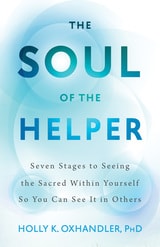
The Soul of the Helper
Seven Stages to Seeing the Sacred within Yourself So You Can See It in OthersHolly K. Oxhandler
Templeton Press, 2025
In their devotion to the well-being of others, caregivers routinely put their own well-being last and can unintentionally burn themselves out physically, emotionally, and spiritually. Their self-neglect, paired alongside a deep desire to help others, has the potential to stir up feelings of anger and resentment, leading to a sense of guilt and shame. They often believe that if they were to grant themselves any rest or grace, they would be at risk of failing in their duty.
In The Soul of the Helper, Dr. Holly K. Oxhandler shows caregivers and fellow helpers a more self-compassionate way to cope with their overwhelming responsibilities and to attend to their own needs, particularly when it comes to their mental health and spiritual journey. She invites them to pause and realize that if they let their personal resources run dry, they cannot possibly care for others as fully as they wish. In fact, their efforts are likely to cause more harm than good.
With a background in spiritually-integrated mental health, Dr. Oxhandler teaches helpers a seven-step process to slow down and reconnect with the stillness within themselves. It is in this space of stillness that Oxhandler guides helpers to reconnect with the “sacred spark” within their soul. By allowing themselves to enter that stillness, caregivers will recognize that they, too, are worthy of care. And with that realization, they will see anew the sacred spark that dwells inside everyone else, especially within those they’re helping.
As a social worker, researcher, and person of faith, Dr. Oxhandler writes in a warm and welcoming style, shares many relatable stories, and widens her scope to include believers of all faiths and spiritual traditions. Her book is for caregivers everywhere who sense the sacred spark within them saying, in effect: “Come to me, all you who are weary and burdened, and I will give you rest.”
The Way to Hell
Machiavelli for Catastrophic TimesNathan Crick
University of Alabama Press, 2024
An incisive and erudite survey of Machiavelli, the catastrophes of his times and ours, and his counsel for responding to an era of constant crises.
Catastrophe looms. Political, environmental, epidemic, and military crises arrive with increasing frequency. In The Way to Hell, Nathan Crick argues that our perilous times call for the strongest medicine in the Western canon: Machiavelli. Crick reminds contemporary readers about the Florentine master’s advice—that one must learn the road to Hell precisely to avoid taking it.
Like a knowledgeable friend, Crick offers contemporary readers a guide to Machiavelli’s world, work, and warnings. He takes in the sweep of Western history, comparing Machiavelli’s work with ancient sources such as Cicero and Thucydides. And as Machiavelli has never stopped provoking comment, Crick treats readers to a feast of responses to Machiavelli’s work—caustic, learned, and humorous—in the five centuries since he lived.
Including both Machiavelli’s best-known works, The Prince and Discourses on Livy, as well as his personal correspondence and comic plays, Crick asks anew the questions that bedeviled Machiavelli’s beloved Florentine republic: When is force necessary? When are lies justified? Is cruelty defensible? When does social protest slip into violent revolution? What is the correct response to catastrophe?
Like Machiavelli himself, The Way to Hell is witty, stimulating, and challenging. In a world seemingly on the road to Hell, Machiavelli offers an alternative route. His bracing vision exhorts readers to see the dangers in their path and to take action with vigor and determination. Far from a vision of cynicism, Machiavelli offers a beacon of hope for a world that seems on the brink.

Trails of Little Rock
Hiking, Biking, and Kayaking Trails in Little RockJohnnie Chamberlin
Parkhurst Brothers, Inc., 2009
Worried Sick
How Stress Hurts Us and How to Bounce BackCarr, Deborah
Rutgers University Press, 2014
We have all experienced stressful times—maybe a major work deadline or relocating cross-country for a new job—when we came out unscathed, feeling not only emotionally and physically healthy, but better than we did prior to the crisis. Why do some people withstand adversity without a scratch, while others fall ill or become emotionally despondent when faced with even a seemingly minor hassle? Without oversimplifying the discussion, Deborah Carr succinctly provides readers with key themes and contemporary research on the concept of stress. Understanding individuals’ own sources of strength and vulnerability is an important step toward developing personal strategies to minimize stress and its unhealthy consequences. Yet Carr also challenges the notion that merely reducing stress in our lives will help us to stay healthy. Many of the stressors that we face in everyday life are not our problems alone; rather, they are symptoms of much larger, sweeping problems in contemporary U.S. society.
To readers interested in the broad range of chronic, acute, and daily life stressors facing Americans in the twenty-first century, as well as those with interest in the many ways that our physical and emotional health is shaped by our experiences, this brief book will be an immediate and quick look at these significant issues.
View a three minute video of Deborah Carr speaking about Worried Sick.