Results by title
6 books match the query 'Selma'
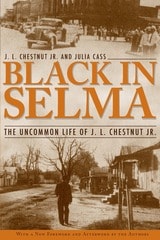
Black in Selma
The Uncommon Life of J. L. Chestnut Jr.J. L. Chestnut
University of Alabama Press, 2007
One man’s fight for justice. One town’s reckoning with history.
Born in Selma in 1930, J. L. Chestnut left home to study law at Howard University in Washington, DC. Returning to Selma, Chestnut was the town’s first and only African American attorney in the late 1950s. As the turbulent struggle for civil rights spread across the South, Chestnut became an active and ardent promoter of social and legal equality in his hometown. A key player on the local and state fronts, Chestnut accrued deep insights into the racial tensions in his community and deftly opened paths toward a more equitable future.
Though intimately involved in many events that took place in Selma, Chestnut was nevertheless often identified in history books simply as “a local attorney.” Black in Selma reveals his powerful yet little-known story.
In the 2014 film Selma, director Ava DuVernay takes audiences to the climactic confrontation between civil rights advocates and the state’s security forces of March 1965. Readers looking for a deeper understanding of the events that preceded that epic moment, as well as how racial integration unfolded in Selma in the decades that followed, will find Chestnut’s story and memories both a vital primary source and an inspiration.
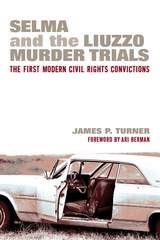
Selma and the Liuzzo Murder Trials
The First Modern Civil Rights ConvictionsJames P. Turner
University of Michigan Press, 2018
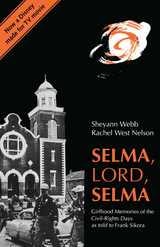
Selma, Lord, Selma
Girlhood Memories of the Civil Rights DaysSheyann Webb
University of Alabama Press, 1997
Witness the Civil Rights Movement through the eyes of two children.
Sheyann Webb was eight years old and Rachel West was nine when Dr. Martin Luther King Jr. arrived in Selma, Alabama, on January 2, 1965. He came to organize non-violent demonstrations against discriminatory voting laws. Selma, Lord, Selma is their firsthand account of the events from that turbulent winter of 1965--events that changed not only the lives of these two little girls but the lives of all Alabamians and all Americans. From 1975 to 1979, award-winning journalist Frank Sikora conducted interviews with Webb and West, weaving their recollections into this luminous story of fear and courage, struggle and redemption that readers will discover is Selma, Lord, Selma.
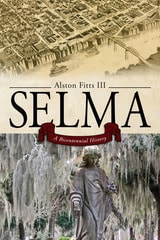
Selma
A Bicentennial HistoryAlston Fitts III
University of Alabama Press, 2017
Exploring the people, politics, and events that shaped Selma from 1815 through the twentieth century.
In 1989, Alston Fitts published a brief history of the city of Selma, Alabama, from its founding through the aftermath of the civil rights movement. Selma: A Bicentennial History is a greatly revised and expanded version of Fitts’s history of the city, replete with a wealth of new, never-before-published illustrations, which further develops a number of significant events, corrects critical errors, and, most importantly, incorporates many new stories and materials that document Selma’s establishment, growth, and development.
Comprehensive, thoroughly researched, and nonpartisan, Fitts’s pleasantly accessible history addresses every major issue, movement, and trend from the city’s settlement in 1815 to the end of the twentieth century. Its commerce, institutions, governance, as well as its evolving racial, religious, and class composition are all treated with candor and depth. Selma’s transformative role within the state and the nation is fully explored, and most notable is a nuanced and complex discussion of race relations from the rise of the civil rights era to modern times.
Historians, scholars, and Alabamians will find great use for this updated and fully developed exploration of Selma’s rich, complex, and significant history.
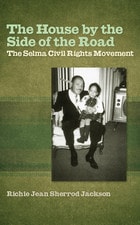
The House by the Side of the Road
The Selma Civil Rights MovementRichie Jean Sherrod Jackson
University of Alabama Press, 2011
King’s informal headquarters in Selma was the home of Dr. Sullivan and Richie Jean Sherrod Jackson and their young daughter, Jawana. The House by the Side of the Road is Richie Jean’s firsthand account of the private meetings King and his lieutenants, including Ralph David Abernathy and John Lewis, held in the haven of the Jackson home.
Sullivan Jackson was an African American dentist in Selma and a prominent supporter of the civil rights movement. Richie Jean was a close childhood friend of King’s wife, Coretta Scott King, a native of nearby Marion, Alabama. Richie Jean’s fascinating account narrates how, in the fraught months of 1965 that preceded the Voting Rights March, King and his inner circle held planning sessions and met with Assistant Attorney General John Doar to negotiate strategies for the event.
Just eight days after Bloody Sunday, President Lyndon Johnson made a televised addressed to a joint session of Congress on Monday, March 15. Jackson relates the intimate scene of King and his lieutenants watching as Johnson called the nation to dedicate itself to equal rights for all and ending his address with the words: “We shall overcome.” Five months later, Congress passed the 1965 Voting Rights Act on August 6.
The major motion picture Selma now commemorates the fiftieth anniversary of Bloody Sunday and the 1965 Voting Rights Act. In it, Niecy Nash and Kent Faulcon star as Sullivan and Richie Jean Jackson among a cast including Oprah Winfrey, Tom Wilkinson, and Cuba Gooding Jr. A gripping primary source, The House by the Side of the Road illuminates the private story whose public outcomes electrified the world and changed the course of American history.
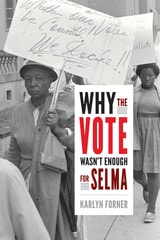
Why the Vote Wasn't Enough for Selma
Karyn Forner
Duke University Press, 2017