Results by title
5 books match the query 'Seminole Indians'

High Stakes
Florida Seminole Gaming and SovereigntyJessica R. Cattelino
Duke University Press, 2008
Cattelino presents a vivid ethnographic account of the history and consequences of Seminole gaming. Drawing on research conducted with tribal permission, she describes casino operations, chronicles the everyday life and history of the Seminole Tribe, and shares the insights of individual Seminoles. At the same time, she unravels the complex connections among cultural difference, economic power, and political rights. Through analyses of Seminole housing, museum and language programs, legal disputes, and everyday activities, she shows how Seminoles use gaming revenue to enact their sovereignty. They do so in part, she argues, through relations of interdependency with others. High Stakes compels rethinking of the conditions of indigeneity, the power of money, and the meaning of sovereignty.
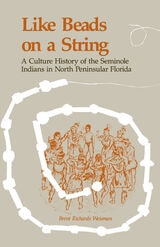
Like Beads on a String
A Culture History of the Seminole Indians in North Peninsular FloridaBrent Richards Weisman
University of Alabama Press, 1989
Florida's Seminole Indians are exerting an ever increasing influence on crucial issues in state politics, economy, and law. From a position of near obscurity less than a century ago, these Native Americans have staged a remarkable comeback to take an active hand in shaping Florida society, present and future. Anthropologists have long been fascinated with the Seminoles and have often remarked upon their ability to adapt to new circumstances while preserving the core features of their traditional culture. Early observers of the Seminoles also commented on the dynamic tension that existed for the individual, clan, and tribe, that drew them together, "like beads on a string," into a resilient and viable society. This study traces the emergence of these qualities in the late prehistoric and early historic period in the Southeast and demonstrates their influence on the course of Seminole culture history.
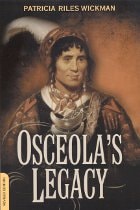
Osceola's Legacy
Patricia Riles Wickman
University of Alabama Press, 2006
A bestselling, re-evaluation of a major Native American resistance leader. Named an Outstanding Book by the Gustavus Myers Center for the Study of Human Rights.
Born in Alabama to a Muscogee/Creek Indian mother and an English father, Osceola, born Billy Powell, came to prominence in the 1830s for resisting the U. S. government's sweep into Florida. He protested the government's Florida Indian removal, killed a pro-emigration Indian leader and then made war on the US government.
Osceola's Legacy draws on a wealth of sources, including letters, diaries, and artifacts to bring this fascinating figure and the central role he played in the Second Seminole War into vivid focus. Of particular interest is a chapter on the forensic report on Osceola's grave as well as descriptions and the illustrations of his personal property at the time of his death.
Osceola's Legacy is significant for its genealogy and archaeological study of this Native American and his interaction with the federal government during the 1800s. The catalog of photographs of Osceola portraits and his personal possessions makes this a worthwhile reference book as well.
The Anthropology of Florida
Aleš Hrdlicka
University of Alabama Press, 2007
This volume, originally published in 1922, constitutes the most complete summary of anthropological information on Florida up until that point. Not only does it consider all previous research on Florida archaeology, physical anthropology, and aboriginal history, it also contains Hrdlicka’s analysis of every human bone from Florida that he could find in collections. He made remarkably accurate observations about the general physical types of prehistoric Florida Indians and how they compared to native peoples of surrounding regions.
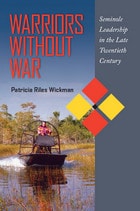
Warriors Without War
Seminole Leadership in the Late Twentieth CenturyPatricia Riles Wickman
University of Alabama Press, 2012
Warriors Without War takes readers beneath the placid waters of the Seminole’s public image and into the fascinating depths of Seminole society and politics.