Results by title
4 books match the query 'Sensationalism in journalism'
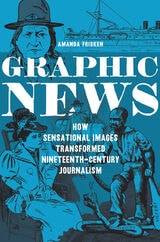
Graphic News
How Sensational Images Transformed Nineteenth-Century JournalismAmanda Frisken
University of Illinois Press, 2020
”You furnish the pictures and I’ll furnish the war.” This famous but apocryphal quote, long attributed to newspaper magnate William Randolph Hearst, encapsulates fears of the lengths to which news companies would go to exploit visual journalism in the late nineteenth century. From 1870 to 1900, newspapers disrupted conventional reporting methods with sensationalized line drawings. A fierce hunger for profits motivated the shift to emotion-driven, visual content. But the new approach, while popular, often targeted, and further marginalized, vulnerable groups. Amanda Frisken examines the ways sensational images of pivotal cultural events—obscenity litigation, anti-Chinese bloodshed, the Ghost Dance, lynching, and domestic violence—changed the public's consumption of the news. Using intersectional analysis, Frisken explores how these newfound visualizations of events during episodes of social and political controversy enabled newspapers and social activists alike to communicate—or challenge—prevailing understandings of racial, class, and gender identities and cultural power.
[more]
Sex Trafficking, Scandal, and the Transformation of Journalism, 1885-1917
Gretchen Soderlund
University of Chicago Press, 2013
In Sex Trafficking, Scandal, and the Transformation of Journalism, Gretchen Soderlund offers a new way to understand sensationalism in both newspapers and reform movements. By tracing the history of high-profile print exposés on sex trafficking by journalists like William T. Stead and George Kibbe Turner, Soderlund demonstrates how controversies over gender, race, and sexuality were central to the shift from sensationalism to objectivity—and crucial to the development of journalism in the early twentieth century.
[more]
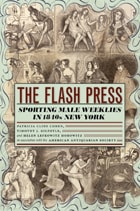
The Flash Press
Sporting Male Weeklies in 1840s New YorkPatricia Cline Cohen, Timothy J. Gilfoyle, Helen Lefkowitz Horowitz, in association with the American Antiquarian Society
University of Chicago Press, 2008
Obscene, libidinous, loathsome, lascivious. Those were just some of the ways critics described the nineteenth-century weeklies that covered and publicized New York City’s extensive sexual underworld. Publications like the Flash and the Whip—distinguished by a captivating brew of lowbrow humor and titillating gossip about prostitutes, theater denizens, and sporting events—were not the sort generally bound in leather for future reference, and despite their popularity with an enthusiastic readership, they quickly receded into almost complete obscurity. Recently, though, two sizable collections of these papers have resurfaced, and in The Flash Press three renowned scholars provide a landmark study of their significance as well as a wide selection of their ribald articles and illustrations.
Including short tales of urban life, editorials on prostitution, and moralizing rants against homosexuality, these selections epitomize a distinct form of urban journalism. Here, in addition to providing a thorough overview of this colorful reportage, its editors, and its audience, the authors examine nineteenth-century ideas of sexuality and freedom that mixed Tom Paine’s republicanism with elements of the Marquis de Sade’s sexual ideology. They also trace the evolution of censorship and obscenity law, showing how a string of legal battles ultimately led to the demise of the flash papers: editors were hauled into court, sentenced to jail for criminal obscenity and libel, and eventually pushed out of business. But not before they forever changed the debate over public sexuality and freedom of expression in America’s most important city.
[more]

The Yellow Journalism
The Press and America's Emergence as a World PowerDavid R. Spencer
Northwestern University Press, 2007
When a case containing dismembered human remains surfaced in New York's East River in June of 1897, the publisher of the New York Journal--a young, devil-may-care millionaire named William Randolph Hearst--decided that his newspaper would "scoop" the city's police department by solving this heinous crime. Pulling out all the stops, Hearst launched more than a journalistic murder investigation; his newspaper's active intervention in the city's daily life, especially its underside, marked the birth of the Yellow Press. In a work that studies the rise and fall of this phenomenon, David R. Spencer documents the fierce competition that characterized yellow journalism, the social realities and trends that contributed to its success (and its ultimate demise), its accomplishments for good or ill, and its long-term legacy.
Most notable among Hearst's competitors was New York City's The World, owned and managed by a European Jewish immigrant named Joseph Pulitzer. The Yellow Journalism describes how these two papers and others exploited the scandal, corruption, and crime among the city's most influential citizens, and its most desperate inhabitants--a policy that made this "journalism of action" remarkably effective, not just as a commercial force, but also as an advocate for the city's poor and defenseless. Spencer shows how many of the innovations first introduced during this period--from investigative reporting to the use of color, entertainment news, and cartoons in papers--have had a lasting effect on journalism; and how media in our day reflects the Yellow Press's influence, but also its threatened irrelevance within the broader realities of contemporary society.
Most notable among Hearst's competitors was New York City's The World, owned and managed by a European Jewish immigrant named Joseph Pulitzer. The Yellow Journalism describes how these two papers and others exploited the scandal, corruption, and crime among the city's most influential citizens, and its most desperate inhabitants--a policy that made this "journalism of action" remarkably effective, not just as a commercial force, but also as an advocate for the city's poor and defenseless. Spencer shows how many of the innovations first introduced during this period--from investigative reporting to the use of color, entertainment news, and cartoons in papers--have had a lasting effect on journalism; and how media in our day reflects the Yellow Press's influence, but also its threatened irrelevance within the broader realities of contemporary society.
[more]