Results by title
30 books match the query 'Sense'
A Language of Its Own
Sense and Meaning in the Making of Western Art MusicRuth Katz
University of Chicago Press, 2009
The Western musical tradition has produced not only music, but also countless writings about music that remain in continuous—and enormously influential—dialogue with their subject. With sweeping scope and philosophical depth, A Language of Its Own traces the past millennium of this ongoing exchange.
Ruth Katz argues that the indispensible relationship between intellectual production and musical creation gave rise to the Western conception of music. This evolving and sometimes conflicted process, in turn, shaped the art form itself. As ideas entered music from the contexts in which it existed, its internal language developed in tandem with shifts in intellectual and social history. Katz explores how this infrastructure allowed music to explain itself from within, creating a self-referential and rational foundation that has begun to erode in recent years.
A magisterial exploration of a frequently overlooked intersection of Western art and philosophy, A Language of Its Own restores music to its rightful place in the history of ideas.
A Place Of Sense
Essays In Search Of MidwestMichael Martone
University of Iowa Press, 1988
A Sense of Arrival
Kevin Adonis Browne
Duke University Press, 2024
A Sense of Brutality
Philosophy after Narco-CultureCarlos Alberto Sánchez
Amherst College Press, 2020
"The study is original, bringing a wide range of voices into dialogue to present a problem that is pressing and deserving of careful analysis. The study will contribute to the field of Latin American philosophy in important ways... This is the only book by a philosopher on the topic of narco-culture, and I think it’s an important contribution to a topic that should be addressed by philosophers." —Elizabeth Millán, DePaul University
A Sense of Order
And Other StoriesJack Harrell
Signature Books, 2010
In another story, the LDS prophet is drawn to s simpler time when he could wander out unnoticed and buy a candy bar. Church Security won’t let him outside on his own and Public Relations won’t let him wear anything but a suit and tie. Still, the impulse to be a regular guy for an afternoon is compelling. Can’t he make his own decisions? He can, but what are the consequences?
And then there’s Jerry, who passes three men in suits who are talking and laughing at the loading dock behind an LDS temple. One of them looks up, drops a cigarette and crushes it, then slips into a nearby car. Another man—someone who has made Jerry’s life miserable—taunts him, saying: “Jerry, your goodness is your enemy …and tell all your friends.” Who is responsible? Maybe it’s the author’s reverie that’s to blame, but his stories have a way of getting deep inside the psyche and haunting us.

A Sense of Place
The Life and Work of Forrest ShreveJanice Emily Bowers
University of Arizona Press, 1988
Tracing Shreve's development from student to scientist, Bowers evokes the rigors and delights of fieldwork in the first half of this century and shows how Shreve's sense of place informed his scientific thought—making him, in his own words, "not an exile from some better place, but a man at home in an environment to which his life can be adjusted without physical or intellectual loss."
A Sense of Space
A Local’s Guide to a Flat Earth, the Edge of the Cosmos, and Other Curious PlacesJohn Edward Huth
University of Chicago Press, 2025
When you give directions, do you tell someone to go straight ahead and turn left? Or do you suggest that they head north before moving west? Your answer reveals more than you might think.
In A Sense of Space, writer and physicist John Edward Huth uses these two kinds of navigation—either centered on or independent of people—to help readers chart a path through evolving spatial models. In doing so, he offers an astonishing exploration of how changing scientific models of space alter our social perceptions, and vice versa. New visions of space can emanate from human considerations, he argues, and those new visions can in turn spawn new cultural phenomena. With accessible introductions to topics including mental maps, astrology, astronomy, particle physics, and Einstein’s relativity, Huth makes clear that, although our minds have evolved to comprehend space in terrestrial distances, we routinely extend this understanding to realms far removed from our everyday experiences, from cosmological to subatomic scales.
Taking us across the eons from the myth of a flat earth to the mysteries of the multiverse, A Sense of Space is an energetic, thoughtful guide to how we orient ourselves in our world—and beyond.
A Sense of Things
The Object Matter of American LiteratureBill Brown
University of Chicago Press, 2003
Brown's captivating new study explores the roots of modern America's fascination with things and the problem that objects posed for American literature at the turn of the century. This was an era when the invention, production, distribution, and consumption of things suddenly came to define a national culture. Brown shows how crucial novels of the time made things not a solution to problems, but problems in their own right. Writers such as Mark Twain, Frank Norris, Sarah Orne Jewett, and Henry James ask why and how we use objects to make meaning, to make or remake ourselves, to organize our anxieties and affections, to sublimate our fears, and to shape our wildest dreams. Offering a remarkably new way to think about materialism, A Sense of Things will be essential reading for anyone interested in American literature and culture.
A Sense of Urgency
How the Climate Crisis Is Changing RhetoricDebra Hawhee
University of Chicago Press, 2023
Why is it difficult to talk about climate change? Debra Hawhee argues that contemporary rhetoric relies on classical assumptions about humanity and history that cannot conceive of the present crisis. How do we talk about an unprecedented future or represent planetary interests without privileging our own species? A Sense of Urgency explores four emerging answers, their sheer novelty a record of both the devastation and possible futures of climate change. In developing the arts of magnitude, presence, witness, and feeling, A Sense of Urgency invites us to imagine new ways of thinking with our imperiled planet.
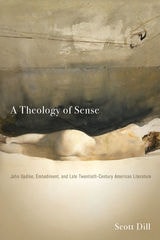
A Theology of Sense
John Updike, Embodiment, and Late Twentieth-Century American LiteratureScott Dill
The Ohio State University Press, 2018
Commentaries on Aristotle's "On Sense and What Is Sensed" and "On Memory and Recollection" (Thomas Aquinas in Translation)
Saint Thomas Aquinas
Catholic University of America Press, 2005
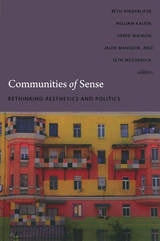
Communities of Sense
Rethinking Aesthetics and PoliticsBeth Hinderliter, William Kaizen, Vered Maimon, Jaleh Mansoor, and Seth McCormick, eds.
Duke University Press, 2009
The first of the collection’s three sections explicitly examines the links between aesthetics and social and political experience. Here a new essay by Rancière posits art as a key site where disagreement can be staged in order to produce new communities of sense. In the second section, contributors investigate how sense was constructed in the past by the European avant-garde and how it is mobilized in today’s global visual and political culture. Exploring the viability of various models of artistic and political critique in the context of globalization, the authors of the essays in the volume’s final section suggest a shift from identity politics and preconstituted collectivities toward processes of identification and disidentification. Topics discussed in the volume vary from digital architecture to a makeshift museum in a Paris suburb, and from romantic art theory in the wake of Hegel to the history of the group-subject in political art and performance since 1968. An interview with Étienne Balibar rounds out the collection.
Contributors. Emily Apter, Étienne Balibar, Carlos Basualdo, T. J. Demos, Rachel Haidu, Beth Hinderliter, David Joselit, William Kaizen, Ranjanna Khanna, Reinaldo Laddaga, Vered Maimon, Jaleh Mansoor, Reinhold Martin, Seth McCormick, Yates McKee, Alexander Potts, Jacques Rancière, Toni Ross

Deprived of Sense and Intellect
Insanity, Possession, and Diagnosis in Medieval EuropeLeigh Ann Craig
University of Michigan Press, 2026
While medieval communities assigned these tensions to a malfunction of consciousness in a single person, medieval miracle texts also reveal how the function and malfunction of consciousness was named and classified. In studying these texts, Leigh Ann Craig explores the terminology and rhetoric used to diagnose a loss of mind as either from natural causes or as an effect of demonic predation, tracing the use of Latin vocabulary in medical compendia, law, and theology. Deprived of Sense and Intellect finds that since diagnoses were difficult and frequently subject to doubt, they varied based on regional cultures of disability in northern and southern Europe, the influences on the development of community consensus in Latin Europe in the Middle Ages, and assumptions based on gender, material evidence, and self-diagnosis.
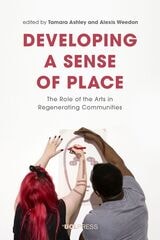
Developing a Sense of Place
The Role of the Arts in Regenerating CommunitiesEdited by Tamara Ashley and Alexis Weedon
University College London, 2020
Developing a Sense of Place offers a range of viewpoints, including those of the arts strategist, the academic, the practice-researcher, and the artist. Through its innovative models, from performing arts to architectural design, the book serves diverse interests, such as the arts and cultural policy managers, master planners, and arts workers, as well as students of human geography, cultural planning, business and the creative industries, and arts administration, at the undergraduate and postgraduate levels.
Friending the Past
The Sense of History in the Digital AgeAlan Liu
University of Chicago Press, 2018
In Friending the Past, Alan Liu proposes fresh answers to these innovative questions of connection. He explores how we can learn from the relationship between past societies whose media forms fostered a communal and self-aware sense of history—such as prehistorical oral societies with robust storytelling cultures, or the great print works of nineteenth-century historicism—and our own instantaneous present. He concludes with a surprising look at how the sense of history exemplified in today’s JavaScript timelines compares to the temporality found in Romantic poetry.
Interlaced among these inquiries, Liu shows how extensive “network archaeologies” can be constructed as novel ways of thinking about our affiliations with time and with each other. These conceptual architectures of period and age are also always media structures, scaffolded with the outlines of what we mean by history. Thinking about our own time, Liu wonders if the digital, networked future can sustain a similar sense of history.
Mapping the Invisible Landscape
Folklore, Writing, and the Sense of PlaceKent C. Ryden
University of Iowa Press, 1993
Any landscape has an unseen component: a subjective component of experience, memory, and narrative which people familiar with the place understand to be an integral part of its geography but which outsiders may not suspect the existence of—unless they listen and read carefully. This invisible landscape is make visible though stories, and these stories are the focus of this engrossing book.
Traveling across the invisible landscape in which we imaginatively dwell, Kent Ryden—himself a most careful listener and reader—asks the following questions. What categories of meaning do we read into our surroundings? What forms of expression serve as the most reliable maps to understanding those meanings? Our sense of any place, he argues, consists of a deeply ingrained experiential knowledge of its physical makeup; an awareness of its communal and personal history; a sense of our identity as being inextricably bound up with its events and ways of life; and an emotional reaction, positive or negative, to its meanings and memories.
Ryden demonstrates that both folk and literary narratives about place bear a striking thematic and stylistic resemblance. Accordingly, Mapping the Invisible Landscape examines both kinds of narratives. For his oral materials, Ryden provides an in-depth analysis of narratives collected in the Coeur d'Alene mining district in the Idaho panhandle; for his consideration of written works, he explores the “essay of place,” the personal essay which takes as its subject a particular place and a writer's relationship to that place.
Drawing on methods and materials from geography, folklore, and literature, Mapping the Invisible Landscape offers a broadly interdisciplinary analysis of the way we situate ourselves imaginatively in the landscape, the way we inscribe its surface with stories. Written in an extremely engaging style, this book will lead its readers to an awareness of the vital role that a sense of place plays in the formation of local cultures, to an understanding of the many-layered ways in which place interacts with individual lives, and to renewed appreciation of the places in their own lives and landscapes.
Music at the Margins of Sense
Jessica A. Holmes
University of Michigan Press, 2026
In Music at the Margins of Sense, Jessica A. Holmes contests prevailing misconceptions associated with deafness and hearing in Western music by turning to the musical experiences of deaf, hard of hearing, and hearing disabled musicians in order to impart a multisensory, multimodal conception of music and musicianship. Through a range of examples drawn from music history, popular music, recent film, and popular science, Holmes reveals that “deafness” is mistakenly understood as a state of total silence and heightened tactile sensation, a stigmatizing trope she calls the “figure of deafness.”
Holmes explores music-making spanning auditory, visual-spatial, vibrotactile, and non-sonorous modalities, including the creative practice of Christine Sun Kim, all-deaf electronic dance music raves, the musical experiences of hearing aid users, and music and musical instruments devised to mitigate tinnitus and hyperacusis. By examining the cultural production of “natural” hearing in the design, branding, and musical programming of digital hearing aids, Holmes offers a reappraisal of hearing that defies naturalized perceptual processes and auditory thresholds, the idealization of sonic fidelity, and biologically driven conceptions of musicality. Music at the Margins of Sense champions an understanding of musicianship that embraces the lived experience of disability as a vital locus of musical creativity and expertise.
Politics of Touch
Sense, Movement, SovereigntyErin Manning
University of Minnesota Press, 2006
In Politics of Touch, Manning develops a new way to conceive the role of the senses, and of touch in particular. Exploring concepts of violence, gender, sexuality, security, democracy, and identity, she traces the ways in which touch informs and reforms the body. Specifically considering tango-a tactile, rhythmic, and improvisational dance- she foregrounds movement as the sensing body's intervention into the political. With a fresh vision and an original theoretical basis, Manning shows the ontogenetic potential of the body, and in doing so, redefines our understanding of the sense of touch in philosophical and political terms.
Erin Manning is assistant professor of fine arts at Concordia University and the author of Ephemeral Territories (Minnesota, 2003).
Sense and Non-Sense
Maurice Merleau-Ponty
Northwestern University Press, 1992
The first part of Sense and Non-Sense, "Arts," is concerned with Merleau-Ponty's concepts of perception, which were advanced in his major philosophical treatise, Phenomenology of Perception. Here the analysis is focused and enriched in descriptions of the perceptual world of Cezanne, the encounter with the Other as expressed in the novels of Simone de Beauvoir and Sartre, and the gestalt quality of experience brought out in the film art form. In the second part, "Ideas," Merleau-Ponty shows how the categories of the phenomenology of perception can be understood as an outgrowth of the behavioral sciences and how a model of existence based on perception sensitizes us to the insights and limitations of previous philosophies and suggests constructive criticisms of contemporary philosophy. The third part, "Politics," clarifies the political dilemmas facing intellectuals in postwar France.
Sense and Uncertainty
A Phenomenology of Rational Actions in an Uncertain WorldEsteban Marín-Ávila
Ohio University Press, 2025
- We are often forced through violence to do things that do not make sense for us except to avoid retaliations, punishments, or the various evils that others might inflict on us.
- We inhabit a world that escapes our control. This involves living in uncertainty concerning the things that we might suffer and do, that is, the things that might happen to us and the results of our actions.
- We are dependent on others and collaborate with them in ways that make it impossible to fully understand the sense of our own actions and practical intentions.

Sense of History
The Place of the Past in American LifeDavid Glassberg
University of Massachusetts Press, 2001
As Americans enter the new century, their interest in the past has never been greater. In record numbers they visit museums and historic sites, attend commemorative ceremonies and festivals, watch historically based films, and reconstruct family genealogies. The question is, Why? What are Americans looking for when they engage with the past? And how is it different from what scholars call “history?”
In this book, David Glassberg surveys the shifting boundaries between the personal, public, and professional uses of the past and explores their place in the broader cultural landscape. Each chapter investigates a specific encounter between Americans and their history: the building of a pacifist war memorial in a rural Massachusetts town; the politics behind the creation of a new historical festival in San Francisco; the letters Ken Burns received in response to his film series on the Civil War; the differing perceptions among black and white residents as to what makes an urban neighborhood historic; and the efforts to identify certain places in California as worthy of commemoration. Along the way, Glassberg reflects not only on how Americans understand and use the past, but on the role of professional historians in that enterprise. Combining the latest research on American memory with insights gained from Glassberg's more than twenty years of personal experience in a variety of public history projects, Sense of History offers stimulating reading for all who care about the future of history in America.
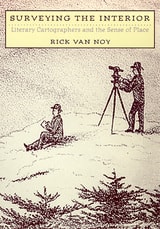
Surveying The Interior
Literary Cartographers And The Sense Of PlaceRick Van Noy
University of Nevada Press, 2003
From a cartographer who wrote to a writer who mapped, the literary significance of surveying is revealed in this study of human relationships to the landscape. From the very beginning, American literature was closely intertwined with surveying. In Surveying the Interior, Rick Van Noy explores the ways that four American literary cartographers—Henry David Thoreau, Clarence King, John Wesley Powell, and Wallace Stegner—concerned themselves with what it means to map or survey a place and what it means to write about it. In the process, he helps define the ways by which space enters the human psyche as definable place, as well as the ways by which physical landscape is transmuted into a sense of place as an intimate, personal manifestation of both physical and existential realities.
Symmetry and Sense
The Poetry of Sir Philip SidneyBy Robert L. Montgomery
University of Texas Press, 1961
Few Elizabethans left the image of their personalities cut so deeply into the Renaissance imagination as did Sir Philip Sidney. Widely admired in his own time, Sidney must seem to the modern reader almost universally accomplished. His talents as courtier, diplomat, soldier, scholar, novelist, and poet are history.
Almost immediately after Sidney's death in battle against the Spaniards in the Low Countries, the process of legend began, and the legend has survived, sometimes obscuring the facts. The versatile "Renaissance man" has become, in the eyes of some critics, the romantic lover whose frustrations and despair found release in the "confessional" form of the sonnet sequence, Astrophel and Stella, and in other poems. To show these poems to be consciously constructed works of art, not simply passionate outbursts of romantic emotion, is one aim of this study.
The author examines Sidney as poet and critic, concentrating his study on rhetorical technique and poetic rhythm and form. He shows Sidney experimenting with the symmetrical possibilities of rhythm and phrase; practicing the ornateness current and acceptable in his day. He examines Sidney's comment on such a style in The Defense of Poesy and the ways in which the poet's own work agreed with or departed from his expressed opinions. He also balances Sidney's poetry against the powerful tradition of Petrarchan love literature and the equally powerful Renaissance impulse to subject passion to the rule of reason. Finally, in an extended analysis of Astrophel and Stella, he shows Sidney as the master of a plainer, wittier, more subtly fashioned style and a complex, more dramatically immediate form. What emerges from the study is not the personality of the poet, but the principles of his art and the value of his achievement in the mainstream of English Renaissance verse.
The Birth of Sense
Generative Passivity in Merleau-Ponty’s PhilosophyDon Beith
Ohio University Press, 2018
In The Birth of Sense, Don Beith proposes a new concept of generative passivity, the idea that our organic, psychological, and social activities take time to develop into sense. More than being a limit, passivity marks out the way in which organisms, persons, and interbodily systems take time in order to manifest a coherent sense. Beith situates his argument within contemporary debates about evolution, developmental biology, scientific causal explanations, psychology, postmodernism, social constructivism, and critical race theory. Drawing on empirical studies and phenomenological reflections, Beith argues that in nature, novel meaning emerges prior to any type of constituting activity or deterministic plan.
The Birth of Sense is an original phenomenological investigation in the style of Maurice Merleau-Ponty, and it demonstrates that the French philosopher’s works cohere around the notion that life is radically expressive. While Merleau-Ponty’s early works are widely interpreted as arguing for the primacy of human consciousness, Beith argues that a pivotal redefinition of passivity is already under way here, and extends throughout Merleau-Ponty’s corpus. This work introduces new concepts in contemporary philosophy to interrogate how organic development involves spontaneous expression, how personhood emerges from this bodily growth, and how our interpersonal human life remains rooted in, and often thwarted by, domains of bodily expressivity.
The Eyes of Faith
The Sense of the Faithful and the Church's Reception of RevelationOrmond Rush
Catholic University of America Press, 2009
The Sense of Brown
José Esteban Muñoz. Edited and with an Introduction by Joshua Chambers-Letson and Tavia Nyong'o
Duke University Press, 2020

The Sense of Sound, Volume 22
Rey Chow
Duke University Press, 0
Rey Chow is Anne Firor Scott Professor of Literature at Duke University. She is the author of The Age of the World Target and Modern Chinese Literary and Cultural Studies in the Age of Theory, both published by Duke University Press.
James A. Steintrager is Professor and Chair of English at the University of California, Irvine.
Contributors: Caroline Bassett, Eugenie Brinkema, Iain Chambers, Michel Chion, Rey Chow, Mladen Dolar, Veit Erlmann, Evan Johnson, Christopher Lee, Mara Mills, John Mowitt, Dominic Pettman, Tara Rodgers, Nicholas Seaver, James A. Steintrager, Jonathan Sterne,
The Sense of the World
Nancy, Jean-Luc
University of Minnesota Press, 1998
Is there a “world” anymore, let alone any “sense” to it? Acknowledging the lack of meaning in our time, and the lack of a world at the center of meanings we try to impose, Jean-Luc Nancy presents a rigorous critique of the many discourses-from philosophy and political science to psychoanalysis and art history-that talk and write their way around these gaping absences in our lives.
In an original style befitting his search for a new mode of thought, Nancy offers fragmentary readings of writers such as Nietzsche, Hegel, Marx, Lévinas, Lacan, Derrida, and Deleuze insofar as their work reflects his concern with sense and the world. Rather than celebrate or bemoan the loss of meaning or attempt to install a new one, his book seeks to reposition both sense and the world between the presence and absence of meaning, between objectivity and subjectivity. Nancy’s project entails a reconception of the field of philosophy itself, a rearticulation of philosophical practice. Neither recondite nor abstract, it is concerned with the existence and experience of freedom-the actuality of existence as experienced by contemporary communities of citizens, readers, and writers.
Combining aesthetic, political, and philosophical considerations to convey a sense of the world between meaning and reality, ideal content and material form, this book offers a new way of understanding-and responding to-“the end of the world.”
Jean-Luc Nancy teaches at the University of Human Sciences in Strasbourg. His books in English include The Literary Absolute (with Philip Lacoue-Labarthe, 1988), The Inoperative Community (Minnesota, 1991), The Birth to Presence (1993), The Experience of Freedom (1993), and The Muses (1996).
Jeffrey S. Librett is associate professor of modern languages and literatures at Loyola University of Chicago.
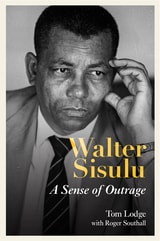
Walter Sisulu
A Sense of OutrageTom Lodge with Roger Southall
Ohio University Press, 0
Although hailed, alongside Nelson Mandela and Oliver Tambo, as one of the African National Congress’s holy trinity, Walter Sisulu has remained a relatively neglected figure in the historiography of the struggle for liberation in South Africa. Modest and unassuming, Sisulu was always content to stay in the background in a way that has long belied his importance. This nuanced and highly original biography, drafted by political historian Tom Lodge before his untimely death, provides a powerful corrective. Lodge describes Sisulu as an exceptional organizer, the most influential planner of the ANC’s mass campaigning during the 1950s, a principled but undoctrinaire communist, and like Mandela, an advocate of the necessity of armed struggle. He also served as the careful navigator of the ambiguous relationship between the ANC and Umkhonto we Sizwe, and Lodge details how Sisulu, with his exceptional grasp of the subtleties of fact and law, confounded the prosecution as he sat in the dock in the Rivonia trial. Sentenced to life imprisonment with his fellow defendants, Sisulu became a calming influence amid the divisive ideological debates that took place on Robben Island, as well as a constant source of strength and support to Mandela. After his 1989 release from jail—ahead of Mandela—he again demonstrated his prowess as the chief organizer of the ANC as it reestablished itself ahead of the 1994 elections. Sociologist Roger Southall stepped in to complete Lodge’s detailed analysis of Sisulu’s commitment and contribution to South African freedom, an encomium that Walter Sisulu richly deserves.
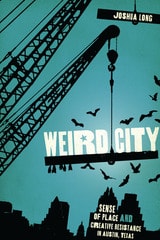
Weird City
Sense of Place and Creative Resistance in Austin, TexasBy Joshua Long
University of Texas Press, 2010
Austin, Texas, at the beginning of the twenty-first century, is experiencing one of the most dynamic periods in its history. Wedged between homogenizing growth and a long tradition of rebellious nonconformity, many Austinites feel that they are in the midst of a battle for the city's soul.
From this struggle, a movement has emerged as a form of resistance to the rapid urban transformation brought about in recent years: "Keep Austin Weird" originated in 2000 as a grassroots expression of place attachment and anti-commercialization. Its popularity has led to its use as a rallying cry for local business, as a rhetorical tool by city governance, and now as the unofficial civic motto for a city experiencing rapid growth and transformation.
By using "Keep Austin Weird" as a central focus, Joshua Long explores the links between sense of place, consumption patterns, sustainable development, and urban politics in Austin. Research on this phenomenon considers the strong influence of the "Creative Class" thesis on Smart Growth strategies, gentrification, income inequality, and social polarization made popular by the works of Richard Florida. This study is highly applicable to several emerging "Creative Cities," but holds special significance for the city considered the greatest creative success story, Austin.