Results by title
20 books match the query 'Sentimentalism in literature'
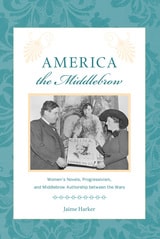
America the Middlebrow
Women's Novels, Progressivism, and Middlebrow Authorship between the WarsJaime Harker
University of Massachusetts Press, 2007
Between the two world wars, American publishing entered a “golden age” characterized by an explosion of new publishers, authors, audiences, distribution strategies, and marketing techniques. The period was distinguished by a diverse literary culture, ranging from modern cultural rebels to working-class laborers, political radicals, and progressive housewives. In America the Middlebrow, Jaime Harker focuses on one neglected mode of authorship in the interwar period—women's middlebrow authorship and its intersection with progressive politics.
With the rise of middlebrow institutions and readers came the need for the creation of the new category of authorship. Harker contends that these new writers appropriated and adapted a larger tradition of women's activism and literary activity to their own needs and practices. Like sentimental women writers and readers of the 1850s, these authors saw fiction as a means of reforming and transforming society. Like their Progressive Era forebears, they replaced religious icons with nationalistic images of progress and pragmatic ideology. In the interwar period, this mode of authorship was informed by Deweyan pragmatist aesthetics, which insisted that art provided vicarious experience that could help create humane, democratic societies.
Drawing on letters from publishers, editors, agents, and authors, America the Middlebrow traces four key moments in this distinctive culture of letters through the careers of Dorothy Canfield, Jessie Fauset, Pearl Buck, and Josephine Herbst. Both an exploration of a virtually invisible culture of letters and a challenge to monolithic paradigms of modernism, the book offers fresh insight into the ongoing tradition of political domestic fiction that flourished between the wars.

An Archaeology of Sympathy
The Sentimental Mode in Literature and CinemaJames Chandler
University of Chicago Press, 2013
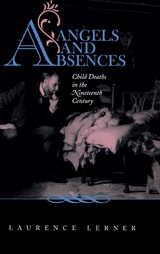
Angels and Absences
Child Deaths in the Nineteenth CenturyLaurence Lerner
Vanderbilt University Press, 1997
What is the difference between public and private feeling, and how far can we deduce past feelings from the words that have been left us? Why do child deaths figure so often and so prominently in the literature of the nineteenth century, and how was the theme of the death of a child used to elicit such poignant responses in the readers of that era? In this fascinating new book, Laurence Lerner vividly contrasts the contempt with which twentieth- century criticism so often dismisses such works as mere sentimentality with the enthusiasm and tears of nineteenth-century contemporaries.
Drawing examples from both real and literary deaths, Lerner delves into the writings of well-known authors such as Dickens, Coleridge, Shelley, Flaubert, Mann, Huxley, and Hesse, as well as lesser known writers like Felicia Hemans and Lydia Sigourney. In the process, he synthesizes fresh ideas about the thorny subjects of sentimentality, aesthetic judgment, and the function of religion in literature.
Lerner's forthright and evocative prose style is enjoyable reading, and he excels in teasing out the moral implications and the psychosocial entanglements of his chosen narrative and lyrical texts. This is a book that will illuminate an important aspect of the history of private life. It should have wide application for those interested in the history, sociology, and literature of the nineteenth century.
Antebellum American Women's Poetry
A Rhetoric of SentimentWendy Dasler Johnson
Southern Illinois University Press, 2016
Considering the logos, ethos, and pathos—aims, writing personae, and audience appeal—of poems by African American abolitionist Frances Watkins Harper, working-class prophet Lydia Huntley Sigourney, and feminist socialite Julia Ward Howe, Wendy Dasler Johnson demonstrates that sentimental poetry was an inportant component of antebellum social activism. She articulates the ethos of the poems of Harper, who presents herself as a properly domestic black woman, nevertheless stepping boldly into Northern pulpits to insist slavery be abolished; the poetry of Sigourney, whose speaker is a feisty, working-class, ambiguously gendered prophet; and the works of Howe, who juggles her fame as the reformist “Battle Hymn” lyricist and motherhood of five children with an erotic Continental sentimentalism.
Antebellum American Women's Poetry makes a strong case for restoration of a compelling system of persuasion through poetry usually dismissed from studies of rhetoric. This remarkable book will change the way we think about women’s rhetoric in the nineteenth century, inviting readers to hear and respond to urgent, muffled appeals for justice in our own day.

Captivity and Sentiment
Cultural Exchange in American Literature, 1682–1861Michelle Burnham
Dartmouth College Press, 2000
Cato's Tears and the Making of Anglo-American Emotion
Julie Ellison
University of Chicago Press, 1999
Early popular dramas of this time, Ellison shows, linked male stoicism with sentimentality through portrayals of stoic figures whose civic sacrifices bring other men to tears. Later works develop a different model of sensibility, drawing their objects of sympathy from other races and classes—Native Americans, African slaves, servants. Only by examining these texts in light of the complex masculine tradition of stoic sentimentality, Ellison argues, can one interpret women's roles in the culture of sensibility.
In her conclusion, Ellison offers "a short history of liberal guilt," exploring the enduring link between male stoicism and male sensibility in political and cultural life from the late seventeenth century to today.
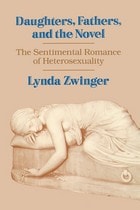
Daughters, Fathers, and the Novel
The Sentimental Romance of HeterosexualityLynda Zwinger
University of Wisconsin Press, 1991
Daughters, Fathers, and the Novel is a provocative study of the father-daughter story—a neglected dimension of the family romance. It has important implications for the history of the novel, for our understanding of key texts in that history, and for theories concerning the representation of gender, family relations, and heterosexuality in Western culture.
In the English and American novel, argues Lynda Zwinger, “the good woman” . . . is a father’s daughter, . . . constructed to the very particular specifications of an omnipresent and unvoiced paternal desire.” Zwinger supports her case with an analysis of both “high-brow” and “low-brow” novels and with ingenious textual analyses of five novels: Clarissa Harlowe, Dombey and Son, Little Women, The Golden Bowl, and The Story of O.
In the dominant discourse of Anglo-American culture, the father’s daughter provides the cornerstone for the patriarchal edifice of domesticity and the alibi for patriarchal desire. Zwinger’s analysis of the sexual politics embodied in the figure of this sentimental daughter raises compelling critical and cultural issues. Zwinger shows how different readings of Clarissa’s story form a sentimental composite that makes her available in perpetuity to heterosexual desire. Dombey and Son illuminates the erotic dimension of the sentimental, the titillation always inherent in the spectacle of virtue in distress. Zwinger’s analysis of Little Women in the context of Louisa May Alcott’s own life-text focuses upon the problems of a daughter trying to write the filial romance. The Golden Bowl deploys the daughter of sentiment as a “cover story” for a feminine version of the Oedipal story, founded on the daughter who can’t say yes, but doesn’t say no. The Story of O reveals the pornographic dimension in romantic and sentimental love.
In her conclusion, Zwinger offers an overview of the nineteenth-century novel, asking what difference it makes when the writer is a daughter. She shows how the daughter’s family romance pictures the father as inadequate, ironically requiring the sentimental daughter as a patriarchal prop. She develops a useful concept of hysteria and argues that generic “disorder” and hysterical “intrusions” mark the family romance novels of Jane Austen, Emily and Charlotte Brontë, and George Eliot. And finally, she makes the case that the daughter’s choice to stay home is not necessarily an act of simple complicity, for by staying home she comes as close as she can to disrupting the father-daughter romance.

Desire and Truth
Functions of Plot in Eighteenth-Century English NovelsPatricia Meyer Spacks
University of Chicago Press, 1990
Disaffected
The Cultural Politics of Unfeeling in Nineteenth-Century AmericaXine Yao
Duke University Press, 2021
Duke University Press Scholars of Color First Book Award recipient
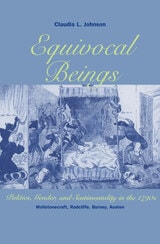
Equivocal Beings
Politics, Gender, and Sentimentality in the 1790s--Wollstonecraft, Radcliffe, Burney, AustenClaudia L. Johnson
University of Chicago Press, 1995
Demonstrating the interrelationships among politics, gender, and feeling in the fiction of this period, Johnson provides detailed readings of Wollstonecraft, Radcliffe, and Burney, and treats the qualities that were once thought to mar their work—grotesqueness, strain, and excess—as indices of ideological conflict and as strategies of representation during a period of profound political conflict. She maintains that the reactionary reassertion of male sentimentality as a political duty displaced customary gender roles, rendering women, in Wollstonecraft's words, "equivocal beings."
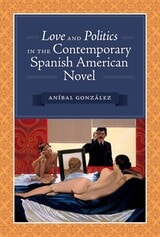
Love and Politics in the Contemporary Spanish American Novel
By Aníbal González
University of Texas Press, 2010
The Latin American Literary Boom was marked by complex novels steeped in magical realism and questions of nationalism, often with themes of surreal violence. In recent years, however, those revolutionary projects of the sixties and seventies have given way to quite a different narrative vision and ideology. Dubbed the new sentimentalism, this trend is now keenly elucidated in Love and Politics in the Contemporary Spanish American Novel.
Offering a rich account of the rise of this new mode, as well as its political and cultural implications, Aníbal González delivers a close reading of novels by Miguel Barnet, Elena Poniatowska, Isabel Allende, Alfredo Bryce Echenique, Gabriel García Márquez, Antonio Skármeta, Luis Rafael Sánchez, and others. González proposes that new sentimental novels are inspired principally by a desire to heal the division, rancor, and fear produced by decades of social and political upheaval. Valuing pop culture above the avant-garde, such works also tend to celebrate agape—the love of one's neighbor—while denouncing the negative effects of passion (eros). Illuminating these and other aspects of post-Boom prose, Love and Politics in the Contemporary Spanish American Novel takes a fresh look at contemporary works.
Robert Frost and Feminine Literary Tradition
Karen L. Kilcup
University of Michigan Press, 1998
Seeing Red
Anger, Sentimentality, and American IndiansCari M. Carpenter
The Ohio State University Press, 2008
Sentimental Collaborations
Mourning and Middle-Class Identity in Nineteenth-Century AmericaMary Louise Kete
Duke University Press, 2000
Many scholars have written about the sentimental novel as a primarily female genre and have stressed its negative ideological aspects. Kete finds that in fact many men—from writers to politicians—participated in nineteenth-century sentimental culture. Importantly, she also recovers the utopian dimension of the phenomenon, arguing that literary sentimentality, specifically in the form of poetry, is the written trace of a broad cultural discourse that Kete calls “sentimental collaboration”—an exchange of sympathy in the form of gifts that establishes common cultural or intellectual ground. Kete reads the work of Ralph Waldo Emerson, Henry Wadsworth Longfellow, Mark Twain, Harriet Beecher Stowe, and Lydia Huntley Sigourney with an eye toward the deployment of sentimentality for the creation of Americanism, as well as for political and abolitionist ends. Finally, she locates the origins of sentimental collaboration in the activities of ordinary people who participated in mourning rituals—writing poetry, condolence letters, or epitaphs—to ease their personal grief.
Sentimental Collaborations significantly advances prevailing scholarship on Romanticism, antebellum culture, and the formation of the American middle class. It will be of interest to scholars of American studies, American literature, cultural studies, and women’s studies.
Sentimental Readers
The Rise, Fall, and Revival of a Disparaged RhetoricFaye Halpern
University of Iowa Press, 2013
Halpern examines these novels with a fresh eye by positioning sentimentality as a rhetorical strategy on the part of these novels’ (mostly) female authors, who used it to answer a question that plagued the male-dominated world of nineteenth-century American rhetoric and oratory: how could listeners be sure an eloquent speaker wasn’t unscrupulously persuading them of an untruth? The authors of sentimental novels managed to solve this problem even as the professional male rhetoricians and orators could not, because sentimental rhetoric, filled with tears and other physical cues of earnestness, ensured that an audience could trust the heroes and heroines of these novels. However, as a wider range of authors began wielding sentimental rhetoric later in the nineteenth century, readers found themselves less and less convinced by this strategy.
In her final discussion, Halpern steps beyond a purely historical analysis to interrogate contemporary rhetoric and reading practices among literature professors and their students, particularly first-year students new to the “close reading” method advocated and taught in most college English classrooms. Doing so allows her to investigate how sentimental novels are understood today by both groups and how these contemporary reading strategies compare to those of Americans more than a century ago. Clearly, sentimental novels still have something to teach us about how and why we read.
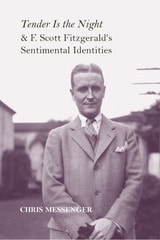
Tender Is the Night and F. Scott Fitzgerald's Sentimental Identities
Chris Messenger
University of Alabama Press, 2015
In “Tender Is the Night” and F. Scott Fitzgerald’s Sentimental Identities, Messenger traces the roots of Fitzgerald’s writing career to the deaths of his two infant sisters a few months before his own birth. It was their loss, Fitzgerald wrote, that made him a writer. Messenger highlights how the loss of Fitzgerald’s siblings powerfully molded his relation to maternal nurturing and sympathy in Tender Is the Night as well as how it shaped the homosocial intimations of its care-giving protagonist, psychiatrist Dick Diver. A concomitant grief and mourning was fueled by Fitzgerald’s intimate and intense creative rivalry with his often-institutionalized wife, Zelda Sayre Fitzgerald.
While sentiment is a discredited strain in high modernism, Fitzgerald nevertheless embraced it in Tender Is the Night to fashion this most poignant and beautiful successor to The Great Gatsby. Fitzgerald’s aesthetic and emotional preoccupations came most vividly to life in this major novel. Messenger describes how Fitzgerald, creating his character Nicole Warren Diver as a victim of paternal incest, finally found the sentimental key to finishing his novel and uniting his vision of the two narratives of “saving” the two sisters and reimagining the agony of his wife and their marriage.
Fitzgerald’s productive quarrel with and through sentiment defines his career, and Messenger convincingly argues that Tender Is the Night should be placed alongside TheGreat Gatsby as a classic exemplar of the modern novel.
The Afterlife of Sympathy
Reading American Literary Realism in the Wake of "Uncle Tom’s Cabin"Faye Halpern
University of Massachusetts Press, 2024
Literary realism rose to prominence in postbellum America with what the realists heralded as artful and accurate depictions of the world. Realism is thought to have replaced sentimentality—an earlier mode of writing the realists disparaged, which has often been seen as antithetical to realism. Literary scholar Faye Halpern challenges this apparent binary by uncovering how and why William Dean Howells, Mark Twain, Henry James, Constance Fenimore Woolson, and Charles Chesnutt incorporated sentimental elements into their most famous works.
With its distinctively narratological approach, The Afterlife of Sympathy offers a more rhetorical way to understand sentimentality and assess the ethical complexity of sympathy. Halpern demonstrates how sentimentality enables authors to form intimate relationships between their characters and readers to supplement the critical distance that realist writers otherwise celebrate and that has remained a key value in literary studies today. In reassessing American literary realism, Halpern seeks not only to understand why these writers adopted sentimental techniques but to provide insight into contemporary arguments in literary studies about critical distance and sympathetic identification.
The Biopolitics of Feeling
Race, Sex, and Science in the Nineteenth CenturyKyla Schuller
Duke University Press, 2018
The Female Complaint
The Unfinished Business of Sentimentality in American CultureLauren Berlant
Duke University Press, 2008
Pairing literary criticism and historical analysis, Berlant explores the territory of this intimate public sphere through close readings of U.S. women’s literary works and their stage and film adaptations. Her interpretation of Uncle Tom’s Cabin and its literary descendants reaches from Harriet Beecher Stowe to Toni Morrison’s Beloved, touching on Shirley Temple, James Baldwin, and The Bridges of Madison County along the way. Berlant illuminates different permutations of the women’s intimate public through her readings of Edna Ferber’s Show Boat; Fannie Hurst’s Imitation of Life; Olive Higgins Prouty’s feminist melodrama Now, Voyager; Dorothy Parker’s poetry, prose, and Academy Award–winning screenplay for A Star Is Born; the Fay Weldon novel and Roseanne Barr film The Life and Loves of a She-Devil; and the queer, avant-garde film Showboat 1988–The Remake. The Female Complaint is a major contribution from a leading Americanist.
Twentieth-Century Sentimentalism
Narrative Appropriation in American LiteratureWilliamson, Jennifer A.
Rutgers University Press, 2013
Today’s critical establishment assumes that sentimentalism is an eighteenth- and nineteenth-century literary mode that all but disappeared by the twentieth century. In this book, Jennifer Williamson argues that sentimentalism is alive and well in the modern era. By examining working-class literature that adopts the rhetoric of “feeling right” in order to promote a proletarian or humanist ideology as well as neo-slave narratives that wrestle with the legacy of slavery and cultural definitions of African American families, she explores the ways contemporary authors engage with familiar sentimental clichés and ideals.
Williamson covers new ground by examining authors who are not generally read for their sentimental narrative practices, considering the proletarian novels of Grace Lumpkin, Josephine Johnson, and John Steinbeck alongside neo-slave narratives written by Margaret Walker, Octavia Butler, and Toni Morrison. Through careful close readings, Williamson argues that the appropriation of sentimental modes enables both sympathetic thought and systemic action in the proletarian and neo-slave novels under discussion. She contrasts appropriations that facilitate such cultural work with those that do not, including Kathryn Stockett’s novel and film The Help. The book outlines how sentimentalism remains a viable and important means of promoting social justice while simultaneously recognizing and exploring how sentimentality can further white privilege.
Sentimentalism is not only alive in the twentieth century. It is a flourishing rhetorical practice among a range of twentieth-century authors who use sentimental tactics in order to appeal to their readers about a range of social justice issues. This book demonstrates that at stake in their appeals is who is inside and outside of the American family and nation.