Results by title

2 books match the query 'Serbs'
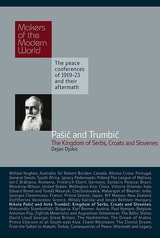
cover of Pasic & Trumbic: The Kingdom of Serbs, Croats and Slovenes

Pasic & Trumbic

The Kingdom of Serbs, Croats and Slovenes

Dejan Djokic

Haus Publishing, 2010

Nicola Pasic and Ante Trumbic: The book will provide the first parallel biographies of two key Yugoslav politicians of the early 20th century: Nikola Pasic, a Serb, and Ante Trumbic, a Croat. It will also offer a brief history of the creation of Yugoslavia (initially known as the Kingdom of Serbs, Croats, and Slovenes), internationally accepted at the Paris Peace Conference of 1919-20 (at the Treaty of Versailles). Such an approach will fill two major gaps in the literature - scholarly biographies of Pasic and Trumbic are lacking, while Yugoslavia's formation is due a reassessment - and to introduce the reader to the central question of South Slav politics: Serb-Croat relations. Pasic and Trumbic's political careers and their often troubled relationship in many ways perfectly epitomize the wider Serb-Croat question.
[more]
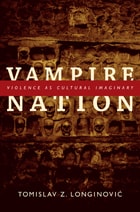
cover of Vampire Nation: Violence as Cultural Imaginary

Vampire Nation

Violence as Cultural Imaginary

Tomislav Z. Longinovi

Duke University Press, 2011

Vampire Nation is a nuanced analysis of the cultural and political rhetoric framing ‘the serbs’ as metaphorical vampires in the last decades of the twentieth century, as well as the cultural imaginaries and rhetorical mechanisms that inform nationalist discourses more broadly. Tomislav Z. Longinović points to the Gothic associations of violence, blood, and soil in the writings of many intellectuals and politicians during the 1990s, especially in portrayals by the U.S.-led Western media of ‘the serbs’ as a vampire nation, a bloodsucking parasite on the edge of European civilization.

Interpreting oral and written narratives and visual culture, Longinović traces the early modern invention of ‘the serbs’ and the category’s twentieth-century transformations. He describes the influence of Bram Stoker’s nineteenth-century novel Dracula on perceptions of the Balkan region and reflects on representations of hybrid identities and their violent destruction in the works of the region’s most prominent twentieth-century writers. Concluding on a hopeful note, Longinović considers efforts to imagine a new collective identity in non-nationalist terms. These endeavors include the emigrant Yugoslav writer David Albahari’s Canadian Trilogy and Cyber-Yugoslavia, a mock nation-state with “citizens” in more than thirty countries.

[more]