Results by title
8 books match the query 'Seri Indians'
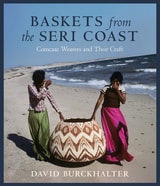
Baskets from the Seri Coast
Comcaac Weavers and Their CraftDavid Burckhalter
University of Arizona Press, 2026
This stunning exploration of Seri (Comcaac) basket weaving reveals the resilience and creativity of the weavers as seen through the lens of documentary photographer David Burckhalter, who has spent five decades cultivating friendships and documenting Seri traditions, landscapes, and basketry in Sonora, Mexico.
Blending striking photography with reflections from years as a trader and observer of Seri culture, Burckhalter traces the evolution of Seri basketry from a utilitarian craft to a celebrated art form. The book examines how Seri weavers have navigated the influences of the craft economy, outside forces like anthropologists, and changing traditions, while preserving their unique oral history and spiritual connections. With detailed insights into the artistry, labor, and legends surrounding Seri baskets, this work is a tribute to the resilience and creativity of Seri women, whose weaving continues to be passed on to future generations.
Featuring more than two hundred color photographs and historic images, Baskets from the Seri Coast: Comcaac Weavers and Their Craft offers readers a visual feast that celebrates the intricate craftsmanship and cultural significance of a timeless art and the people who make it.
[more]
Empire of Sand
The Seri Indians and the Struggle for Spanish Sonora, 1645–1803Compiled and edited by Thomas E. Sheridan
University of Arizona Press, 1999
From the earliest days of their empire in the New World, the Spanish sought to gain control of the native peoples and lands of what is now Sonora. While missionaries were successful in pacifying many Indians, the Seris--independent groups of hunter-gatherers who lived on the desert shores and islands of the Gulf of California--steadfastly defied Spanish efforts to subjugate them. Empire of Sand is a documentary history of Spanish attempts to convert, control, and ultimately annihilate the Seris. These papers of religious, military, and government officials attest to the Seris' resilience in the face of numerous Spanish attempts to conquer them and remove them from their lands. Most of the documents are being made available for the first time, while the few that have been published are extremely difficult to find. They include early observations of the Seris by Jesuit missionaries; the collapse of the Seri mission system in 1748; accounts of the invasion of Tibur¢n Island in 1750 and the Sonora Expedition of 1767-1771; and reports of late-eighteenth-century Seri hostilities. Thomas Sheridan's introduction puts the documents in perspective, while his notes objectively clarify their significance. In a superb analysis of contact history, Sheridan shows through these documents that Spaniards and Seris understood one another well, and it was their inability to tolerate each other's radically different societies and cultures that led to endless conflict between them. By skillfully weaving the documents into a coherent narrative of Spanish-Seri interaction, he has produced a compelling account of empire and resistance that speaks to anthropologists, historians, and all readers who take heart in stories of resistance to oppression.
[more]
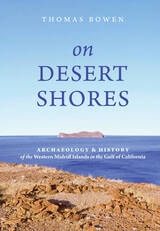
On Desert Shores
Archaeology and History of the Western Midriff Islands in the Gulf of CaliforniaThomas Bowen
University of Utah Press, 2022
Hot, arid, and uninhabited, the western Midriff Islands lie in the Gulf of California, surrounded by an often-treacherous sea. Given these conditions, why would ancient people go there, and why would anybody go there today? Thomas Bowen addresses these questions in the first comprehensive history of these islands.
Bowen draws on a wide range of sources, including the first archaeological field work ever conducted on the islands, written accounts dating back to the sixteenth century, oral histories of native people, contemporary interviews, and his own firsthand experiences. Among those cast in the islands’ historical drama are the Seri (Comcaac) people of Sonora, the extinct Cochimís of Baja California, Spanish explorers, Jesuit missionaries, pearl fishers, egg collectors, guano miners, hydrographers, cartographers, small-scale Mexican fishermen, recreational anglers, writers, photographers, ecotourists, shipwreck victims, and, most importantly, scientists. The final chapter documents the impact of this human activity on the islands’ ecosystems and examines conservation efforts now underway. Compelling and richly illustrated, this broadly based work provides a unique picture of these extraordinary islands.
Bowen draws on a wide range of sources, including the first archaeological field work ever conducted on the islands, written accounts dating back to the sixteenth century, oral histories of native people, contemporary interviews, and his own firsthand experiences. Among those cast in the islands’ historical drama are the Seri (Comcaac) people of Sonora, the extinct Cochimís of Baja California, Spanish explorers, Jesuit missionaries, pearl fishers, egg collectors, guano miners, hydrographers, cartographers, small-scale Mexican fishermen, recreational anglers, writers, photographers, ecotourists, shipwreck victims, and, most importantly, scientists. The final chapter documents the impact of this human activity on the islands’ ecosystems and examines conservation efforts now underway. Compelling and richly illustrated, this broadly based work provides a unique picture of these extraordinary islands.
[more]
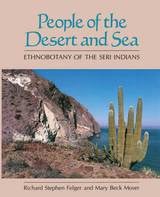
People of the Desert and Sea
Ethnobotany of the Seri IndiansRichard Stephen Felger, Mary Beck Moser
University of Arizona Press, 1985
"People of the Desert and Sea is one of those books that should not have to wait a generation or two to be considered a classic. A feast for the eye as well as the mind, this ethnobotany of the Seri Indians of Sonora represents the most detailed exploration of plant use by a hunting-and-gathering people to date. . . . Scholarship in the best sense of the term—precise without being pedantic, exhaustive without exhausting its readers."—Journal of Arizona History
"To read and gaze through this elegantly illustrated book is to be exposed, as if through a work of science fiction, to an astonishing and unknown cultural world."—North Dakota Quarterly
"To read and gaze through this elegantly illustrated book is to be exposed, as if through a work of science fiction, to an astonishing and unknown cultural world."—North Dakota Quarterly
[more]
Seri Prehistory
The Archaeology of the Central Coast of Sonora, MexicoThomas Bowen
University of Arizona Press, 1976
The Anthropological Papers of the University of Arizona is a peer-reviewed monograph series sponsored by the School of Anthropology. Established in 1959, the series publishes archaeological and ethnographic papers that use contemporary method and theory to investigate problems of anthropological importance in the southwestern United States, Mexico, and related areas.
[more]
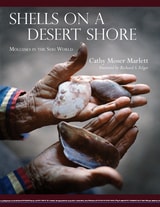
Shells on a Desert Shore
Mollusks in the Seri WorldCathy Moser Marlett; Foreword by Richard S. Felger
University of Arizona Press, 2014
In Mexico’s western Sonoran Desert along the Gulf of California is a place made extraordinary by the desert solitude, the dynamic sea, and the people who live there—the Seris. Central to the lives of these people are the sea and its shores.
Shells on a Desert Shore describes the Seri knowledge of mollusks and includes names, folklore, history, uses, and much more. Cathy Moser Marlett’s research of several decades, conducted in the Seri language, builds on work begun in 1951 by her parents, Edward and Becky Moser. The language, spoken by fewer than a thousand people today, is considered endangered. Marlett presents what she has learned from Seri consultants over recent decades and also draws from her own childhood experiences while living in a Seri village. The information from the people who had lived as hunter-gatherers provides a window into a lifestyle no longer recalled from personal experience by most Seris today—and perhaps a window into the lives of other peoples who made the Gulf’s shores their home.
The book offers a wealth of information about Seri history, as well as species accounts of more than 150 mollusks from the Seri area on the central Gulf coast. Chapters describe how the people ate mollusks or used them medicinally, how the mollusks were named, and how their shells were used. The author provides several hundred detailed drawings and photographs, many of them archival.
Shells on a Desert Shore is a fresh, original presentation of a significant part of the Seri way of life. Unique because it is written from the perspective of a participant in the Seri culture, the book will stand as a definitive, irreplaceable work in ethnography, a time capsule of the Seri people and their connection to the sea.
[more]
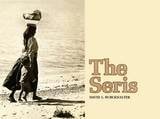
The Seris
David Burckhalter
University of Arizona Press, 1981
A collection of black and white photographs of the Seri Indians of Sonora, Mexico, including various portraits and descriptions of the subjects.
[more]
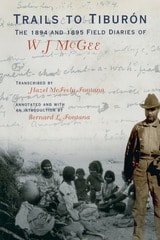
Trails to Tiburón
The 1894 and 1895 Field Diaries of W J McGeeW. J. McGee; Transcribed by Hazel McFeely Fontana; Annotated and with an Introduction by Bernard L. Fontana
University of Arizona Press, 2000
When William John McGee set out from Washington, D.C., for the Sonoran Desert in 1894, he was inspired by a passion for adventure as much as a thirst for knowledge. McGee lived in an era when discovery was made through travel rather than study, and reputations were forged by going where no outsiders had gone before.
A self-taught scientist in the newly forming field of anthropology, McGee led two expeditions through southern Arizona and northern Sonora for the Bureau of American Ethnology. There he conducted ethnographic research among the Papagos (Tohono O'odham) and the Seris, and his subsequent publication The Seri Indians helped secure his place in the anthropological community.
McGee's complete journals of the expeditions, kept in small field notebooks and preserved in the Library of Congress, are published here for the first time. These journals contain detailed descriptions of the country and people McGee encountered and convey the adventure of traveling through wild and unfamiliar places—including a voyage to Isla Tiburón, or Shark Island, in the Gulf of California—and being plagued by foul weather, a shortage of supplies, and fear of attack from hostile Indians.
Trails to Tiburón features 57 historical photographs taken on the expedition, capturing the places McGee saw and the people he encountered. Fontana's notes to the diary provide useful botanical, geological, and ethnographic information, while his introduction places McGee and his field work in the context of late-nineteenth-century anthropology and science.
Trails to Tiburón reveals McGee's versatility as a field worker and shows his methods, often questioned today, to be the reasonable response of a man caught up in the intellectual fervor of his time. For anyone wanting to share in the spirit of adventure, these journals are a landmark in the annals of exploration.
[more]