Results by title
13 books match the query 'Serial murderers'
A Prescription for Murder
The Victorian Serial Killings of Dr. Thomas Neill CreamAngus McLaren
University of Chicago Press, 1993
Bad Boy from Rosebud
The Murderous Life of Kenneth Allen McDuffGary M. Lavergne
University of North Texas Press, 1999
Butcher's Work
True Crime Tales of American Murder and MadnessHarold Schechter
University of Iowa Press, 2022
Confession of a Serial Killer
The Untold Story of Dennis Rader, the BTK KillerKatherine Ramsland
University Press of New England, 2017
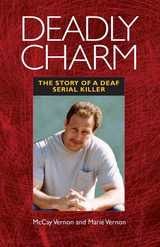
Deadly Charm
The Story of a Deaf Serial KillerMcCay Vernon
Gallaudet University Press, 2010
From the day he was born, Patrick McCullough faced hardships and reacted with untempered anger. His mother, a soon-to-be-divorced military wife, was late to realize that he was deaf and never learned how to handle his outbursts. Eventually, she abandoned him by petitioning for him to be a ward of the state. Stints in mental institutions and dismissals from several schools punctuated the rest of McCullough’s early years. Despite this severe childhood, no one could have predicted the outcome of his life described in Deadly Charm: The Story of a Deaf Serial Killer.
Authors McCay and Marie Vernon present a compelling story about McCullough, a strikingly handsome man with a winning personality. His charm was endearing, but his incendiary temper resulted in increasing aggression and abuse. Eventually, he was convicted for the murder of two men. Yet, McCullough ingratiated himself with the court and served only seven years in prison. Once free again, he resumed his pattern of sweetness and mayhem. He beguiled sympathetic women whom he then abused and stalked. Finally, his rage culminated in a crescendo of destruction. Deadly Charm depicts a deaf serial killer driven by frustration and violence and leaves much to consider. Did McCullough’s deafness exacerbate his lethally violent nature? Perhaps his vicious impulses could have been constrained if his time in mental institutions had been more productive than his time in prison.
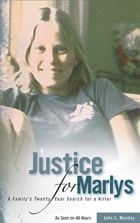
Justice For Marlys
A Family’s Twenty Year Search for a KillerJohn S. Munday Munday
University of Minnesota Press, 2006
At once a gripping story and an in-depth look at the grief of losing a child, Justice for Marlys relates the true account of a serial killer, Joseph Ture Jr., who slipped past the law again and again during a three-year-long crime spree. It was Ture who brutally murdered Marlys Wohlenhaus in her own home. John S. Munday, the husband of Marlys’s mother, reconstructs the murder and the seventeen-year investigation that led to the capture and conviction of Ture, allowing the reader to explore the horror, obsession, dedication, and finally the peace that he and his wife experienced in the search for and eventual conviction of her daughter’s killer. Justice for Marlys generates suspense and sympathy as Munday recounts how Marlys’s case was solved through the efforts of the victim’s tenacious family, supportive news media, and persistent investigators.
Munday gives readers a terrifying sense of the unimaginable grief and despair in the hearts of those who lose a child, yet he also shares his intensely personal exploration of the resilience and power within the human spirit.
John S. Munday is an intellectual property attorney who lives with his wife Fran in Isanti County, Minnesota. He is also the author of Surviving the Death of a Child, a contributing editor for Grief Digest, and a member of the board of directors of the Other Side Magazine.
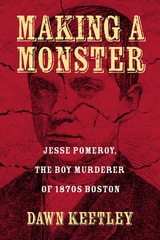
Making a Monster
Jesse Pomeroy, the Boy Murderer of 1870s BostonDawn Keetley
University of Massachusetts Press, 2017
In this book, Dawn Keetley details the story of Pomeroy's crimes and the intense public outcry. She explores the two reigning theories at the time—that he was shaped before birth when his pregnant mother visited a slaughterhouse and that he imitated brutal acts found in popular dime novels. Keetley then thoughtfully offers a new theory: that Pomeroy suffered a devastating reaction to a smallpox vaccination which altered his brain, creating a psychopath who revealed the human potential for brutality. The reaction to Pomeroy's acts, then and now, demonstrates the struggle to account for exactly those aspects of human nature that remain beyond our ability to understand.
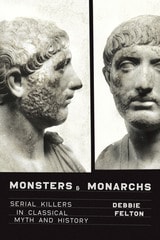
Monsters and Monarchs
Serial Killers in Classical Myth and HistoryBy Debbie Felton
University of Texas Press, 2021
Jack the Ripper. Jeffrey Dahmer. John Wayne Gacy. Locusta of Gaul. If that last name doesn’t seem to fit with the others, it’s likely because our modern society largely believes that serial killers are a recent phenomenon. Not so, argues Debbie Felton—in fact, there’s ample evidence to show that serial killers stalked the ancient world just as they do the modern one.
Felton brings this evidence to light in Monsters and Monarchs, and in doing so, forces us to rethink the assumption that serial killers arise from problems unique to modern society. Exploring a trove of stories from classical antiquity, she uncovers mythological monsters and human criminals that fit many serial killer profiles: the highway killers confronted by the Greek hero Theseus, such as Procrustes, who tortured and mutilated their victims; the Sphinx, or “strangler,” from the story of Oedipus; child-killing demons and witches, which could explain abnormal infant deaths; and historical figures such as Locusta of Gaul, the most notorious poisoner in the early Roman Empire. Redefining our understanding of serial killers and their origins, Monsters and Monarchs changes how we view both ancient Greek and Roman society and the modern-day killers whose stories still captivate the public today.

Natural Born Celebrities
Serial Killers in American CultureDavid Schmid
University of Chicago Press, 2005
David Schmid provides a historical account of how serial killers became famous and how that fame has been used in popular media and the corridors of the FBI alike. Ranging from H. H. Holmes, whose killing spree during the 1893 Chicago World's Fair inspired The Devil in the White City, right up to Aileen Wuornos, the lesbian prostitute whose vicious murder of seven men would serve as the basis for the hit film Monster, Schmid unveils a new understanding of serial killers by emphasizing both the social dimensions of their crimes and their susceptibility to multiple interpretations and uses. He also explores why serial killers have become endemic in popular culture, from their depiction in The Silence of the Lambs and The X-Files to their becoming the stuff of trading cards and even Web sites where you can buy their hair and nail clippings.
Bringing his fascinating history right up to the present, Schmid ultimately argues that America needs the perversely familiar figure of the serial killer now more than ever to manage the fear posed by Osama bin Laden since September 11.
Of Men and Monsters
Jeffrey Dahmer and the Construction of the Serial KillerRichard Tithecott
University of Wisconsin Press, 1998
Of Men and Monsters examines the serial killer as an American cultural icon, one that both attracts and repels. Richard Tithecott suggests that the stories we tell and the images we conjure of serial killers—real and fictional—reveal as much about mainstream culture and its values, desires, and anxieties as they do about the killers themselves.
Season of Terror
The Espinosas in Central Colorado, March–October 1863Charles F. Price
University Press of Colorado, 2013
For eight months during the spring and fall of 1863, brothers Felipe Nerio and José Vivián Espinosa and their young nephew, José Vincente, New Mexico–born Hispanos, killed and mutilated an estimated thirty-two victims before their rampage came to a bloody end. Their motives were obscure, although they were members of the Penitentes, a lay Catholic brotherhood devoted to self-torture in emulation of the sufferings of Christ, and some suppose they believed themselves inspired by the Virgin Mary to commit their slaughters.
Until now, the story of their rampage has been recounted as lurid melodrama or ignored by academic historians. Featuring a fascinating array of frontier characters, Season of Terror exposes this neglected truth about Colorado’s past and examines the ethnic, religious, political, military, and moral complexity of the controversy that began as a regional incident but eventually demanded the attention of President Lincoln.
Shallow Graves
The Hunt for the New Bedford Highway Serial KillerMaureen Boyle
University Press of New England, 2017
The Michigan Murders
Edward Keyes
University of Michigan Press, 2010
"True crime devotees won't want to miss this one!"
---Publishers Weekly
"Very engrossing . . . in the finest you can't put it down tradition."
---Hartford Courant
"This factual account of each murder, through the conviction of the killer, has all the excitement of a first-rate work of fiction, and is told straight, without the usual sociological jargon. Keyes collaborated with Robin Moore on The French Connection; The Michigan Murders is his first solo effort, and it is a good one."
---Miami Herald
"The Michigan Murders is the ultimate True Crime classic, unfolding like great mystery fiction while still delivering the powerful charge of real life."
---Jamie Agnew, Aunt Agatha's Mystery Bookshop
With a new prologue by Mardi Link and a new epilogue by Laura James
The true story of the savage coed killings---by the boy who could have lived next door!
Southeastern Michigan was rocked in the late 1960s by the terrifying serial murders of young women, whose bodies were dumped in Ann Arbor and Ypsilanti. In each case, few clues were left at the scene, and six separate police agencies were unable to end the horror. Then, almost by accident, a break came. The suspect: John Norman Collins, a young, quiet, all-American boy.
Collins was caught, went to trial, and, on August 19, 1970, was found guilty and sentenced to life imprisonment with no possibility of parole. He is now in his sixties and is serving his sentence in Marquette, Michigan.
Collins was one of the first serial killers exposed in the region, and his crimes had many in the area locking their doors for the first time. Edward Keyes's harrowing The Michigan Murders covers every step of the case. It fell out of print for more than a decade before being revived for this special edition.
Mardi Link, author of the new prologue, is the author of two regionally best-selling true crime books based in northern Michigan, When Evil Came to Good Hart and Isadore's Secret.
Laura James, author of the new epilogue, is a trial lawyer, crime historian, and true crime author who blogs about the true crime genre at her Web site CLEWS (www.laurajames.com).
Edward Keyes, now deceased, spent several years in the early 1970s investigating the Michigan murders. He also authored the works Double Dare and Cocoanut Grove. The Michigan Murders was a finalist for the Edgar Allan Poe Award for Best Fact Crime in 1977.