Results by title
7 books match the query 'Sex Workers'

Daughter, Mother, Grandmother, and Whore
The Story of a Woman Who Decided to be a PutaGabriela Leite
Duke University Press, 2024
In the early 1970s, while living at home with her conservative middle-class family and studying at the University of São Paulo, Gabriela Leite decided to become a sex worker. From her first client in a tiny room in downtown São Paulo to the launch of an exuberant clothing line designed for sex workers in Rio de Janeiro thirty years later, Daughter, Mother, Grandmother, and Whore tells the fascinating story of Leite’s bold and unique life in her own words. After helping to organize Brazil’s first protests by sex workers against police brutality, she moved to Rio de Janeiro, where she quickly became ensconced in the city’s storied red-light district. From there, Leite built a national network of politicized sex workers, worked for HIV/AIDS prevention, and participated in Brazil’s robust new civil society after its return to democracy in 1985 following a twenty-one-year military dictatorship. Insistent on advocating for the sex worker’s comprehensive human rights, Leite pioneered an irreverent grassroots Latin American feminism, which critiqued moral hypocrisies and Christian conservatism while affirming pleasure, joy, and agency. Daughter, Mother, Grandmother, and Whore also includes a foreword by artist and activist Carol Leigh.
[more]
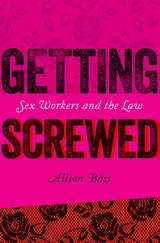
Getting Screwed
Sex Workers and the LawAlison Bass
University Press of New England, 2015
Alison Bass weaves the true stories of sex workers with the latest research on prostitution into a gripping journalistic account of how women (and some men) navigate a culture that routinely accepts the implicit exchange of sex for money, status, or even a good meal, but imposes heavy penalties on those who make such bargains explicit. Along the way, Bass examines why an increasing number of middle-class white women choose to become sex workers and explores how prostitution has become a thriving industry in the twenty-first-century global economy. Situating her book in American history more broadly, she also discusses the impact of the sexual revolution, the rise of the Nevada brothels, and the growing war on sex trafficking after 9/11. Drawing on recent studies that show lower rates of violence and sexually transmitted diseases, including HIV, in regions where adult prostitution is legal and regulated, Bass makes a powerful case for decriminalizing sex work. Through comparisons of the impact of criminalization vs. decriminalization in other countries, her book offers strategies for making prostitution safer for American sex workers and the communities in which they dwell. This riveting assessment of how U.S. anti-prostitution laws harm the public health and safety of sex workers and other citizens—and affect larger societal attitudes toward women—will interest feminists, sociologists, lawyers, health-care professionals, and policy makers. The book also will appeal to anyone with an interest in American history and our society’s evolving attitudes toward sexuality and marriage.
[more]
Mobile Orientations
An Intimate Autoethnography of Migration, Sex Work, and Humanitarian BordersNicola Mai
University of Chicago Press, 2018
Despite continued public and legislative concern about sex trafficking across international borders, the actual lives of the individuals involved—and, more importantly, the decisions that led them to sex work—are too often overlooked. With Mobile Orientations, Nicola Mai shows that, far from being victims of a system beyond their control, many contemporary sex workers choose their profession as a means to forge a path toward fulfillment.
Using a bold blend of personal narrative and autoethnography, Mai provides intimate portrayals of sex workers from sites including the Balkans, the Maghreb, and West Africa who decided to sell sex as the means to achieve a better life. Mai explores the contrast between how migrants understand themselves and their work and how humanitarian and governmental agencies conceal their stories, often unwittingly, by addressing them all as helpless victims. The culmination of two decades of research, Mobile Orientations sheds new light on the desires and ambitions of migrant sex workers across the world.
Using a bold blend of personal narrative and autoethnography, Mai provides intimate portrayals of sex workers from sites including the Balkans, the Maghreb, and West Africa who decided to sell sex as the means to achieve a better life. Mai explores the contrast between how migrants understand themselves and their work and how humanitarian and governmental agencies conceal their stories, often unwittingly, by addressing them all as helpless victims. The culmination of two decades of research, Mobile Orientations sheds new light on the desires and ambitions of migrant sex workers across the world.
[more]
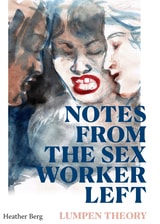
Notes from the Sex Worker Left
Lumpen TheoryHeather Berg
Duke University Press, 2026
In dressing rooms and shared cab rides home, mutual aid collectives and reading groups, sex workers are experimenting with how to live otherwise. Notes from the Sex Worker Left highlights unruly thinkers at the cutting edge of radical political theory. Drawing on interviews with sex workers as well as their political and creative writings, Heather Berg curates an archive of radical thought on the trappings of respectability, the failures of work, and the role of everyday resistance in collective militant struggle. Berg grounds her analysis in the perspective of the lumpenproletariat—the mutinous, precarious, and often criminalized counterpart to the respectable working class. Lumpen theorists use their position on the margins to imagine futures that welcome everyone for whom the usual solutions are not nearly enough. The nuclear family, the wage relation, the gendered racial capitalist state: All must go. Notes from the Sex Worker Left offers tools to dismantle them.
[more]
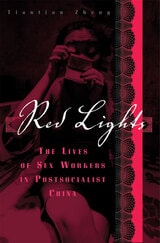
Red Lights
The Lives of Sex Workers in Postsocialist ChinaTiantian Zheng
University of Minnesota Press, 2009
In China today, sex work cannot be untangled from the phenomenon of rural-urban migration, the entertainment industry, and state power. In Red Lights, Tiantian Zheng highlights the urban karaoke bar as the locus at which these three factors intersect and provides a rich account of the lives of karaoke hostesses—a career whose name disguises the sex work and minimizes the surprising influence these women often have as power brokers.
Zheng embarked on two years of intensely embedded ethnographic fieldwork in her birthplace, Dalian, a large northeastern Chinese seaport of over six million people. During this time, Zheng lived and worked with a group of hostesses in a karaoke bar, facing many of the same dangers that they did and forming strong, intimate bonds with them. The result is an especially engaging, moving story of young, rural women struggling to find meaning, develop a modern and autonomous identity, and, ultimately, survive within an oppressively patriarchal state system.
Moving from her case studies to broader theories of sex, gender, and power, Zheng connects a growth in capitalist entrepreneurialism to the emergence of an urban sex industry, brilliantly illuminating the ways in which hostesses, their clients, and the state are mutually created in postsocialist China.
[more]
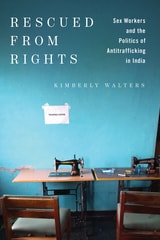
Rescued from Rights
Sex Workers and the Politics of Antitrafficking in IndiaKimberly Walters
University of Illinois Press, 2027
In South India, selling sex offers women a viable livelihood when motherhood, widowhood, abandonment, or failed relationships leave few options. But it costs them respectability. Torn between the need to earn and the need to be seen as good, some independent sex workers call themselves victims of trafficking even as they reject the programs that claim to rescue them.
Kimberly Walters reveals that in the name of rescue, sex workers are seized from their livelihoods, detained in rehabilitation homes, cut off from their families, and returned to the poverty that sex work had eased. The antitrafficking apparatus, Walters argues, fuses humanitarian care with disciplinary coercion and deepens the precarity it promises to end. In this context, women’s trafficking stories are addressed less to rescuers than to their own communities—a plea for the moral belonging their work denies them.
Nuanced and illuminating, Rescued from Rights draws on years of fieldwork to reveal what sex workers want that neither rescue nor rights can give them.
[more]
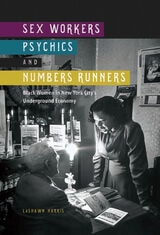
Sex Workers, Psychics, and Numbers Runners
Black Women in New York City's Underground EconomyLaShawn Harris
University of Illinois Press, 2016
During the early twentieth century, a diverse group of African American women carved out unique niches for themselves within New York City's expansive informal economy. LaShawn Harris illuminates the labor patterns and economic activity of three perennials within this kaleidoscope of underground industry: sex work, numbers running for gambling enterprises, and the supernatural consulting business. Mining police and prison records, newspaper accounts, and period literature, Harris teases out answers to essential questions about these women and their working lives. She also offers a surprising revelation, arguing that the burgeoning underground economy served as a catalyst in working-class black women ™s creation of the employment opportunities, occupational identities, and survival strategies that provided them with financial stability and a sense of labor autonomy and mobility. At the same time, urban black women, all striving for economic and social prospects and pleasures, experienced the conspicuous and hidden dangers associated with newfound labor opportunities.
[more]