Results by title
10 books match the query 'Sex in popular culture'
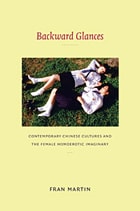
Backward Glances
Contemporary Chinese Cultures and the Female Homoerotic ImaginaryFran Martin
Duke University Press, 2010
As Martin explains, memorial schoolgirl love stories are popular throughout contemporary Chinese cultures. The same-sex attracted young woman appears in both openly homophobic and proudly queer-affirmative narratives, as well as in stories whose ideological valence is less immediately clear. Martin demonstrates that the stories, television programs, and films she analyzes are not idiosyncratic depictions of marginal figures, but manifestations of a broader, mainstream cultural preoccupation. Her investigation of representations of same-sex love between women sheds new light on contemporary Chinese understandings of sex, love, gender, marriage, and the cultural ordering of human life.
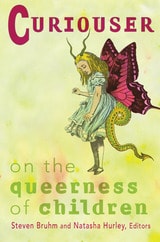
Curiouser
On The Queerness Of ChildrenSteven Bruhm
University of Minnesota Press, 2004
Classic essays and new work on the issue of childhood sexuality and its “queer resonances”
Our culture has a dominant narrative about children: they are (and should stay) innocent of sexual desires and intentions. At the same time, children are officially, tacitly, assumed to be heterosexual. Curiouser is a book about this narrative and what happens when it takes an unexpected, or queer, turn—when the stories of childhood must confront a child whose play does not conform to the ideal of child (a)sexuality.
The contributors to Curiouser examine the ostensibly simple representations of children that circulate through visual images, life narrative, children’s literature, film, and novels. At issue in these essays are the stories we tell to children, the stories we tell about children, and the stories we tell ourselves as children—stories that ultimately frame what is normative and what is queer. From the fiction of Horatio Alger, Henry James, Djuna Barnes, and Guy Davenport to the spectacles of Michael Jackson, Calvin Klein, and The Exorcist; from the narrative structure of pedophilia to evangelical Christianity; from punk tomboyism to queer girl-scouting: these scholars of childhood and sexuality scrutinize queer childhood energies in an impressive range of cultural forms. Contributors: Lauren Berlant, U of Chicago; Andre Furlani, Concordia U; Judith Halberstam, U of California, San Diego; Ellis Hanson, Cornell U; Paul Kelleher; Kathryn R. Kent, Williams College; James R. Kincaid, U of Southern California; Richard D. Mohr, U of Illinois, Urbana; Michael Moon, Johns Hopkins U; Kevin Ohi, Boston College; Eric Savoy, U of Montreal; Eve Kosofsky Sedgwick, CUNY Graduate Center; Kathryn Bond Stockton, U of Utah; Michael Warner, Rutgers U.
Lusosex
Gender And Sexuality In The Portuguese-Speaking WorldSusan Canty Quinlan
University of Minnesota Press, 2002
The first book to examine these essential issues in a Lusophone context.
Some of the most compelling theoretical debates in the humanities today center on representations of sexuality. This volume is the first to focus on the topic-in particular, the connections between nationhood, sex, and gender-in the lusophone, or Portuguese-speaking, world. Written by prominent scholars in Brazilian, Portuguese, and Lusophone African literary and cultural studies, the essays range across multiple discourses and cultural expressions, historical periods and theoretical approaches to offer a uniquely comprehensive perspective on the issues of sex and sexuality in the literature and culture of the Portuguese-speaking world that extends from Portugal to Brazil to Angola, Cape Verde, and Mozambique.
Through the critical lenses of gay and lesbian studies, queer theory, postcolonial studies, feminist theory, and postmodern theory, the authors consider the work of such influential literary figures as Clarice Lispector and Silviano Santiago. An important aspect of the volume is the publication of a newly discovered-and explicitly homoerotic-poem by Fernando Pessoa, published here for the first time in the original Portuguese and in English translation. Chapters take up questions of queer performativity and activism, female subjectivity and erotic desire, the sexual customs of indigenous versus European Brazilians, and the impact of popular music (as represented by Caetano Veloso and others) on interpretations of gender and sexuality. Challenging static notions of sexualities within the Portuguese-speaking world, these essays expand our understanding of the multiplicity of differences and marginalized subjectivities that fall under the intersections of sexuality, gender, and race.Contributors: Severino João Albuquerque, U of Wisconsin; Jossianna Arroyo, U of Michigan; César Braga-Pinto, Rutgers; Ana Paula Ferreira, U of California, Irvine; John Gledson, U of Liverpool; Russell G. Hamilton, Vanderbilt; André Torres Lepecki; Mário César Lugarinho, Universidade Federal Fluminense, Brazil; Phyllis Peres, U of Maryland; Ronald W. Sousa, U of Illinois; João Silvério Trevisan; Richard Zenith.
Media, Erotics, and Transnational Asia
Purnima Mankekar and Louisa Schein, eds.
Duke University Press, 2012
Judith Farquhar examines how health magazines serve as sources of both medical information and erotic titillation to readers in urban China. Tom Boellstorff analyzes how queer zines produced in Indonesia construct the relationship between same-sex desire and citizenship. Purnima Mankekar examines the rearticulation of commodity affect, erotics, and nation on Indian television. Louisa Schein describes how portrayals of Hmong women in videos shot in Laos create desires for the homeland among viewers in the diaspora. Taken together, the essays offer fresh insights into research on gender, erotics, media, and Asia transnationally conceived.
Contributors. Anne Allison, Tom Boellstorff, Nicole Constable, Heather Dell, Judith Farquhar, Sarah L. Friedman, Martin F. Manalansan IV, Purnima Mankekar, Louisa Schein, Everett Yuehong Zhang

No Tea, No Shade
New Writings in Black Queer StudiesE. Patrick Johnson, editor
Duke University Press, 2016
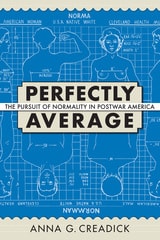
Perfectly Average
The Pursuit of Normality in Postwar AmericaAnna G. Creadick
University of Massachusetts Press, 2010
At the end of World War II, many Americans longed for a return to a more normal way of life after decades of depression and war. In fact, between 1945 and 1963 the idea of “normality” circulated as a keyword in almost every aspect of American culture. But what did this term really mean? What were its parameters? Whom did it propose to include and exclude?
In Perfectly Average, Anna Creadick investigates how and why “normality” reemerged as a potent homogenizing category in postwar America. Working with scientific studies, material culture, literary texts, film, fashion, and the mass media, she charts the pursuit of the “normal” through thematic chapters on the body, character, class, sexuality, and community.
Creadick examines such evidence as the “Norm and Norma” models produced during the war by sexologists and anthropologists—statistical composites of “normal” American bodies. In 1945, as thousands of Ohio women signed up for a Norma Look-Alike contest, a “Harvard Study of Normal Men” sought to define the typical American male according to specific criteria, from body shape to upbringing to blood pressure. By the early 1950s, the “man in the gray flannel suit” had come to symbolize what some regarded as the stultifying sameness of the “normalized” middle class. Meanwhile, novels such as From Here to Eternity and Peyton Place both supported and challenged normative ideas about gender, race, and sexuality, even as they worked to critique the postwar culture of surveillance—watching and being watched—through which normalizing power functioned.
As efforts to define normality became increasingly personal, the tensions em-bedded in its binary logic multiplied: Was normal descriptive of an average or prescriptive of an ideal? In the end, Creadick shows, a variety of statistics, assumptions, and aspirations converged to recast “normality” not as something innate or inborn, but rather as a quality to be actively pursued—a standard at once highly seductive and impossible to achieve because it required becoming perfectly average.
Pleasures and Perils
Girls' Sexuality in a Caribbean Consumer CultureCurtis, Debra
Rutgers University Press, 2009
Curtis shows that girls are often caught between conflicting discourses of Christian teachings about chastity, public health cautions about safe sex, and media enticements about consumer delights. Sexuality's contradictions are exposed: power and powerless¡ness, self-determination and cultural control, violence and pleasure. Pleasures and Perils illuminates the methodological and ethical issues anthropologists face when they conduct research on sex, especially among girls. The sexually explicit narratives conveyed in this book challenge not only the reader's own thoughts on sexuality but also the broader limits and possibilities of ethnography.
See Me Naked
Black Women Defining Pleasure in the Interwar EraTara T. Green
Rutgers University Press, 2022

Sexual Politics and Popular Culture
Diane Raymond
University of Wisconsin Press, 1990

Swinging Single
Representing Sexuality in the 1960sHilary Radner
University of Minnesota Press, 1999