Results by title
4 books match the query 'Sexual behavior in animals'
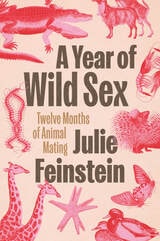
A Year of Wild Sex
Twelve Months of Animal MatingJulie Feinstein
University of Chicago Press, 2026
An eye-opening, unexpected year of animals' most intimate encounters.
It was a chance meeting with mating silverfish behind her bathroom cabinet that made biologist Julie Feinstein more curious about, well, the birds and the bees. How do other animals have sex? How do turtles do it? Or starfish without obvious sex organs? What about dangerous animals, like alligators? Or those historically associated with sex, like an oyster or a stork? What if all the animals that we see in zoos, TV ads, and children’s books, she wondered, had sex lives as seemingly strange as those of silverfish?
Feinstein’s humorous, accessible, and deeply researched text answers these and other questions on nature’s most surprising sexual behaviors, including firefly suitors bearing nutritious “nuptial gifts” and post-copulatory slug penis amputations. She raises an eyebrow at all the mammals—from goats to giraffes—that incorporate urine into courtship. She explains the complex interactions of amorous cockroaches and their equally complex genitalia. She laments that dyeing poison dart frog tadpoles sometimes commit cannibalism for a better shot at growing up and then, eventually, coupling up. In this little black book of animal sex, Feinstein guides readers through the year, drawing connections that illuminate the associations between animals’ mating behaviors and our monthly calendars. She details some animals’ peak bursts of activity, such as Atlantic white shrimp spawning in July, porcupines breeding in October, and bald eagles, decorators extraordinaires, working on their nests in December. Scorpions enter whimsically under the astrological sign of Scorpio in November, and when a holiday nears, she explains the mating nitty-gritty of species with deep cultural connections to a specific day, like New Year storks, Thanksgiving turkeys, or Christmas reindeer. Presenting a pair of animals for each month, Feinstein offers an entertaining and illuminating Noah’s ark and a year of wacky, unbelievable, truly wild sex.

Primate Paradigms
Sex Roles and Social BondsLinda Marie Fedigan
University of Chicago Press, 1992
"A book that properly illuminates in rich detail not only developmental and socioecological aspects of primate behavior but also how and why certain questions are asked. In addition, the book frequently focuses on insufficiently answered questions, especially those concerned with the evolution of primate sex differences. Fedigan's book is unique . . . because it places primate adaptations and our explanation of those patterns in a larger intellectual framework that is easily and appropriately connected to many lines of research in different fields (sociology, psychology, anthropology, neurobiology, endocrinology, and biology)—and not in inconsequential ways, either."—James McKenna, American Journal of Primatology
"This is the feminist critique of theories of primate and human evolution."—John H. Cook, Nature
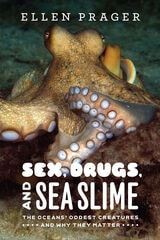
Sex, Drugs, and Sea Slime
The Oceans' Oddest Creatures and Why They MatterEllen Prager
University of Chicago Press, 2011
When viewed from a quiet beach, the ocean, with its rolling waves and vast expanse, can seem calm, even serene. But hidden beneath the sea’s waves are a staggering abundance and variety of active creatures, engaged in the never-ending struggles of life—to reproduce, to eat, and to avoid being eaten.
With Sex, Drugs, and Sea Slime, marine scientist Ellen Prager takes us deep into the sea to introduce an astonishing cast of fascinating and bizarre creatures that make the salty depths their home. From the tiny but voracious arrow worms whose rapacious ways may lead to death by overeating, to the lobsters that battle rivals or seduce mates with their urine, to the sea’s masters of disguise, the octopuses, Prager not only brings to life the ocean’s strange creatures, but also reveals the ways they interact as predators, prey, or potential mates. And while these animals make for some jaw-dropping stories—witness the sea cucumber, which ejects its own intestines to confuse predators, or the hagfish that ties itself into a knot to keep from suffocating in its own slime—there’s far more to Prager’s account than her ever-entertaining anecdotes: again and again, she illustrates the crucial connections between life in the ocean and humankind, in everything from our food supply to our economy, and in drug discovery, biomedical research, and popular culture.
Written with a diver’s love of the ocean, a novelist’s skill at storytelling, and a scientist’s deep knowledge, Sex, Drugs, and Sea Slime enchants as it educates, enthralling us with the wealth of life in the sea—and reminding us of the need to protect it.
The Dawn of the Deed
The Prehistoric Origins of SexJohn A. Long
University of Chicago Press, 2012