Results by title
4 books match the query 'Sexual minorities in art'

Matchmaking in the Archive
19 Conversations with the Dead and 3 Encounters with GhostsE.G. Crichton
Rutgers University Press, 2023
Working with the archives of the Gay Lesbian Bisexual Transgender Historical Society, artist E.G. Crichton decided to do something to bridge this generation gap. She selected 19 innovative LGBTQ artists, writers, and musicians, then paired each of them with a deceased person whose personal artifacts are part of the archive.
Including 25 pages of vivid images, Matchmaking in the Archive documents this monumental creative project and adds essays by Jonathan D. Katz, Michelle Tea, and Chris Vargas, who describe their own unique encounters with the ghosts of LGBTQ history. Together, they make the archive come alive in remarkably intimate ways.
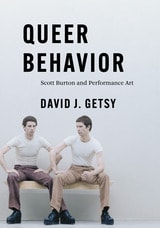
Queer Behavior
Scott Burton and Performance ArtDavid J. Getsy
University of Chicago Press, 2022
Scott Burton (1939–89) created performance art and sculpture that drew on queer experience and the sexual cultures that flourished in New York City in the 1970s. David J. Getsy argues that Burton looked to body language and queer behavior in public space—most importantly, street cruising—as foundations for rethinking the audiences and possibilities of art. This first book on the artist examines Burton’s underacknowledged contributions to performance art and how he made queer life central in them. Extending his performances about cruising, sexual signaling, and power dynamics throughout the decade, Burton also came to create functional sculptures that covertly signaled queerness by hiding in plain sight as furniture waiting to be used.
With research drawing from multiple archives and numerous interviews, Getsy charts Burton’s deep engagements with postminimalism, performance, feminism, behavioral psychology, design history, and queer culture. A restless and expansive artist, Burton transformed his commitment to gay liberation into a unique practice of performance, sculpture, and public art that aspired to be antielitist, embracing of differences, and open to all. Filled with stories of Burton’s life in New York’s art communities, Queer Behavior makes a case for Burton as one of the most significant out queer artists to emerge in the wake of the Stonewall uprising and offers rich accounts of queer art and performance art in the 1970s.
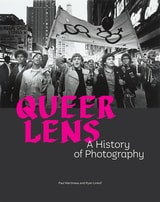
Queer Lens
A History of PhotographyPaul Martineau
J. Paul Getty Trust, The, 2025
Discover how photography helped define queer identity, visibility, and community in this richly illustrated “tour de force.”―Emma Jacob, Aesthetica Magazine
Winner of the 2026 Lambda Literary Award for LGBTQ+ Anthology.
“Potent and inspiring. . . . An empowering photography retrospective that reflects American queer communities.”―Aleena Ortiz, Foreword Reviews
From intimate portraits to public protests, Queer Lens: A History of Photography explores the transformative role of photography in LGBTQ+ communities from the 19th century to today. Edited by Paul Martineau and Ryan Linkof, this volume brings together scholars and artists to examine desire, kinship, gender expression, activism, and visibility. Historical photographs and contemporary works reveal how queer people have pictured themselves and challenged restrictive definitions of identity, while lively essays illuminate the intersections of photography and queer life.
This award-winning volume:
-
Spans nearly two centuries, connecting photography’s earliest experiments with contemporary expressions of queer identity.
-
Features nearly 300 images by some of photography’s most celebrated artists, including Thomas Eakins, Alice Austen, Nan Goldin, Robert Mapplethorpe, Annie Leibovitz, David LaChapelle, Laura Aguilar, Mickalene Thomas, and Paul Mpagi Sepuya.
-
Includes essays exploring how race, gender, class, and desire shape queer representation and photographic practice.
-
Concludes with a personal afterword by acclaimed photographer Catherine Opie on representation and visibility.
For lovers of photography and LGBTQ+ history, Queer Lens offers a new perspective on the people, images, and relationships that have shaped queer life.
Published to accompany an exhibition held at the J. Paul Getty Museum at the Getty Center from June 17 to September 28, 2025.
Queer and Trans Aesthetics
Lloyd Whitesell
University of Michigan Press, 2026
If a creative individual identifies as queer or trans, does that fact belong solely to the realm of biography, or does it pertain to their artistic achievement? In Queer and Trans Aesthetics, Lloyd Whitesell discusses literature, visual culture, audio-visual media, music, and performance from the 19th to the 21st century. Through this analysis, Whitesell develops a systematic framework to enrich our understanding of LGBTQ aesthetics and cultural production. He traces the history of queer aesthetic inquiry, develops a justification for a synthetic approach, identifies a fund of expressive strategies motivated by queer subjectivity, and highlights how such strategies create affinity across differences of gender, race, local context, and artistic media.
Rooted in a gender-inclusive theory of queer/trans subjectivity, the book draws on testimony from people of diverse backgrounds, genders, and races. Whitesell engages with debates in the existing scholarly literature while making connections between a wide range of artists: some from mainstream canons, some established subcultural figures, and others only now emerging as notable contributors to queer culture. The book explores five expressive archetypes or poses which have had profound significance in queer art traditions: the Monster, the Victim, the Trickster, the Dandy, and the Dreamer. Each offers a repertoire of creative responses to social oppression and configures queer subjective experience in a unique way. With its unique systematic approach, Queer and Trans Aesthetics enhances our knowledge of queer aesthetic traditions across genres and time.