Results by title
96 books match the query 'Shadow' and 6 start with a

A Shadow on Our Hearts
Soldier-Poetry, Morality, and the American War in VietnamAdam Gilbert
University of Massachusetts Press, 2018
The soldier-poets provide important insights into the ethical dimensions of their physical and psychological surroundings before, during, and after the war. They also offer profound perspectives on the relationships between American soldiers and the Vietnamese people. From firsthand experiences, they reflect on what it meant to be witnesses, victims, and perpetrators of the war's violence. And they advance an uncompromising vision of moral responsibility that indicts a range of culprits for the harms caused by the conflict. Gilbert explores the powerful and perceptive work of these soldier-poets through the lens of morality and presents a radically alternative, deeply personal, and ethically penetrating account of the American war in Vietnam.

Abuela in Shadow, Abuela in Light
Rigoberto González
University of Wisconsin Press, 2022
González travels to his abuela’s birthplace, Michoacán, Mexico, and along the way recovers his memories of a past he had tried to leave behind. A complex woman who was forced to take on maternal roles and suffered years of abuse, his grandmother simultaneously resisted traditional gender roles; she was kind yet unaffectionate, and she kept many secrets in a crowded household with little personal space. Sifting through family histories and anecdotes, González pieces together the puzzling life story of a woman who was present in her grandson’s life yet absent during his emotional journey as a young man discovering his sexuality and planning his escape from a toxic and abusive environment.
From fragments of memory and story, González ultimately creates a portrait of an unconventional yet memorable grandmother, a hard-working Indigenous Mexican woman who remained an enigma while she was alive. A grandmother, he shows, is more than what her descendants remember; she is also all that has been forgotten or never known. Through this candid exploration of his own family, González explores how we learn to remember and honor those we’ve lost.
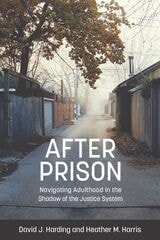
After Prison
Navigating Adulthood in the Shadow of the Justice SystemDavid J. Harding
Russell Sage Foundation, 2020
The transition to young adulthood typically includes school completion, full-time employment, leaving the childhood home, marriage, and childbearing, events that are disrupted by incarceration. While one quarter of the young men who participated in the study successfully transitioned into adulthood—achieving employment and residential independence and avoiding arrest and incarceration—the same number of young men remained deeply involved with the criminal justice system, spending on average four out of the seven years after their initial release re-incarcerated. Not surprisingly, whites are more likely to experience success after prison. The authors attribute this racial disparity to the increased stigma of criminal records for blacks, racial discrimination, and differing levels of social network support that connect whites to higher quality jobs. Black men earn less than white men, are more concentrated in industries characterized by low wages and job insecurity, and are less likely to remain employed once they have a job.
The authors demonstrate that families, social networks, neighborhoods, and labor market, educational, and criminal justice institutions can have a profound impact on young people’s lives. Their research indicates that residential stability is key to the transition to adulthood. Harding and Harris make the case for helping families, municipalities, and non-profit organizations provide formerly incarcerated young people access to long-term supportive housing and public housing. A remarkably large number of men in this study eventually enrolled in college, reflecting the growing recognition of college as a gateway to living wage work. But the young men in the study spent only brief spells in college, and the majority failed to earn degrees. They were most likely to enroll in community colleges, trade schools, and for-profit institutions, suggesting that interventions focused on these kinds of schools are more likely to be effective. The authors suggest that, in addition to helping students find employment, educational institutions can aid reentry efforts for the formerly incarcerated by providing supports like childcare and paid apprenticeships.
After Prison offers a set of targeted policy interventions to improve these young people’s chances: lifting restrictions on federal financial aid for education, encouraging criminal record sealing and expungement, and reducing the use of incarceration in response to technical parole violations. This book will be an important contribution to the fields of scholarly work on the criminal justice system and disconnected youth.
Agricultural Reason in the Shadow of Subsistence Capitalism
A Rural Ontology from Western IndiaArjun Appadurai
HAU, 2024
This collection of essays by Arjun Appadurai based on his fieldwork in rural Maharashtra, India, in the early 1980s is one of the few anthropological treatments of agricultural reasoning. In conversation with agronomists, economists, and development anthropologists, the essays explore the ways agricultural technologies, changes in how surface wells are dug and managed, the provision and sharing of food and management of time, issues of scale in studying rural lives, and how local knowledge is formed and transformed reveal the distinctive character of rural Indian sociality. Locating these features in the context of “subsistence capitalism,” Appadurai draws our attention to the importance of relational practices and the pull of autonomy. These essays offer a close look at an agrarian society at the pivotal moment of its encounter with capitalist transformation and study ideas of measurement, sociality, and independence.
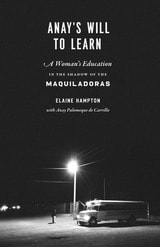
Anay's Will to Learn
A Woman's Education in the Shadow of the MaquiladorasBy Elaine Hampton with Anay Palomeque de Carrillo
University of Texas Press, 2013
The opening of free trade agreements in the 1980s caused major economic changes in Mexico and the United States. These economic activities spawned dramatic social changes in Mexican society. One young Mexican woman, Anay Palomeque de Carrillo, rode the tumultuous wave of these economic activities from her rural home in tropical southern Mexico to the factories in the harsh desert lands of Ciudad Juárez during the early years of the city’s notorious violence.
During her years as an education professor at the University of Texas at El Paso, author Elaine Hampton researched Mexican education in border factory (maquiladora) communities. On one trip across the border into Ciudad Juárez, she met Anay, who became her guide in uncovering the complexities of a factory laborer’s experiences in these turbulent times.
Hampton here provides an exploration of education in an era of dramatic social and economic upheaval in rural and urban Mexico. This critical ethnographic case study presents Anay’s experiences in a series of narrative essays addressing the economic, social, and political context of her world. This young Mexican woman leads us through Ciudad Juárez in its most violent years, into women’s experiences in the factories, around family and religious commitments as well as personal illness, and on to her achievement of an education through perseverance and creativity.

Asian Legal Revivals
Lawyers in the Shadow of EmpireYves Dezalay and Bryant G. Garth
University of Chicago Press, 2010
More than a decade ago, before globalization became a buzzword, Yves Dezalay and Bryant G. Garth established themselves as leading analysts of how that process has shaped the legal profession. Drawing upon the insights of Pierre Bourdieu, Asian Legal Revivals explores the increasing importance of the positions of the law and lawyers in South and Southeast Asia.
Dezalay and Garth argue that the current situation in many Asian countries can only be fully understood by looking to their differing colonial experiences—and in considering how those experiences have laid the foundation for those societies’ legal profession today. Deftly tracing the transformation of the relationship between law and state into different colonial settings, the authors show how nationalist legal elites in countries such as India, Indonesia, Malaysia, the Philippines, Singapore, and South Korea came to wield political power as agents in the move toward national independence. Including fieldwork from over 350 interviews, Asian Legal Revivals illuminates the more recent past and present of these legally changing nations and explains the profession’s recent revival of influence, as spurred on by American geopolitical and legal interests.