Results by title
19 books match the query 'Shame'

Another Eve
Shame and Desire on the Oregon CoastElissa Minor
Oregon State University Press, 2026
When she walks away from the Mormon church and a twenty-five-year marriage, Elissa Minor abandons the only life she’s ever known to embrace her identity as a queer woman. In this intimate memoir, she explores shame, desire, beauty, and acceptance. Minor realizes that her desire isn’t the problem but the solution. Finding solace outside of the church in the wilderness that surrounds her, she eventually begins to understand what it really means to be pure and worthy.
On the rugged terrain of the northern Oregon coast, Minor discovers passion and harmony in the grip of nature and in the arms of a lover who will become her wife. In the salty sea air, she learns that her own queerness—though less-charted territory—is like her love of backwoods hiking and that to accept her sexuality, she must take full pleasure in the wild that encompasses her. Poignant and powerful, Another Eve re-examines past truths and celebrates honoring oneself and living authentically. For Minor, the end of her transformation is only the beginning.
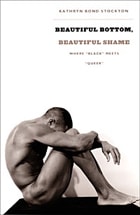
Beautiful Bottom, Beautiful Shame
Where "Black" Meets "Queer"Kathryn Bond Stockton
Duke University Press, 2006
Stockton engages the domains of African American studies, queer theory, psychoanalysis, film theory, photography, semiotics, and gender studies. She brings together thinkers rarely, if ever, read together in a single study—James Baldwin, Radclyffe Hall, Jean Genet, Toni Morrison, Robert Mapplethorpe, Eldridge Cleaver, Todd Haynes, Norman Mailer, Leslie Feinberg, David Fincher, and Quentin Tarantino—and reads them with and against major theorists, including Georges Bataille, Sigmund Freud, Eve Kosofsky Sedgwick, Jacques Lacan, Roland Barthes, and Leo Bersani. Stockton asserts that there is no clear, mirrored relation between the terms “black” and “queer”; rather, seemingly definitive associations attached to each are often taken up or crossed through by the other. Stockton explores dramatic switchpoints between these terms: the stigmatized “skin” of some queers’ clothes, the description of blacks as an “economic bottom,” the visual force of interracial homosexual rape, the complicated logic of so-called same-sex miscegenation, and the ways in which a famous depiction of slavery (namely, Morrison’s Beloved) seems bound up with depictions of AIDS. All of the thinkers Stockton considers scrutinize the social nature of shame as they examine the structures that make debasements possible, bearable, pleasurable, and creative, even in their darkness.

Blush
Faces of ShameElspeth Probyn
University of Minnesota Press, 2005

Class Fictions
Shame and Resistance in the British Working Class Novel, 1890–1945Pamela Fox
Duke University Press, 1994
With a focus on certain classics in the working-class literary "canon," such as The Ragged Trousered Philanthropists and Love on the Dole, as well as lesser-known texts by working-class women, Fox uncovers the anxieties that underlie representations of class and consciousness. Shame repeatedly emerges as a powerful counterforce in these works, continually unsettling the surface narrative of protest to reveal an ambivalent relation toward the working-class identities the novels apparently champion.
Class Fictions offers an equally rigorous analysis of cultural studies itself, which has historically sought to defend and value the radical difference of working-class culture. Fox also brings to her analysis a strong feminist perspective that devotes considerable attention to the often overlooked role of gender in working-class fiction. She demonstrates that working-class novels not only expose master narratives of middle-class culture that must be resisted, but that they also reveal to us a need to create counter narratives or formulas of working-class life. In doing so, this book provides a more subtle sense of the role of resistance in working class culture. While of interest to scholars of Victorian and working-class fiction, Pamela Fox’s argument has far-reaching implications for the way literary and cultural studies will be defined and practiced.
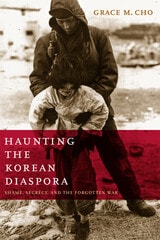
Haunting the Korean Diaspora
Shame, Secrecy, and the Forgotten WarGrace M. Cho
University of Minnesota Press, 2008
Grace M. Cho exposes how Koreans in the United States have been profoundly affected by the forgotten war and uncovers the silences and secrets that still surround it, arguing that trauma memories have been passed unconsciously through a process psychoanalysts call “transgenerational haunting.” Tracing how such secrets have turned into “ghosts,” Cho investigates the mythic figure of the yanggongju, literally the “Western princess,” who provides sexual favors to American military personnel. She reveals how this figure haunts both the intimate realm of memory and public discourse, in which narratives of U.S. benevolence abroad and assimilation of immigrants at home go unchallenged. Memories of U.S. violence, Cho writes, threaten to undo these narratives—and so they have been rendered unspeakable.
At once political and deeply personal, Cho’s wide-ranging and innovative analysis of U.S. neocolonialism and militarism under contemporary globalization brings forth a new way of understanding—and remembering—the impact of the Korean War.

Honor Bound
Race and Shame in AmericaLeverenz, David
Rutgers University Press, 2012
To make his argument, Leverenz casts an unusually wide net, from ancient and modern cultures of honor to social, political, and military history to American literature and popular culture.
He highlights the convergence of whiteness and honor in the United States from the antebellum period to the present. The Civil War, the civil rights movement, and the election of Barack Obama represent racial progress; the Tea Party movement represents the latest recoil.
From exploring African American narratives to examining a 2009 episode of Hardball—in which two white commentators restore their honor by mocking U.S. Attorney General Eric Holder after he called Americans “cowards” for not talking more about race—Leverenz illustrates how white honor has prompted racial shaming and humiliation. The United States became a nation-state in which light-skinned people declared themselves white. The fear masked by white honor surfaces in such classics of American literature as The Scarlet Letter and Adventures of Huckleberry Finn and in the U.S. wars against the Barbary pirates from 1783 to 1815 and the Iraqi insurgents from 2003 to the present. John McCain’s Faith of My Fathers is used to frame the 2008 presidential campaign as white honor’s last national stand.
Honor Bound concludes by probing the endless attempts in 2009 and 2010 to preserve white honor through racial shaming, from the “birthers” and Tea Party protests to Joe Wilson’s “You lie!” in Congress and the arrest of Henry Louis Gates Jr. at the front door of his own home. Leverenz is optimistic that, in the twenty-first century, racial shaming is itself becoming shameful.
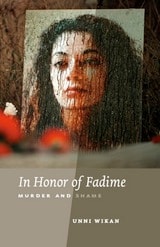
In Honor of Fadime
Murder and ShameUnni Wikan
University of Chicago Press, 2008
Unni Wikan narrates Fadime’s heartbreaking story through her own eloquent words, along with the testimonies of her father, mother, and two sisters. What unfolds is a tale of courage and betrayal, loyalty and love, power and humiliation, and a nearly unfathomable clash of cultures. Despite enduring years of threats over her emancipated life, Fadime advocated compassion for her killer to the end, believing him to be trapped by an unyielding code of honor. Wikan puts this shocking event in context by analyzing similar honor killings throughout Europe, Canada, and the United States. She also examines the concept of honor in historical and cross-cultural depth, concluding that Islam itself is not to blame—indeed, honor killings occur across religious and ethnic traditions—but rather the way that many cultures have resolutely linked honor with violence.
In Honor of Fadime holds profound and timely insights into conservative Kurdish culture, but ultimately the heart of this powerful book is Fadime’s courageous and tragic story—and Wikan’s telling of it is riveting.

Land of Shame and Glory
Britain 2021–22Peter Hennessy
Haus Publishing, 2023
2021 and 2022 were two of the most turbulent and disruptive years experienced by Britain in peacetime. Land of Shame and Glory: Britain 2021–22 addresses a series of unprecedented challenges that laid bare the fragility of Britain and the Union during this time. Beginning with the chaotic Fall of Kabul, which exposed Britain's military dependence on the United States, through the prolonged, unsatisfying removal of a prime minister—and the economically catastrophic, short-lived tenure of his successor—that further exposed the vulnerabilities of an unwritten constitution; to the country sweltering in record-breaking temperatures amid dire warnings of climate catastrophe; and finally, to the death of a much-loved monarch, who was a point of consistency during decades of tremendous social and technological change. Peter Hennessy considers the continuities and upheavals of the last seventy years, asking whether there can be said to have been a second Elizabethan Age and lamenting that the post-war period came to its close amid such upheaval and loss.
Microsociology
Discourse, Emotion, and Social StructureThomas J. Scheff
University of Chicago Press, 1990
Thomas J. Scheff brings together the study of communication and the social
psychology of emotions to explore the microworld of thoughts, feelings,
and moods. Drawing on strikingly diverse and rich sources—the findings of
artificial intelligence and cognitive science, and examples from literary
dialogues and psychiatric interviews—Scheff provides an inventive account
of the nature of social life and a theory of motivation that brilliantly
accounts for the immense complexity involved in understanding even the most
routine conversation.
"A major contribution to some central debates in social theory at the
present time. . . . What Thomas Scheff seeks to develop is essentially a
quite novel account of the nature of social life, its relation to language
and human reflexivity, in which he insists upon the importance of a theory
of emotion. . . . A work of true originality and jolting impact. . . .
Microsociology is of exceptional interest, which bears witness to the
very creativity which it puts at the center of human social contact."
—Anthony Giddens, from the Foreword
"Scheff provides a rich theory that can easily generate further exploration. And he drives home the message that sociological work on interaction, social bonds, and society cannot ignore human emotionality."—Candace Clark, American Journal of Sociology
"This outstanding and ground-breaking little volume contains a wealth of original ideas that bring together many insights concerning the relationship of emotion to motivation in a wide variety of social settings. It is strongly recommended to all serious students of emotion, of society, and of human nature."—Melvin R. Lansky, American Journal of Psychiatry

No Ordinary Letter
A Gendered History of Rural Violence and Shame in Apartheid South AfricaJill E. Kelly
Ohio University Press, 0
No Ordinary Letter reconstructs the intellectual world of rural South African women who, in 1959, mounted determined campaigns across Natal to resist the expanding policies of apartheid. Challenging Bantu Authorities, detrimental agricultural schemes, restrictions on movement, and the extension of pass laws to women, these organizers drew on knowledge rooted in the lived experience of farmwork, household management, and community governance. The book shows how women assessed their political circumstances and crafted strategies—some peaceful, some destructive—to make themselves heard in a system structured to ignore them.
Foregrounding women as thinkers as well as activists, No Ordinary Letter reveals how rural organizers theorized their positions under apartheid law and within patriarchal households and communities. Their repertoire of political understanding encompassed the daily violence of apartheid, local cultures of honor that enabled them to shame others into action, and finely honed skills for navigating the authority of elders, in-laws, and traditional leaders. When the Camperdown Native Commissioner asked why a group had destroyed government property, they replied, “We were really writing a letter to the authorities which they could read. If we had written an ordinary letter, you would not have replied.” Their explanation captures how an underlying logic of violence became a vehicle for extraordinary political communication.
At the same time, the book underscores the profound constraints shaping women’s choices: poverty, state repression, and the multiple patriarchies embedded within both the apartheid state and African communities. These overlapping systems meant that the immediate enforcers of apartheid policy were often African men with their own stakes in patriarchal arrangements. No Ordinary Letter offers a groundbreaking account of how rural women understood, navigated, and contested these entangled structures of power, providing a fresh view on political thought and resistance in apartheid South Africa.
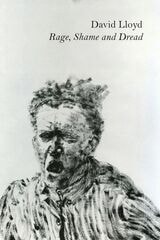
Rage, Shame and Dread
David Lloyd
Seagull Books, 2026
A radical rethinking of dark emotion as critical responses to capitalism, colonial violence, and authoritarian power.
Rage, Shame and Dread is a bold and unsettling exploration of three emotions that resist consolation, correction, or easy political use. In this triptych of essays, David Lloyd dwells with rage, shame, and dread not as states to be managed or redeemed, but as objectless, intransitive forces that interrupt social life and expose its underlying wrongness.
Reading rage as “sheer manifestation,” shame as a catastrophic rupture of self-relation, and dread as anticipation without an object, Lloyd traces how these unpromising emotions emerge from—and register—the violences of capitalism, colonialism, racialization, and authoritarian power. Drawing on Walter Benjamin, Sigmund Freud, Jacques Derrida, Frantz Fanon, Aimé Césaire, Joseph Conrad, Oscar Wilde, and Søren Kierkegaard, the book moves between philosophy, literature, and political theory to challenge therapeutic and liberal accounts that treat these feelings as errors to be corrected or tools for socialization.
Rather than pathologizing these states, Lloyd reads them as signals of damaged social relations and as thresholds to alternative forms of life-in-common. At once philosophically rigorous and politically urgent, Rage, Shame and Dread offers a radical rethinking of feeling as a site of critique, resistance, and collective possibility.
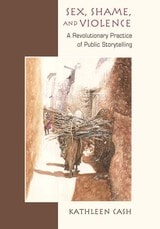
Sex, Shame, and Violence
A Revolutionary Practice of Public Storytelling in Poor CommunitiesKathleen Cash
Vanderbilt University Press, 2016
For more than three decades, Kathleen Cash has lived and worked with impoverished people, learning about their lives. Listening to them talk about their feelings of shame, Cash heard how people suffered from being unable to change what was happening to them--HIV infection, sexual and domestic violence, violence toward children, and environmental degradation. She saw that many interventions lacked emotional and cultural integrity and thus did little to alleviate these hardships. So Cash went outside the conventional approaches to health promotion and social justice and devised a community narrative practice, a strategy for engaging people through storytelling. From numerous ethnographic interviews, she pieced together cultural stories in a way that resonated with community people and revealed the paradoxes in their suffering. Cash recruited local artists to illustrate the stories in a form resembling a graphic novel and distributed these booklets for community discussion. (This book includes excerpts from these illustrated stories.)
In Thailand, Bangladesh, Haiti, Uganda, and the United States, people learned to talk about forbidden subjects and say what they could never say before. They stood up to each other, reconciled, and made health-seeking decisions. By helping others, they repaired themselves. In cathartic conversations they acknowledged shame, which led to acts of courage and generosity.

Shame
Grant Maierhofer
University of Alabama Press, 2022
A kaleidoscopic sequence of autofictional narratives about identity, grief, and narrative itself.
Shame is a daring exploration of the potential and limits of memory and self. Here we meet Grant Maierhofer at various points within his life then, now, and in the future as he investigates the sense of shame that haunts the course of his days. The real and unreal, fact and fiction, blur together in a Kaufmanesque sequence of overlapping narratives about who we really are, how we cope with regret, and the repetitions of our behavior.
Through lists, fragments, recollections, and rants, the story of a son’s vexing grief for his father emerges. A sober addict trying to figure out how to navigate pleasure, diversion, and escape. A father trying to figure out marriage, children, maturity, and responsibility. A confused observer in a world constantly torn apart by media, politics, and aggression. A meditation on the nature of art, and art’s place in contemporary life.

Shame and Endurance
The Untold Story of the Chiricahua Apache Prisoners of WarH. Henrietta Stockel
University of Arizona Press, 2004
First removed from Arizona to Florida, the prisoners were eventually relocated to Mount Vernon Barracks in Alabama, where, in the words of one Apache, "We didn’t know what misery was until they dumped us in those swamps." Pulmonary disease took its toll—by 1894, disease had killed nearly half of the Apaches—and after years of pressure from Indian rights activists and bureaucratic haggling, Fort Sill in Oklahoma was chosen as a more healthful location. Here they were given the opportunity to farm, and here Geronimo, who eventually converted to Christianity, died of pneumonia in 1909 at the age of 89, still a prisoner of war. In the meantime, many Apache children had been removed to Carlisle, Pennsylvania, for education—despite earlier promises that families would not be split up—and most eventually lost their cultural identity.
Henrietta Stockel has combed public records to reconstruct this story of American shame and Native endurance. Unabashedly speaking on behalf of the Apaches, she has framed these documents within a readable narrative to show how exasperated public officials, eager to openly demonstrate their superiority over "savages" who had successfully challenged the American military for years, had little sympathy for the consequences of their confinement. Although the Chiricahua Apaches were not alone in losing their ancestral homelands, they were the only American Indians imprisoned for so long a time in an environment that continually exposed them to illnesses against which they had no immunity, devastating families even more than warfare. Shame and Endurance records events that ought never to be repeated—and tells a story that should never be forgotten.
Shame and Its Sisters
A Silvan Tomkins ReaderEve Kosofsky Sedgwick and Adam Frank, eds.
Duke University Press, 1995
SilvanTomkins (1911–1991) was one of the most radical and imaginative psychologists of the twentieth century. In Affect, Imagery, Consciousness, a four-volume work published over the last thirty years of his life, Tomkins developed an ambitious theory of affect steeped in cybernetics and systems theory as well as in psychoanalysis, ethology, and neuroscience. The implications of his conceptually daring and phenomenologically suggestive theory are only now—in the context of postmodernism—beginning to be understood. With Shame and Its Sisters, editors Eve Kosofsky Sedgwick and Adam Frank make available for the first time an engaging and accessible selection of Tomkins’s work.
Featuring intensive examination of several key affects, particularly shame and anger, this volume contains many of Tomkins’s most haunting, diagnostically incisive, and theoretically challenging discussions. An introductory essay by the editors places Tomkins’s work in the context of postwar information technologies and will prompt a reexamination of some of the underlying assumptions of recent critical work in cultural studies and other areas of the humanities. The text is also accompanied by a biographical sketch of Tomkins by noted psychologist Irving E. Alexander, Tomkins’s longtime friend and collaborator.
Shame
A Brief HistoryPeter Stearns
University of Illinois Press, 2017
Peter N. Stearns draws on his long career as a historian of emotions to provide the foundational text on shame’s history and how this history contributes to contemporary issues around the emotion. Summarizing current research, Stearns unpacks the major debates that surround this complex emotion. He also surveys the changing role of shame in the United States from the nineteenth century to today, including shame’s revival as a force in the 1960s and its place in today’s social media. Looking ahead, he maps the abundant opportunities for future historical research and historically informed interdisciplinary scholarship.
Written for interested readers and scholars alike, Shame combines significant new research with a wider synthesis.
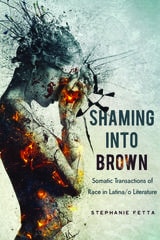
Shaming into Brown
Somatic Transactions of Race in Latina/o LiteratureStephanie Fetta
The Ohio State University Press, 2018
In Shaming into Brown: Somatic Transactions of Race in Latina/o Literature, Stephanie Fetta asserts that our bodies are fundamental to how we live and how we make meaning. Anchored by two psychoanalytic theories, bioenergetic analysis developed by Alexander Lowen and affect theory put forth by Silvan Tomkins, Fetta examines Latinx fiction to draw attention to the cultural role of the intelligent, emotional, and communicative body—the soma—in relation to shame. She argues that we bring the soma—the physical, emotive, and social register of our subjectivity—to the text as we do to our lives,proposing that the power of racialization operates at the level of somatic expression and reception through habituated, socially cued behaviors that are not readily subject to intentional control.
Fetta examines shame beyond individual experiences, looking at literary renderings of the cultural practice of racial shaming that are deeply embedded into our laws, hiring practices, marketing strategies, and more. Grounding her analysis in the works of Gloria Anzaldúa and Cherríe Moraga, Shaming into Brown focuses on exposing the underpinnings of racialized shame and does so through analyzing “scenes of racialization” in prominent works by authors such as Junot Díaz, Sandra Cisneros, and Oscar Zeta Acosta.
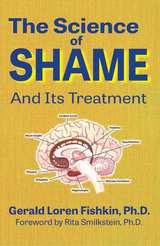
The Science of Shame and Its Treatment
Gerald Loren Fishkin, Ph.D.
Parkhurst Brothers, Inc., 2016
Through his empirical analysis and understanding of toxic shame, Dr. Fishkin has identified multiple effective clinical approaches for its treatment and addressing shame-based behaviors. He clearly outlines why contemporary treatment approaches, including cognitive behavioral therapy, do not treat core shame wounds and most often cause individuals to terminate the therapeutic process prematurely.
This book is a must-read for clinicians, addiction specialists, teachers, students of human behavior, counselors, social workers, patients in treatment.
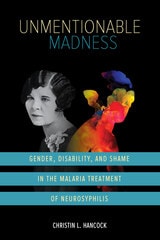
Unmentionable Madness
Gender, Disability, and Shame in the Malaria Treatment of NeurosyphilisChristin L. Hancock
University of Illinois Press, 2025
Christin L. Hancock looks through the lens of feminist disability to examine the popular but ethically suspect treatment and its consequences. As Hancock shows, the treatment’s purported success rate relied on the disabled minds and bodies of people incarcerated in mental hospitals. The backgrounds and identities of these patients reflected and perpetuated attitudes around poverty, gender, race, and disability while betraying authorities’ desire to protect the public from women and men perceived as abnormal, sexually tainted, and unworthy of community life.
Paying special attention to the patients’ voices and experiences, Unmentionable Madness offers a disability history that confronts the ethics of experimentation.