Results by title

4 books match the query 'Shape-note singing'
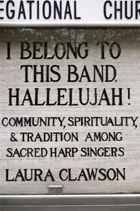
cover of I Belong to This Band, Hallelujah!: Community, Spirituality, and Tradition among Sacred Harp Singers

I Belong to This Band, Hallelujah!

Community, Spirituality, and Tradition among Sacred Harp Singers

Laura Clawson

University of Chicago Press, 2011

The Sacred Harp choral singing tradition originated in the American South in the mid-nineteenth century, spread widely across the country, and continues to thrive today. Sacred Harp isn’t performed but participated in, ideally in large gatherings where, as the a cappella singers face each other around a hollow square, the massed voices take on a moving and almost physical power. I Belong to This Band, Hallelujah! is a vivid portrait of several Sacred Harp groups and an insightful exploration of how they manage to maintain a sense of community despite their members’ often profound differences.

Laura Clawson’s research took her to Alabama and Georgia, to Chicago and Minneapolis, and to Hollywood for a Sacred Harp performance at the Academy Awards, a potent symbol of the conflicting forces at play in the twenty-first-century incarnation of this old genre. Clawson finds that in order for Sacred Harp singers to maintain the bond forged by their love of music, they must grapple with a host of difficult issues, including how to maintain the authenticity of their tradition and how to carefully negotiate the tensions created by their disparate cultural, religious, and political beliefs.
[more]
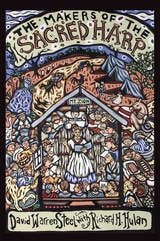
cover of The Makers of the Sacred Harp

The Makers of the Sacred Harp

David Warren Steel with Richard H. Hulan

University of Illinois Press, 2010
This authoritative reference work investigates the roots of the Sacred Harp, the central collection of the deeply influential and long-lived southern tradition of shape-note singing. Where other studies of the Sacred Harp have focused on the sociology of present-day singers and their activities, David Warren Steel and Richard H. Hulan concentrate on the regional culture that produced the Sacred Harp in the nineteenth century and delve deeply into history of its authors and composers. They trace the sources of every tune and text in the Sacred Harp, from the work of B. F. White, E. J. King, and their west Georgia contemporaries who helped compile the original collection in 1844 to the contributions by various composers to the 1936 to 1991 editions.
 
The Makers of the Sacred Harp also includes analyses of the textual influences on the music--including metrical psalmody, English evangelical poets, American frontier preachers, camp meeting hymnody, and revival choruses--and essays placing the Sacred Harp as a product of the antebellum period with roots in religious revivalism. Drawing on census reports, local histories, family Bibles and other records, rich oral interviews with descendants, and Sacred Harp Publishing Company records, this volume reveals new details and insights about the history of this enduring American musical tradition.
[more]
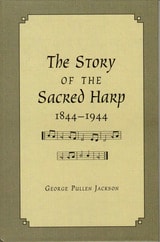
cover of The Story of the Sacred Harp, 1844-1944

The Story of the Sacred Harp, 1844-1944

George Pullen Jackson

Vanderbilt University Press, 1944
The Sacred Harp is the most famous of the shape-note hymnals, a collection of over five hundred four-part a cappella hymns dating back over a hundred and fifty years. Shape-note singing itself is seeing a resurgence in popularity with sings being organized all over the country. And yet, George Pullen Jackson's groundbreaking history of the first hundred years of the hymnal has been out of print and hard to come by for decades. But now, The Story of the Sacred Harp, 1844-1944 is back in print and available for music lovers, historians, and librarians alike.
[more]
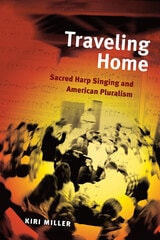
cover of Traveling Home: Sacred Harp Singing and American Pluralism

Traveling Home

Sacred Harp Singing and American Pluralism

Kiri Miller

University of Illinois Press, 2010

A compelling account of contemporary Sacred Harp singing, Traveling Home describes how this vibrant musical tradition brings together Americans of widely divergent religious and political beliefs. Named after the most popular of the nineteenth-century shape-note tunebooks--which employed an innovative notation system to teach singers to read music--Sacred Harp singing has been part of rural Southern life for more than 150 years.
 
In the wake of the folk revival of the 1950s and '60s, this participatory musical tradition attracted new singers from all over America. All-day "singings" from The Sacred Harp now take place across the country, creating a diverse and far-flung musical community. Meanwhile, the advent of internet discussion boards and increasing circulation of singer-produced recordings have changed the nature of traditional transmission and sharpened debates about Sacred Harp as an "authentic" form of southern musical expression. Blending historical scholarship with wide-ranging fieldwork, Kiri Miller presents an engagingly written study of a musical movement that some have christened "a quintessential expression of American democracy."
 
[more]