Results by title
6 books match the query 'Shīʻah'
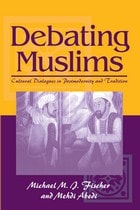
Debating Muslims
Cultural Dialogues in Postmodernity and TraditionMichael M. J. Fischer and Mehdi Abedi
University of Wisconsin Press, 1990
In a world of multinational commerce, satellite broadcasting, migration, terrorism, and global arms dealing, what is said and how it is said in one society can no longer be isolated from what is said and how it is said in another. Debating Muslims focuses on Iranian culture, Shi’ite Islam, and Iranians in the United States, offering an experiment in postmodern ethnography and an invitation to think in a multifaceted way about Islam in the contemporary world.
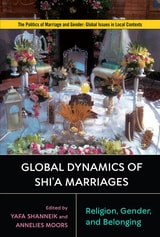
Global Dynamics of Shi'a Marriages
Religion, Gender, and BelongingYafa Shanneik
Rutgers University Press, 2022
Iran
From Religious Dispute to RevolutionMichael M. J. Fischer
University of Wisconsin Press, 2003

Islam
Origin and BeliefBy Emory C. Bogle
University of Texas Press, 1998
Islam is the fastest-growing religion in the world today. An understanding of its beliefs and practices has become essential knowledge not only for religious and political leaders but also for ordinary citizens who increasingly interact with Muslims as neighbors, coworkers, and schoolmates.
This book is designed to offer the general public a concise overview of the origins, basic beliefs, and common practices of Islam, as well as the reasons for its dramatic resurgence in recent times. Emory Bogle details the life mission of the prophet Muhammad and describes the spread of Islam after his death. He accounts for the rise and contemporary influence of Shi'i Islam, a topic of particular interest to Western readers. Bogle also explains the basic beliefs ("The Five Pillars") of Islam, as well as the role played by the Qur'an (Islam's scriptures), the hadith (the words and behavior of Muhammad), and the shari'a (Islamic law).
The Shadow of God and the Hidden Imam
Religion, Political Order, and Societal Change in Shi'ite Iran from the Beginning to 1890Said Amir Arjomand
University of Chicago Press, 1984
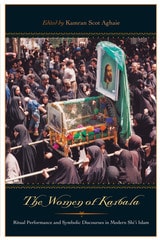
The Women of Karbala
Ritual Performance and Symbolic Discourses in Modern Shi'i IslamEdited by Kamran Scot Aghaie
University of Texas Press, 2005
Commemorating the Battle of Karbala, in which the Prophet Mohammad's grandson Hosayn and seventy-two of his family members and supporters were martyred in 680 CE, is the central religious observance of Shi'i Islam. Though much has been written about the rituals that reenact and venerate Karbala, until now no one has studied women's participation in these observances. This collection of original essays by a multidisciplinary team of scholars analyzes the diverse roles that women have played in the Karbala rituals, as well as the varied ways in which gender-coded symbols have been used within religious and political discourses.
The contributors to this volume consider women as participants in and observers of the Karbala rituals in Iran, Iraq, Lebanon, India, Pakistan, and the United States. They find that women's experiences in the Shi'i rituals vary considerably from one community to another, based on regional customs, personal preferences, religious interpretations, popular culture, and socioeconomic background. The authors also examine the gender symbolism within the rituals, showing how it reinforces distinctions between the genders while it also highlights the centrality of women to the symbolic repertory of Shi'ism. Overall, the authors conclude that while Shi'i rituals and symbols have in some ways been used to restrict women's social roles, in other ways they have served to provide women with a sense of independence and empowerment.