Results by title
4 books match the query 'Shift'

Shift
Jeredith Merrin
University of Chicago Press, 1996

Soundies Jukebox Films and the Shift to Small-Screen Culture
Kelley, Andrea J
Rutgers University Press, 2018

The End of the Cold War
European Unity, Socialism, and the Shift in Global PowerBogdan Denitch
University of Minnesota Press, 1990
The End of the Cold War was first published in 1990. Minnesota Archive Editions uses digital technology to make long-unavailable books once again accessible, and are published unaltered from the original University of Minnesota Press editions.
Against the backdrop of unprecedented change in the world political and social order, Bogdan Denitch charts the unique opportunities and potential pitfalls that accompany the increased economic and political integration of the European Community. Historically, any move toward unification has had broad ramifications. This, coming as it does in the wake of recent democratic upheavals in Europe, will bring to a close an entire era -- an era of a world dominated by superpowers and the cold war that defined there confrontations.
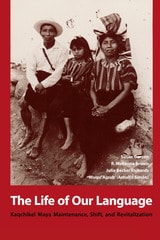
The Life of Our Language
Kaqchikel Maya Maintenance, Shift, and RevitalizationBy Susan Garzon, R. McKenna Brown, Julia Becker Richards, and Wuqu’ Ajpub’
University of Texas Press, 1998
The native Maya peoples of Mexico, Guatemala, Honduras, and Belize have been remarkably successful in maintaining their cultural identity during centuries of contact with and domination by outside groups. Yet change is occurring in all Mayan communities as contact with Spanish-speaking Ladino society increases. This book explores change and continuity in one of the most vital areas of Mayan culture—language use.
The authors look specifically at Kaqchikel, one of the most commonly spoken Mayan languages. Following an examination of language contact situations among indigenous groups in the Americas, the authors proceed to a historical overview of the use of Kaqchikel in the Guatemalan Highlands. They then present case studies of three highland communities in which the balance is shifting between Kaqchikel and Spanish. Wuqu' Ajpub', a native Kaqchikel speaker, gives a personal account of growing up negotiating between the two languages and the different world views they encode. The authors conclude with a look at the Mayan language revitalization movement and offer a scenario in which Kaqchikel and other Mayan languages can continue to thrive.