Results by title
4 books match the query 'Shoot'
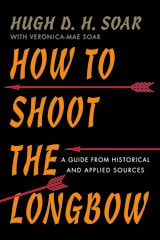
How to Shoot the Longbow
A Guide from Historical and Applied SourcesHugh D. H. Soar
Westholme Publishing, 2015
“Soar’s book [The Crooked Stick] is indispensible.”—Bernard Cornwell, New York Times bestselling author
Relying on more than fifty years’ experience in archery, historian Hugh D. H. Soar reflects on how the longbow was drawn and shot across the centuries through examining the design of the bow and early literature about the bow, combined with his and his colleagues’ applied knowledge using replica bows. No complete medieval longbow has survived, but those found aboard the Tudor warship Mary Rose provide the best archaeological evidence to the possible construction of the medieval bow. Contemporary treatises written about the proper manner of shooting the bow, together with the resurgence in interest and construction of replica bows beginning in the late sixteenth century that form part of the author’s collection provide the basis for this work. How to Shoot the Longbow: A Guide from Historical and Applied Sources is a fascinating and practical look at the use of a legendary invention.
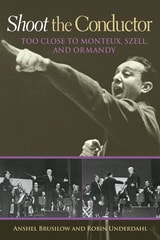
Shoot the Conductor
Too Close to Monteux, Szell, and OrmandyAnshel Brusilow
University of North Texas Press, 2015
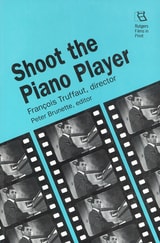
Shoot the Piano Player
Francois Truffaut, DirectorBrunette, Peter
Rutgers University Press, 1993
When it appeared in 1960, the inspired fun of François Truffaut's Shoot the Piano Player shocked and delighted critics and audiences around the world. Its sudden shifts of tone and mood, its willful play with genre stereotypes, and its hilarious in-jokes clearly signaled that Jean-Luc Godard's equally innovative Breathless was not a fluke. The two films heralded the arrival of the so-called New Wave, sharing with other New Wave films an insistence on low-budget, location shooting and, above all, on cinema as the personal statement of an author. These films had a tremendous impact on all filmmaking.
Peter Brunette's introduction to this book gives us new insight into the film, based in part on revisualizing it in terms of recent postmodern and poststructuralist thinking. He argues, in effect, that Truffaut was one of the directors who paved the way for a postmodern aesthetic. The volume also contains a complete and accurate continuity script of the film (based on the authoritative, wide-screen version), a series of interviews with Truffaut (including one by Hélène Laroche Davis, previously unpublished), a large number of reviews and essays, a filmography, and selected bibliography.
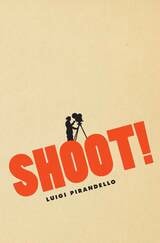
Shoot!
The Notebooks of Serafino Gubbio, Cinematograph OperatorLuigi Pirandello
University of Chicago Press, 2005
Shoot!, presented here in its 1927 English translation, is a classic example of Nobel Prize-winning Sicilian playwright Luigi Pirandello's (1867-1936) literary talent and genius for blurring the line between art and reality. From the film studio Kosmograph, Pirandello's Gubbio steadily winds the crank of his camera by day and scribbles with his pen by night, revealing the world both mundane and melodramatic that unfolds in front of his camera. Through Gubbio's narrative—saturated with fantasy and folly—Pirandello grapples with the philosophical implications of modernity. Like much of Pirandello's work, Shoot! parodies human weaknesses, drawing attention to the themes of isolation and madness as emerging tendencies in the modern world.
Enhanced by new critical commentaries, Shoot! is an entertaining caricature, capturing early twentieth-century Italian filmmaking and revealing its truths as only a parody can.